A coolant leak in a Chrysler can start as a small puddle and quickly turn into an overheating problem. If you notice a coolant warning light, a sweet smell, low coolant level, or rising engine temperature, the cooling system needs attention. Chrysler coolant leak diagnosis is not simply about finding a wet spot. A proper inspection checks the radiator, hoses, water pump, thermostat housing, reservoir, radiator cap, and the engine itself. In Dubai’s high temperatures, finding and repairing a coolant leak early can help prevent expensive engine damage.
What Is Chrysler Coolant Leak Diagnosis?
Chrysler coolant leak diagnosis is the process of locating where coolant is escaping from the vehicle’s cooling system and identifying why the leak is happening.
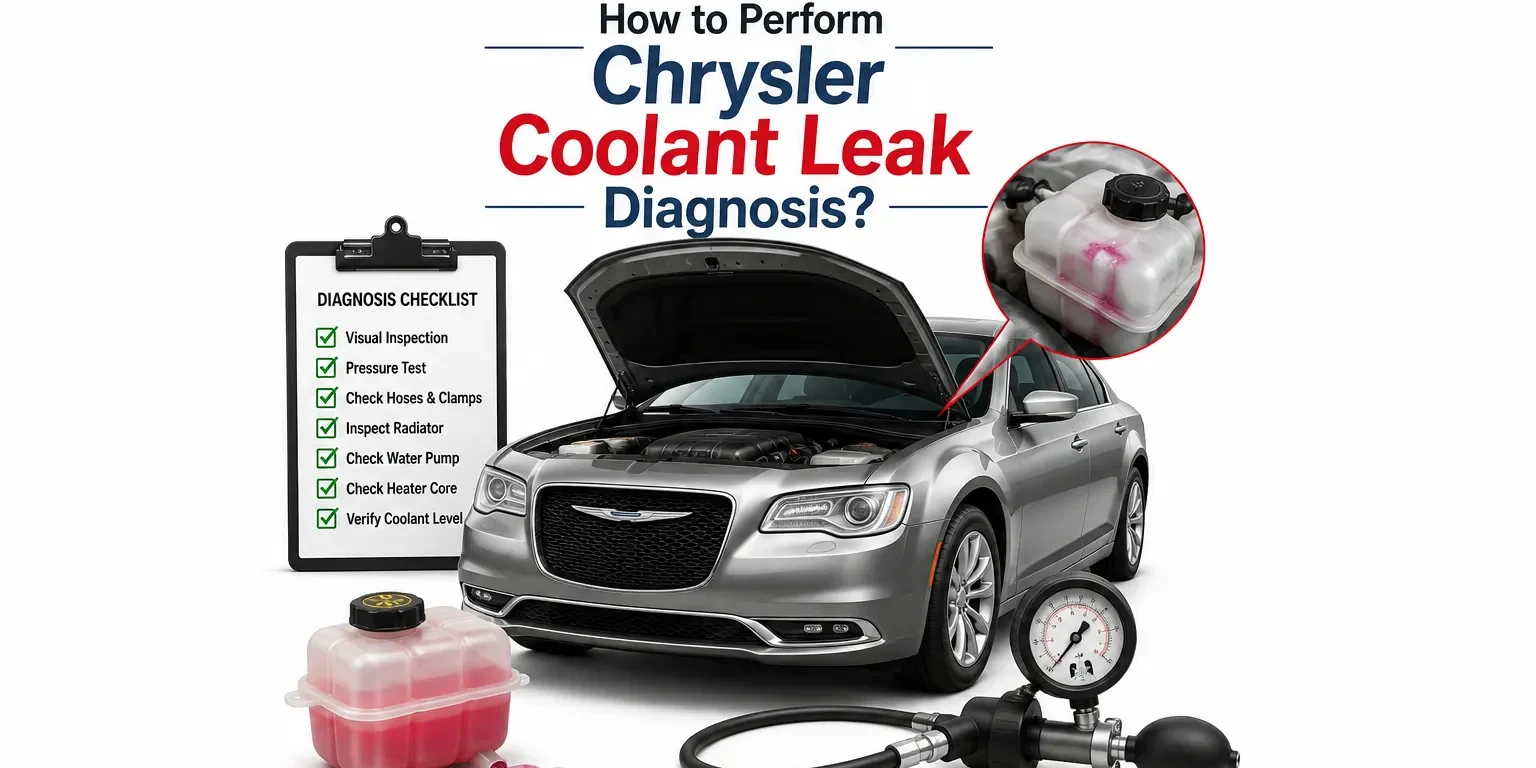
A proper diagnosis usually includes a visual cooling system inspection, pressure testing, inspection of hoses and clamps, checking the radiator and reservoir, and testing components such as the water pump and thermostat housing. When a leak is difficult to see, a technician may use coolant dye leak detection to locate the source.
The goal is not just to stop coolant loss. The technician should also determine whether the leak has already caused overheating or other engine problems.
Why Does a Chrysler Lose Coolant?
There are several reasons a Chrysler may lose coolant. Some leaks are external and easy to spot, while others can happen internally and leave little or no visible evidence.
Common causes include:
- Cracked or damaged coolant hoses
- Loose or damaged hose clamps
- Radiator leaks
- Damaged coolant reservoir
- Faulty radiator cap
- Water pump leakage
- Thermostat housing leaks
- Damaged cooling system connections
- Head gasket failure
- Cylinder head damage
Age, heat and repeated temperature changes can make rubber hoses and plastic cooling system components brittle. Dubai’s hot climate can make cooling system maintenance even more important.
How to Perform Chrysler Coolant Leak Diagnosis
A professional coolant leak diagnosis should follow a logical process. Replacing parts without identifying the actual source can waste money and may not solve the problem.
1. Check the Coolant Level
The first step is checking the coolant reservoir when the engine is completely cool. The coolant should normally sit between the marked minimum and maximum levels.
If the level is repeatedly dropping after a coolant top up, there is a strong possibility that the system has a leak or another cooling system problem.
Never open a hot radiator cap. The cooling system can remain under pressure and release extremely hot coolant.
2. Look for Visible Coolant Leaks
A technician should inspect the engine bay and the area underneath the vehicle for signs of coolant.
Look around the radiator, coolant hoses, hose clamps, thermostat housing, water pump and reservoir. Dried coolant can sometimes leave a colored or crusty residue around the leaking area.
A small leak may only appear when the engine reaches operating temperature, which is why a quick visual inspection does not always find the problem.
3. Inspect the Radiator
The radiator is responsible for transferring heat from the coolant to the surrounding air. Damage, corrosion, cracks or leaking joints can cause coolant loss.
A radiator inspection should include the radiator itself, its connections and surrounding areas. The technician should also check for signs of previous coolant leakage.
If the radiator is leaking badly, topping up coolant will only provide a temporary solution. The damaged radiator may need repair or replacement depending on its condition.
4. Inspect Coolant Hoses and Clamps
Coolant hoses carry hot coolant between major components of the cooling system. Over time, hoses can become soft, hard, cracked or swollen.
A mechanic should check both the hose condition and the clamps holding the connections together. A loose clamp can cause coolant to escape, while a damaged hose may suddenly fail under pressure.
This is one of the most common areas checked during a cooling system inspection.
5. Check the Coolant Reservoir
The coolant reservoir stores excess coolant and allows the cooling system to expand and contract as temperatures change.
A cracked reservoir can slowly lose coolant. The cap and connecting hose should also be inspected because a leak may occur around the connection rather than from the reservoir itself.
If the reservoir level keeps dropping but no obvious external leak is visible, further testing is necessary.
6. Inspect the Water Pump
The water pump circulates coolant through the engine and radiator. A failing water pump can cause coolant leakage as well as poor coolant circulation.
Signs can include coolant around the pump area, unusual noises, overheating, or repeated coolant loss.
A water pump problem should not be ignored. Poor coolant circulation can cause engine temperature problems and potentially lead to serious engine damage.
7. Check the Thermostat Housing
The thermostat controls coolant flow based on engine temperature. The thermostat housing and its sealing surfaces can develop leaks.
A mechanic should inspect the housing, gasket and surrounding connections. If the thermostat is not operating correctly, the engine may also experience abnormal temperature behavior.
This is why replacing coolant without checking the thermostat system may not solve an overheating complaint.
How Does a Cooling System Pressure Test Work?
A cooling system pressure test uses a special testing tool to pressurize the cooling system and identify leaks.
The technician applies controlled pressure to the system and monitors whether the pressure drops. If pressure falls, the cooling system is inspected for the source of the leak.
Pressure testing is particularly useful when a Chrysler has slow coolant loss but no obvious puddle underneath the vehicle.
For difficult leaks, a technician may combine pressure testing with coolant dye leak detection. The dye circulates through the cooling system and can make a small leak easier to identify using the appropriate inspection light.
What If There Is No Visible Coolant Leak?
If coolant continues to disappear but there is no obvious external leak, the problem may be more serious.
The technician may need to investigate possible internal coolant loss. A failed head gasket or damaged cylinder head can allow coolant to enter areas where it should not be.
Possible warning signs include:
- Persistent overheating
- White exhaust smoke
- Milky engine oil
- Bubbles in the coolant system
- Repeated coolant loss
- Rough engine operation
- Unexplained pressure in the cooling system
These symptoms do not automatically prove head gasket failure. Proper testing is needed before making an expensive repair decision.
Why Does a Chrysler Overheat After Losing Coolant?
Coolant carries heat away from the engine. When the coolant level becomes too low, the system may not be able to remove enough heat.
Air can also enter the cooling system after coolant loss. This can reduce proper coolant circulation and create hot spots inside the engine.
In Dubai, where outside temperatures can be extremely high, an already weak cooling system may struggle even more. Continuing to drive an overheating Chrysler can increase the risk of cylinder head damage, head gasket failure and other expensive engine repairs.
If the temperature gauge rises into the danger zone, it is safer to stop driving and have the vehicle inspected.
What Happens After the Leak Is Repaired?
Finding the leak is only part of the job. The cooling system must be restored correctly after the repair.
Depending on the repair, this may involve draining the old coolant, replacing the damaged component, refilling the system with the correct coolant and bleeding trapped air from the system.
Proper cooling system bleeding is important because trapped air can affect coolant circulation and temperature readings.
After the coolant refill, the technician should check the system again for leaks and confirm that the engine reaches and maintains its normal operating temperature.
Common Mistakes Chrysler Owners Should Avoid
One of the most common mistakes is repeatedly adding coolant without finding the reason for the coolant loss. A coolant top up may get the vehicle moving temporarily, but it does not repair the leak.
Another mistake is using plain water as a permanent replacement for the correct coolant. Emergency water use may sometimes be necessary to prevent immediate overheating, but the cooling system should then be checked and restored with the correct coolant mixture.
It is also important not to ignore a coolant warning light. A small leak can become much more serious when the vehicle is driven for long distances in high temperatures.
Chrysler Cooling System Service in Dubai
If your Chrysler is losing coolant, overheating or showing an engine temperature warning, professional diagnosis can help identify the actual cause before the problem becomes more expensive.
At Car Repair Auto Service, technicians can inspect the cooling system, check coolant hoses, radiator connections, reservoir, water pump and thermostat components, and perform appropriate leak testing when required.
A proper inspection can also identify related issues before they develop into major engine repairs. This is especially useful for Chrysler owners who want regular preventive maintenance rather than waiting for a breakdown.
How Much Does Chrysler Coolant Leak Repair Cost in Dubai?
The cost depends on the actual source of the leak. A loose hose clamp or damaged hose can be relatively straightforward to repair, while a radiator, water pump, thermostat housing or internal engine problem can require significantly more work.
A reliable workshop should diagnose the problem before giving a final repair recommendation. This prevents unnecessary parts replacement and gives the owner a clearer idea of what needs to be repaired.
When Should You Get Your Chrysler Inspected?
You should arrange a cooling system inspection if you notice:
- Coolant levels dropping repeatedly
- A coolant warning light
- Engine temperature rising
- A sweet coolant smell
- Coolant underneath the vehicle
- Steam from the engine bay
- Visible cracks or damage around coolant hoses
- Repeated overheating
- Poor cooling system performance
Do not wait for the vehicle to overheat before taking action. Early diagnosis is usually much easier and can help prevent engine damage.
Final Thoughts
How to perform Chrysler coolant leak diagnosis? Start with the coolant level and a careful visual inspection, then check the radiator, hoses, clamps, reservoir, water pump, thermostat housing and radiator cap. If the leak is difficult to locate, a cooling system pressure test or coolant dye leak detection can help identify the source.
The important point is to diagnose the cause instead of repeatedly topping up coolant. In Dubai’s hot climate, maintaining the cooling system can play an important role in preventing overheating and expensive Chrysler engine repairs.
If your Chrysler is losing coolant or showing engine temperature problems, have the vehicle professionally inspected before continuing to drive it. Car Repair Auto Service can help diagnose cooling system problems and recommend the appropriate repair based on the actual condition of the vehicle.
FAQs
How do I know if my Chrysler has a coolant leak?
Common signs include low coolant levels, coolant underneath the vehicle, a sweet smell, visible wet areas around hoses or the radiator, overheating, and a coolant warning light. Some slow leaks may require pressure testing to locate.
Can I drive a Chrysler with a coolant leak?
It is not recommended to continue driving with an active coolant leak, especially if the engine temperature is increasing. Low coolant can cause overheating and may lead to head gasket or cylinder head damage.
How does a mechanic find a hidden coolant leak?
A mechanic can perform a cooling system pressure test to check for pressure loss. If the leak remains difficult to see, coolant dye leak detection can help reveal small leaks around components and connections.
Why is my Chrysler losing coolant but not leaking?
If coolant is disappearing without an obvious external leak, the cooling system may have an internal problem. Possible causes include head gasket failure or cylinder head damage. Proper diagnostic testing is required to confirm the cause.
Does Dubai’s heat affect Chrysler cooling systems?
High ambient temperatures increase the cooling system’s workload. A weak hose, radiator, water pump or thermostat can become more noticeable during hot weather, making regular cooling system maintenance important for Chrysler vehicles in Dubai.