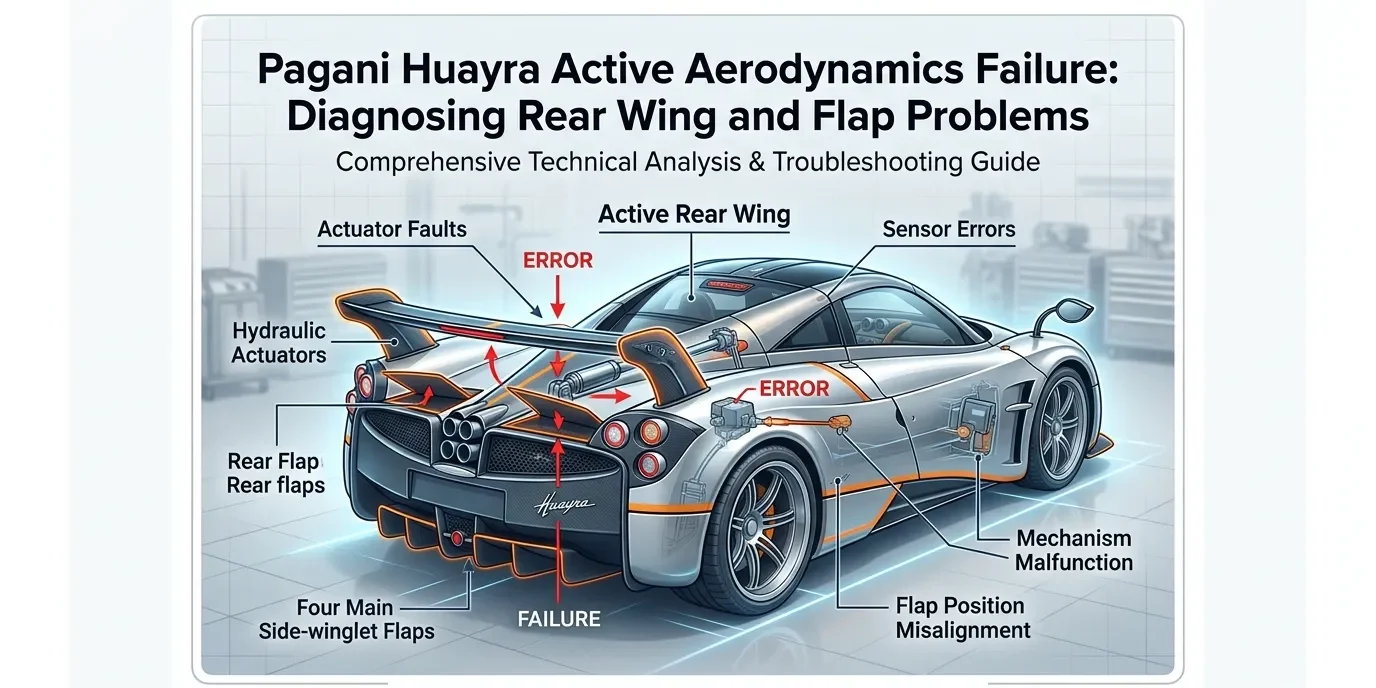
Owning a Pagani Huayra means driving one of the most advanced hypercars ever built. Its active aerodynamic system plays an important role in maintaining stability, controlling airflow, and improving performance at different speeds. However, when the rear wing or aerodynamic flaps stop responding correctly, the issue can affect more than just driving performance.
Dubai’s heat, road conditions, and demanding driving environments make proper maintenance especially important for high-performance vehicles. If you are experiencing aerodynamic system problems or visible carbon fibre damage, understanding the cause is the first step towards a reliable repair.
This guide explains how Pagani Huayra active aerodynamics work, what causes rear wing and flap failures, how technicians approach diagnosis, and when professional Pagani Carbon Fibre Repair Dubai services may be necessary.
How Does the Pagani Huayra Active Aerodynamics System Work?
The Pagani Huayra uses an advanced active aerodynamic system with four independently controlled flaps positioned around the vehicle. These aerodynamic elements adjust their positions according to driving conditions, helping manage airflow and vehicle balance.
Unlike a fixed rear spoiler, active aerodynamics can change their position to respond to acceleration, braking, cornering, and other driving inputs.
The system helps achieve several important functions:
- Improved stability: Adjusting aerodynamic surfaces helps manage vehicle balance at higher speeds.
- Better braking support: Aerodynamic adjustments can help increase stability during heavy braking.
- Cornering balance: Individual flap adjustments help manage airflow across different parts of the vehicle.
- Reduced aerodynamic resistance: The system can adjust surfaces to suit different driving conditions.
Because these components are integrated into the vehicle’s electronic and mechanical systems, a fault may involve sensors, actuators, wiring, control modules, or physical damage to the aerodynamic components.
What Causes Pagani Huayra Rear Wing and Flap Problems?
Active aerodynamic failures do not always have one obvious cause. A rear wing that does not move correctly may indicate an electrical fault, a mechanical obstruction, or damage to the carbon fibre structure.
Understanding the possible causes helps technicians avoid replacing expensive components unnecessarily.
1. Actuator Malfunction
Actuators are responsible for moving aerodynamic components into their required positions. If an actuator develops an internal fault, the affected flap may respond slowly, stop moving, or fail to reach its intended position.
Possible warning signs include unusual movement, inconsistent flap response, or a visible difference between aerodynamic surfaces.
A technician should inspect the actuator operation, electrical supply, connections, and mechanical movement before recommending replacement.
2. Faulty Position Sensors
Position sensors provide feedback about the location of the aerodynamic flaps. This information helps the vehicle’s control system determine whether each component is moving as expected.
A damaged sensor or incorrect signal can create communication problems between the control system and the aerodynamic hardware.
For example, a flap may physically move but the control system may not receive the correct position information. This can trigger a fault or prevent normal operation.
3. Carbon Fibre Damage Around Aerodynamic Components
Carbon fibre is widely used throughout the Pagani Huayra because it offers high strength with relatively low weight. However, carbon fibre components can still suffer damage from impacts, road debris, improper handling, or previous repair work.
Damage around rear wing mounts, flap housings, or supporting structures may affect component alignment and movement.
This is where specialist Pagani Carbon Fibre Repair Dubai services become relevant. A proper inspection can determine whether the damage is cosmetic or involves the structural integrity of the component.
4. Electrical Wiring and Connector Issues
Active aerodynamic components depend on electrical connections to receive commands and communicate with the vehicle’s control system.
Heat exposure, vibration, damaged wiring insulation, or loose connectors can interfere with normal operation.
In Dubai, high ambient temperatures make careful inspection of electrical components particularly important. However, heat alone should not be assumed to be the cause without proper testing.
5. Mechanical Obstruction or Misalignment
Dust, debris, damaged mounting points, or incorrectly fitted components can restrict the movement of aerodynamic flaps.
Even a small alignment problem may affect how a flap moves through its operating range.
Technicians should inspect mounting points, hinges, clearances, and movement before concluding that an electronic component has failed.
Common Warning Signs of Pagani Huayra Active Aerodynamics Failure
Recognising early warning signs can help prevent additional damage and unnecessary repair costs.
Watch for the following symptoms:
Uneven Flap Movement
If one aerodynamic flap moves differently from the others, there may be an actuator, sensor, alignment, or mechanical problem.
Rear Wing Not Responding
A rear aerodynamic component that fails to respond as expected may indicate an electrical, mechanical, or control system fault.
Unusual Noise During Operation
Clicking, grinding, or repeated mechanical sounds may indicate restricted movement, damaged mounting points, or actuator problems.
Dashboard Warning Messages
An aerodynamic system warning or related fault code may indicate that the vehicle has detected an abnormal operating condition.
Visible Cracks or Surface Damage
Cracks, delamination, or impact marks around carbon fibre aerodynamic components require professional assessment.
It is important not to force a stuck wing or flap into position. Doing so may create additional damage to the actuator, mounting structure, or carbon fibre component.
How Do Technicians Diagnose Pagani Rear Wing and Flap Problems?
Accurate diagnosis is especially important when working on a rare hypercar such as the Pagani Huayra. Replacing parts without identifying the original fault can increase repair costs and may not solve the problem.
A professional diagnostic process should include several stages.
Step 1: Visual Inspection
The inspection begins with the aerodynamic surfaces, rear wing assembly, flap housings, mounting points, and surrounding carbon fibre panels.
Technicians look for visible cracks, impact damage, loose fittings, misalignment, and signs of previous repairs.
Step 2: Electronic System Diagnosis
Compatible diagnostic equipment is used to identify relevant fault codes and investigate communication problems.
The technician checks available system information to understand whether the issue relates to sensors, actuators, electrical connections, or control system operation.
Step 3: Actuator and Sensor Testing
The relevant components are inspected according to the manufacturer’s service procedures.
Technicians assess electrical connections, actuator response, sensor signals, and available position feedback. Any movement tests should follow approved diagnostic procedures.
Step 4: Carbon Fibre Structural Assessment
If the inspection identifies physical damage, the affected carbon fibre component requires a separate assessment.
The technician determines the location, depth, and extent of the damage. This helps establish whether the component needs cosmetic refinishing, specialist composite repair, or replacement.
Step 5: Repair Verification
After the identified fault has been addressed, the system should be checked again.
Verification may include reviewing diagnostic information, inspecting component alignment, and confirming operation using the appropriate manufacturer procedures.
Why Is Specialist Pagani Carbon Fibre Repair Important?
Carbon fibre repair requires a different approach from conventional metal bodywork. The material is made from layers of carbon fibre reinforcement combined with a resin system.
Damage can affect the visible surface, the internal laminate structure, or the component’s mounting areas. A repair that only improves the appearance may not restore the original strength.
Professional Pagani carbon fibre repair should consider:
- Damage depth and location.
- Carbon fibre layer separation or delamination.
- Cracks around mounting and fixing points.
- Resin and composite material compatibility.
- Original component shape and alignment.
- Surface finishing and protective coating requirements.
For example, a small visible crack near a rear wing mounting point may appear cosmetic. However, if the damage extends into the supporting laminate, the component may require a more detailed structural assessment.
The correct repair method depends on the component design, manufacturer’s guidance, and the extent of damage.
How Dubai’s Climate Can Affect Pagani Carbon Fibre Components
Dubai presents unique operating conditions for exotic and high-performance vehicles. High ambient temperatures, direct sunlight, dust, and occasional road debris can all influence vehicle maintenance requirements.
Carbon fibre itself is not automatically damaged by normal exposure to Dubai’s weather. However, the complete component includes resin systems, protective coatings, bonded sections, and mounting hardware that must remain in suitable condition.
Some areas deserve additional attention:
High Temperature Exposure: Prolonged heat exposure makes the condition of protective coatings, bonded joints, and surrounding materials worth checking during maintenance.
Dust and Road Debris: Small particles can collect around moving aerodynamic components and may contribute to surface wear or mechanical obstruction.
Parking Conditions: Extended exposure to direct sunlight can affect exterior finishes and other materials used around carbon fibre body panels.
Previous Repairs: Poor-quality composite repairs may become more noticeable over time, especially when the vehicle is exposed to changing temperatures.
Regular inspection helps identify developing problems before they become more expensive to address.
Can a Damaged Pagani Rear Wing Be Repaired?
Yes, some damaged Pagani rear wing and aerodynamic components may be repairable, depending on the material, construction, and severity of the damage.
Minor surface scratches, certain cosmetic defects, and some localised composite damage may be suitable for specialist repair. However, severe structural cracks, extensive delamination, or damage affecting critical mounting areas may require component replacement.
A professional assessment should establish:
- Whether the damage is limited to the outer surface.
- Whether the carbon fibre laminate has lost structural integrity.
- Whether the mounting points remain secure.
- Whether the original component shape can be restored.
- Whether repair is appropriate under the manufacturer’s requirements.
Owners should avoid choosing a repair method based only on appearance or price. Structural integrity and correct aerodynamic operation must remain the priority.
Choosing a Professional Hypercar Repair Workshop in Dubai
Pagani vehicles require careful handling because their engineering, materials, and component designs are different from those of ordinary road cars.
When choosing a workshop for Pagani Huayra repair in Dubai, consider the following:
- Experience with exotic and high-performance vehicles.
- Knowledge of carbon fibre composite materials.
- Access to suitable diagnostic equipment.
- Understanding of electronic and mechanical systems.
- Proper inspection and documentation procedures.
- Clear communication about repair options and replacement parts.
It is also important to ask whether the workshop can support the specific Pagani model and whether specialist equipment or manufacturer-authorised procedures are required.
Not every general automotive workshop is equipped to diagnose or repair an advanced active aerodynamic system.
Pagani Carbon Fibre Repair and Diagnostic Support at Car Repair Auto Services
When a high-performance vehicle develops an aerodynamic fault, identifying the actual cause is more important than immediately replacing expensive components.
At Car Repair Auto Services, Dubai, vehicle owners can enquire about professional automotive inspection, repair requirements, and carbon fibre damage assessment.
For Pagani Huayra owners experiencing rear wing problems, flap movement issues, or visible composite damage, the appropriate first step is a detailed inspection to establish the nature of the fault.
Depending on the vehicle and the work required, specialist equipment, composite repair expertise, or manufacturer-supported procedures may be necessary. Repair recommendations should always be based on the actual condition of the vehicle.
If your Pagani has visible carbon fibre damage or an active aerodynamic warning, contact Car Repair Auto Services to discuss the inspection requirements and determine the appropriate next step.
Conclusion
The Pagani Huayra’s active aerodynamic system is an important part of its performance and vehicle stability. Rear wing and flap problems can result from actuator faults, sensor issues, electrical failures, mechanical obstruction, or carbon fibre damage.
The most effective repair approach starts with accurate diagnosis. Replacing components without understanding the original fault can lead to unnecessary expense and unresolved problems.
For owners seeking Pagani Carbon Fibre Repair Dubai, choosing a workshop that understands composite materials and advanced vehicle systems is essential. A careful inspection helps protect the vehicle’s structure, appearance, and performance while guiding the right repair decision.
Frequently Asked Questions
1. What causes Pagani Huayra active aerodynamics failure?
Common possible causes include faulty actuators, damaged position sensors, electrical connection problems, mechanical obstruction, and physical damage to aerodynamic components. Proper diagnostics are required to identify the exact fault.
2. Can a Pagani Huayra rear wing be repaired?
Some rear wing components can be repaired if the damage is limited and the component’s structural integrity can be restored. Severe structural damage may require replacement based on manufacturer requirements.
3. Where can I get Pagani Carbon Fibre Repair in Dubai?
Look for a specialist workshop with suitable composite material knowledge, experience with exotic vehicles, and access to appropriate diagnostic equipment. Car Repair Auto Services can be contacted to discuss inspection and repair requirements.
4. Does Dubai’s heat damage Pagani carbon fibre?
Normal exposure to high temperatures does not automatically damage carbon fibre. However, heat can affect certain coatings, resin systems, bonded joints, and surrounding materials over time, making proper inspection important.
5. Can I drive my Pagani Huayra with a faulty rear wing?
It is not advisable to continue high-speed driving when the active aerodynamic system has a fault. The issue may affect vehicle stability and aerodynamic performance. Have the vehicle assessed by a qualified specialist before further performance driving.