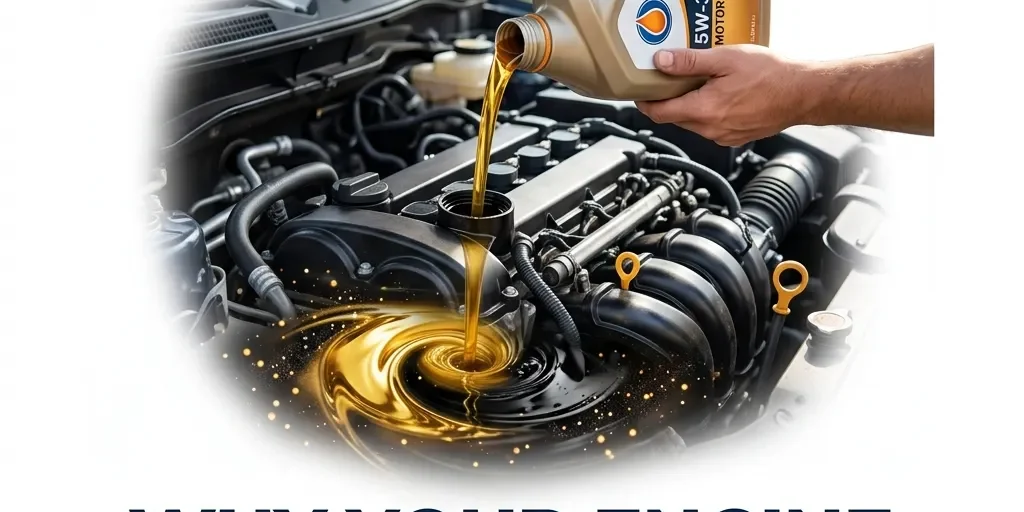
You changed your engine oil only a few days or weeks ago, checked the dipstick, and found the oil already dark or almost black. Naturally, the first thought is often, “Was the oil really changed?”
In many cases, there is no reason to panic. When engine oil turns black soon after an oil change, it can simply mean the new oil is cleaning soot, carbon, and old deposits from inside the engine. However, rapid darkening can also point to fuel contamination, sludge, poor combustion, worn engine components, or an incorrect service.
As mechanics working with vehicles in Dubai conditions, we look beyond oil colour. The smell, texture, oil level, engine behaviour, service history, oil specification, and filter condition provide a much clearer picture.
Is It Normal for Engine Oil to Turn Black After an Oil Change?
Yes. Engine oil can become dark relatively soon after an oil change without being damaged.
Modern engine oils contain detergents and dispersants. Their job is to clean contaminants from internal engine surfaces and keep tiny particles suspended in the oil until the next service.
This means dark oil can actually indicate that the lubricant is doing part of its job.
The important point is this:
Black engine oil does not automatically mean bad engine oil. Oil condition should be judged together with its level, consistency, smell, mileage, engine condition, and service history.
This distinction prevents many car owners from paying for unnecessary oil changes.
Why Does Fresh Engine Oil Turn Black So Quickly?
Several processes start as soon as fresh oil begins circulating through the engine.
The New Oil Is Cleaning Old Engine Deposits
Even after the old oil is drained, the inside of an engine is not perfectly clean.
Small amounts of old oil, carbon, varnish, and combustion deposits can remain inside oil galleries, cylinder-head areas, the oil cooler, turbocharger lines, and other internal passages.
Fresh oil contains cleaning additives that begin collecting these contaminants.
For example, we may inspect a vehicle that has gone through several delayed oil changes. The owner changes the oil and notices it becoming dark quickly. The new oil may not be the problem at all. It may simply be cleaning contamination left from previous maintenance.
This is why service history matters when diagnosing black oil.
The Engine Oil Filter Can Affect How Quickly Oil Becomes Dirty
One area many drivers overlook is the oil filter.
Replacing engine oil without replacing the filter is poor service practice in most routine oil changes. An old filter can already contain contaminants from the previous oil.
A low-quality, incorrect, damaged, or heavily restricted filter can also reduce effective filtration.
During a proper engine oil change in Dubai, we recommend checking that the correct filter specification is used along with the correct engine oil.
Changing expensive oil while using a poor filter defeats part of the purpose of the service.
Diesel Engines Can Turn Oil Black Very Quickly
Diesel owners are often surprised when clean oil becomes dark almost immediately.
Diesel combustion naturally produces more soot than most conventional petrol engines. Very small soot particles can enter the crankcase and become suspended in the oil.
As a result, diesel engine oil may look black very quickly while still performing normally.
The colour alone is therefore not a reliable indication that the oil needs replacement.
What matters more is whether the oil meets the manufacturer’s specification and whether there are additional symptoms such as excessive consumption, abnormal smoke, rough running, increased oil level, or warning lights.
Direct Injection and Turbo Engines Can Darken Oil Faster
Modern petrol engines are also becoming more demanding on lubricants.
Turbocharged and direct injection engines can expose oil to higher temperatures and different combustion conditions than older naturally aspirated engines.
Engines using technologies such as GDI, TFSI, TSI, EcoBoost, and similar systems may darken their oil faster than owners expect.
The turbocharger is particularly important because its bearings depend heavily on clean oil flowing at the correct pressure.
This is one reason we advise Dubai drivers not to judge oil only by colour or rely on a generic oil grade. The lubricant should meet the exact specification required by the vehicle manufacturer.
Dubai Driving Conditions Put Extra Stress on Engine Oil
Driving conditions in Dubai can be demanding for engine lubrication.
High temperatures, slow-moving traffic, long periods with the AC running, frequent short journeys, dust, and extended idling can all increase the workload on the engine oil.
A vehicle can spend a long time running while covering relatively few kilometres.
For example, two cars may each travel 5,000 km. One spends most of its time cruising on open roads, while the other spends hours in stop-and-go city traffic with the AC running.
Their engine oils may not experience the same level of stress.
This is why maintenance should consider both mileage and how the vehicle is actually used.
Can Fuel Make Engine Oil Turn Black?
Yes. Fuel contamination is different from normal oil darkening and should not be ignored.
Small amounts of unburned fuel can pass the piston rings and enter the crankcase. This is known as fuel dilution.
It may happen because of:
- Repeated short journeys.
- Leaking fuel injectors.
- Rich air-fuel mixtures.
- Misfires.
- Incorrect sensor readings.
- Incomplete combustion.
A strong petrol or diesel smell on the dipstick can be an important clue.
Fuel can reduce the oil’s viscosity, meaning the lubricant may become too thin to maintain a strong protective film between moving engine components.
If the oil level appears to be increasing rather than decreasing, fuel contamination should also be considered.
A Dirty Air Filter Can Contribute to Black Engine Oil
Dubai’s dusty environment makes the engine air filter especially important.
The filter prevents airborne dirt from entering the engine. If it is badly clogged, incorrectly fitted, damaged, or overdue for replacement, engine breathing and combustion can be affected.
Poor combustion can increase carbon formation.
More serious air filtration problems may also allow fine contaminants to enter the intake system.
During routine maintenance at Car Repair Auto Services, checking the condition of the air filter alongside the oil and oil filter can reveal problems that would be missed by simply draining and replacing the lubricant.
Excessive Blow-By Can Contaminate Engine Oil
Some combustion gases naturally pass around the piston rings. This is known as blow-by.
As an engine wears, the amount of blow-by can increase.
These gases carry combustion by-products into the crankcase, causing the oil to become contaminated more quickly.
Possible signs of excessive blow-by include:
- Rapid engine oil consumption.
- Blue exhaust smoke.
- Reduced engine performance.
- Excess crankcase pressure.
- Oil leaks that repeatedly return.
- Heavy contamination inside the engine.
A mechanic may recommend a compression test, leak-down test, or crankcase pressure inspection if internal engine wear is suspected.
What Does the PCV System Have to Do With Black Oil?
The Positive Crankcase Ventilation system helps remove gases, moisture, and vapours from the crankcase.
If the PCV valve or related breather hoses become restricted, contaminants may remain inside the engine for longer.
This can contribute to sludge formation and faster oil contamination.
A PCV problem may also cause rough idling, oil leaks, increased oil consumption, unusual whistling sounds, or crankcase pressure problems.
Because the symptoms overlap with several engine faults, the system should be tested rather than replaced based only on oil colour.
Black Oil, Milky Oil, and Fuel-Smelling Oil Are Not the Same Problem
Oil appearance can give useful clues, but it needs proper interpretation.
Dark or black but smooth oil: Often normal, especially after several hundred or thousand kilometres.
Black oil with a strong fuel smell: Possible fuel dilution or rich combustion.
Very thick, sticky oil: Possible oxidation, neglected servicing, or sludge formation.
Milky, creamy, or coffee-coloured oil: Possible coolant contamination.
Oil containing metallic particles: Possible internal engine wear.
These conditions should not be treated as the same problem.
Simply performing another oil change without finding the cause can hide a developing fault temporarily.
Why Does Engine Oil Turn Black Immediately After a Fresh Oil Change?
If the oil becomes black almost immediately, there are several possibilities.
The engine may contain heavy deposits from previous servicing. A diesel engine may naturally darken fresh oil very quickly. Some old oil may remain inside the lubrication system after draining.
Another possibility is that the engine was not fully drained during service, although complete removal of every drop of old oil is not possible during a normal oil change.
The more important question is whether other warning signs are present.
If the oil level is correct, the engine sounds normal, there are no warning lights, and the oil does not smell strongly of fuel or contain sludge, rapid colour change alone may not indicate a fault.
Should You Change Black Engine Oil Again?
Not simply because it is black.
Changing oil based only on colour can waste money and still leave the real problem undiagnosed.
Instead, consider:
- How long ago the oil was changed.
- How many kilometres the car has travelled.
- Whether the correct oil specification was used.
- Whether the oil filter was replaced.
- Whether the oil level is dropping or increasing.
- Whether the oil smells strongly of fuel.
- Whether the engine is producing smoke or abnormal noise.
- Whether any warning lights are present.
This gives a mechanic far more useful information than colour alone.
Should You Use an Engine Flush If the Oil Turns Black?
Not automatically.
An engine flush may be useful in certain situations, but it should not be treated as the standard solution for dark oil.
If an older or poorly maintained engine contains heavy sludge, aggressive cleaning can loosen deposits rapidly. Those deposits may then move through small oil passages.
For some engines, a mechanic may prefer controlled maintenance using the correct oil and shorter service intervals instead of an aggressive chemical flush.
At Car Repair Auto Services, the condition of the engine should be assessed before recommending an engine flush.
The safest solution depends on the vehicle’s mileage, maintenance history, sludge level, and internal engine condition.
How We Diagnose Black Engine Oil at a Workshop
A proper inspection should determine why the oil has changed rather than automatically recommending another service.
A mechanic may:
- Check the oil level and condition.
- Confirm the oil grade and manufacturer specification.
- Inspect the oil and air filters.
- Check for sludge under the oil filler cap.
- Inspect the PCV and crankcase ventilation system.
- Scan the engine control unit for fuel mixture or misfire faults.
- Check injectors if fuel dilution is suspected.
- Inspect for coolant contamination.
- Check for external oil leaks.
- Perform compression or leak-down testing if excessive blow-by is suspected.
This diagnostic approach can separate normal oil darkening from an actual engine problem.
When Should Black Engine Oil Concern You?
Black engine oil becomes more concerning when the colour change appears together with another abnormal symptom.
Arrange an inspection if you notice oil pressure warnings, knocking or ticking noises, excessive exhaust smoke, rapid oil loss, a strong fuel smell, overheating, sludge, metallic particles, or a milky appearance.
These signs can point to lubrication, combustion, cooling, or internal engine problems that should be investigated promptly.
How Can You Keep Engine Oil in Better Condition in Dubai?
You cannot prevent engine oil from becoming darker. That is normal.
You can, however, reduce harmful contamination and oil degradation.
Use the exact oil specification recommended for your engine rather than choosing viscosity alone. Fit a quality oil filter at every scheduled oil service, maintain the engine air filter, repair fuel-system faults promptly, and avoid unnecessary extended idling where possible.
It is also useful to check the engine oil level between services, especially on turbocharged, high-mileage, performance, and European vehicles.
Most importantly, follow the manufacturer’s maintenance guidance while considering whether your regular driving falls into its severe operating conditions category.
Why Correct Oil Specification Matters More Than Oil Colour
Two oils can look equally black while providing very different levels of protection.
Engine oil is engineered around viscosity, thermal stability, detergency, anti-wear protection, oxidation resistance, and manufacturer approvals.
For this reason, simply asking for “5W-30” or “5W-40” is not always enough.
Many modern Mercedes-Benz, BMW, Audi, Volkswagen, Porsche, Land Rover, Lexus, Toyota, Nissan, Ford, and other engines require specific manufacturer approvals.
Using the correct approved lubricant is more important than trying to keep the oil looking golden.
Get Your Engine Oil Checked in Dubai
If your engine oil turns black shortly after an oil change, do not assume the engine is damaged and do not assume you automatically need another oil change.
Start by checking the oil level, smell, consistency, service history, filter condition, and how the vehicle is running.
At Car Repair Auto Services in Dubai, we can inspect the engine oil together with the lubrication, filtration, crankcase ventilation, and engine management systems when required. The goal is to determine whether the dark oil is normal or whether another fault is contaminating it.
Finding the real cause early can prevent unnecessary servicing and help protect expensive engine components.
Frequently Asked Questions
Why did my engine oil turn black after only a few days?
Fresh oil can clean soot and deposits left inside the engine, causing it to darken quickly. Diesel engines and some direct injection engines can also turn oil black very fast. If there are no other symptoms, the colour alone does not prove that the oil is bad.
Does black engine oil mean I need another oil change?
Not necessarily. Oil should be changed according to the correct maintenance schedule and its actual condition, not simply because it looks dark. Check for other warning signs such as fuel smell, sludge, low oil level, metallic particles, or engine noise.
Why is diesel engine oil black immediately after an oil change?
Diesel combustion produces soot that becomes suspended in the engine oil. Fresh diesel oil can therefore become dark very quickly while still providing proper lubrication.
Can the wrong oil make engine oil turn black faster?
Incorrect or low-quality oil can perform poorly under heat and engine load. More importantly, oil that does not meet the manufacturer’s required specification may not provide the correct protection, even if its viscosity appears suitable.
Is black engine oil safe to drive with?
Dark oil by itself is usually not an emergency. However, stop driving and arrange professional assistance if the oil pressure warning light appears, the engine knocks, the oil becomes milky, the engine overheats, or the vehicle loses oil rapidly.