A small accident can leave your Haval with what looks like a simple bumper dent. But once we inspect accident-damaged vehicles in a workshop, we often find that the visible dent is only part of the problem. Clips can break, sensor brackets can move, paint can crack, and damage may be hidden behind the bumper cover.
Professional Haval Bumper Dent Repair is therefore not just about pushing the plastic back into shape. The bumper needs to be inspected, reshaped or repaired correctly, refinished if required, aligned with surrounding panels, and checked for electronic or structural problems before the vehicle goes back on the road.
This guide explains how the process works and when repairing your Haval bumper makes more sense than replacing it.
What Happens to a Haval Bumper During an Accident?
Modern Haval bumpers are designed to absorb and manage minor impacts while protecting components behind them. The visible bumper cover is normally flexible, which means it can bend or dent without immediately breaking apart.
That flexibility can be misleading.
A low-speed impact in a Dubai parking area might leave only a dent on the outside while damaging a mounting clip or sensor holder behind it. A stronger collision can also affect the energy absorber, reinforcement structure, lights, radiator area, or nearby body panels.
This is why we never recommend judging accident damage only by what you can see from outside.
Can a Dented Haval Bumper Be Repaired?
Yes, many Haval bumper dents can be repaired if the plastic is not severely torn, stretched, or structurally damaged. A technician can often reshape the bumper, repair minor cracks, restore damaged mounting areas, prepare the surface, and repaint it.
Replacement becomes more practical when the bumper has major tears, badly distorted plastic, extensive broken mounting points, or damage around important sensors.
The correct choice depends on the condition of the complete bumper, not simply the size of the visible dent.
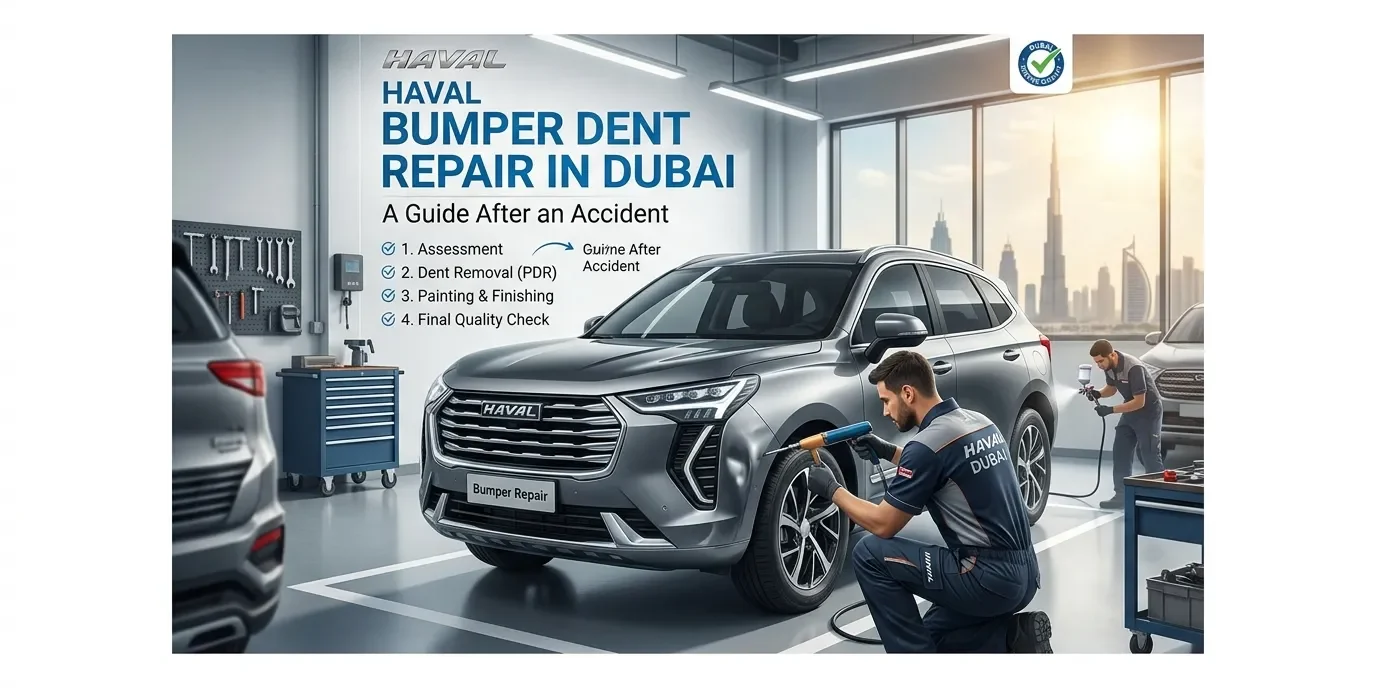
How Haval Bumper Dent Repair Works
A proper repair follows several stages. At Car Repair Auto Services, the aim is to identify the actual extent of the accident damage before deciding which repair method makes sense.
1. Initial Accident Damage Inspection
The first step is examining the bumper from different angles.
We look for dents, scratches, paint cracks, broken edges, abnormal panel gaps and signs that the bumper has shifted from its normal position.
The technician should also check whether the bumper sits evenly against the fenders, headlights, tail lights, grille and other surrounding panels.
This alignment check is important. A bumper that looks straight from the front can still have damaged side retainers or brackets.
2. Checking What Is Behind the Bumper
One area many quick repairs overlook is hidden damage.
If the impact is significant enough, removing or loosening the bumper may be necessary to inspect components behind it. This allows technicians to check mounting tabs, brackets, absorbers and the reinforcement area.
On a front impact, nearby cooling components should also be inspected when the collision force suggests they may have been affected.
This extra inspection can prevent a cosmetic repair from hiding a mechanical problem.
3. Checking Parking Sensors, Cameras and Driver Assistance Systems
Many modern Haval vehicles use electronic equipment around the front and rear bumper areas. Depending on the model and specification, this can include parking sensors, cameras and driver assistance equipment.
A sensor does not have to be visibly broken to cause problems.
Its bracket may move slightly during an accident, or the bumper may become distorted around its mounting position. Drivers may then notice false parking warnings, constant beeping, missing alerts or an unusual camera view.
For this reason, electronic systems around the damaged area should be checked before and after the bumper repair.
4. Reshaping the Dent
If the plastic is suitable for repair, the technician gradually returns the damaged section to its original contour.
Controlled heat may be used to make certain types of bumper plastic easier to reshape. Pressure is then applied carefully from the correct direction.
Temperature control matters.
Applying uncontrolled heat can damage the paint, distort the bumper or weaken the repair area. Trying to fix a dent at home with boiling water or a heat gun can therefore create more work for the body shop.
The objective is not simply to make the dent disappear. The original bumper profile should match the surrounding body lines.
Is Haval Bumper Dent Repair the Same as Paintless Dent Repair?
Not necessarily. Paintless dent repair, commonly called PDR, is mainly associated with dents in metal body panels where the original paint remains intact. Plastic bumper repair uses different techniques because bumper covers behave differently from steel or aluminium panels.
A shallow plastic bumper dent with undamaged paint may sometimes be reshaped without repainting.
However, if the paint is cracked, scratched or stretched, surface refinishing will normally be required after the shape has been restored.
Understanding this difference helps Haval owners avoid expecting a metal-panel PDR process for every bumper dent.
5. Repairing Cracks and Damaged Mounting Points
A bumper can sometimes be saved even when the accident creates a small crack.
Depending on the location and severity, professional plastic repair techniques can reinforce and repair the damaged section.
Mounting tabs require particular attention.
If these points are ignored, the bumper may look good after painting but develop gaps, vibration or loose edges later. The bumper should remain securely attached and aligned after the repair, not simply look attractive in photographs.
If several mounting areas are destroyed or the plastic is severely torn, replacement may provide a more reliable result.
6. Surface Preparation Before Painting
Good bumper painting starts long before the spray gun is used.
The repair area is cleaned, levelled and sanded. Suitable products for automotive plastic are then used to prepare the surface.
Poor preparation is one reason repaired bumper paint can later peel, crack or show uneven patches.
Dubai’s strong sunlight and high temperatures make paint preparation especially important. A repair that looks acceptable when the vehicle leaves the workshop should also remain stable after repeated exposure to heat.
7. Paint Matching the Haval Bumper
Colour matching is one of the biggest differences between an average bumper repair and a professional one.
Simply choosing paint based on a colour name is not enough. Age, sunlight exposure, previous repairs and variations in the original finish can affect how a colour appears on the vehicle.
The technician needs to compare the repaired bumper with adjacent panels under suitable lighting and adjust the finish when necessary.
Metallic and pearl colours can be especially sensitive to application technique. Even the correct paint formula may appear different if the metallic particles or coating are applied incorrectly.
A quality Haval bumper repair in Dubai should therefore restore both the bumper shape and the visual consistency of the vehicle.
8. Reassembly and Panel Gap Adjustment
After painting and curing, the bumper is refitted.
At this stage we look closely at panel gaps around the headlights, grille, fenders or rear body panels. Clips and fasteners need to hold the bumper properly without forcing it into position.
Uneven gaps can indicate a damaged bracket, incorrectly installed clip or hidden accident damage.
This step is easy to overlook because customers naturally focus on paint quality. From a technician’s point of view, correct fitment is just as important.
9. Final Sensor and Function Check
Once everything is installed, the repair should not be considered finished until the affected systems are checked.
Parking sensors should respond correctly. Cameras should provide a normal image. Warning lights or stored faults related to the impact area should be investigated.
Where a vehicle’s driver assistance equipment has been disturbed by the collision or repair, the workshop should determine whether additional calibration or specialist checks are required.
The exact requirement depends on the Haval model, equipment and type of accident damage.
When Should a Haval Bumper Be Replaced Instead of Repaired?
Repairing the original bumper is often practical when the damage is limited. Replacement becomes the better choice when repair would compromise fit, appearance or reliability.
A workshop may recommend replacement when:
- The bumper has a large tear or missing plastic.
- Several mounting points have broken away.
- The bumper is badly stretched or permanently distorted.
- The area around a sensor mounting point cannot be restored accurately.
- Previous poor-quality repairs have weakened the same section.
- Internal accident damage makes proper bumper alignment impossible without additional parts.
The cheapest initial option is not always the most economical one.
Repeatedly repairing a bumper that cannot hold its correct shape can eventually cost more than replacing it properly once.
How Long Does Haval Bumper Dent Repair Take?
A straightforward Haval bumper dent repair may take around one to two working days, while more complex accident damage can take longer.
Repair time depends on the depth of the dent, cracks, paintwork, broken clips, sensor issues and whether replacement parts are required.
A simple reshaping job is very different from an accident involving the bumper, brackets, paint, sensors and adjacent panels.
Insurance approval and parts availability can also affect the final turnaround time.
What Affects Haval Bumper Repair Cost in Dubai?
There is no reliable single price for every Haval bumper repair.
The final cost depends on the amount of labour and material required. Model differences also matter.
Important cost factors include:
- Depth and location of the dent.
- Amount of paint damage.
- Cracks or torn plastic.
- Broken mounting tabs and brackets.
- Parking sensor or camera damage.
- Requirement for complete bumper repainting.
- Damage to surrounding panels.
- Repair versus bumper replacement.
- Genuine, OEM-equivalent or aftermarket replacement parts, where applicable.
A useful quotation should explain what is being repaired rather than giving you only one total figure.
If one garage quotes much less than another, compare the work included before deciding.
A Realistic Example From a Dubai Parking Accident
Imagine a Haval Jolion reversing into a concrete pillar in an underground parking area.
From a few metres away, the problem appears to be one dent and a paint scrape on the rear corner.
During inspection, however, the technician finds that the bumper edge has moved away from the quarter panel and one parking sensor sits at a slightly different angle.
In this situation, simply filling and painting the visible damage would not be enough.
The better repair would involve checking the bumper mounting system, restoring its shape, repairing or replacing the damaged retainer, preparing and painting the affected section, then confirming that the parking sensor operates normally.
This is the difference between covering accident damage and actually repairing it.
How Can You Tell If a Bumper Repair Was Done Properly?
Before collecting your Haval, inspect the vehicle in good lighting.
Check that:
- The repaired area follows the original bumper shape.
- Paint colour and gloss match surrounding areas.
- There are no obvious sanding marks or rough edges.
- The bumper sits evenly against surrounding panels.
- Clips and edges do not feel loose.
- Parking sensors operate normally.
- Camera views look correct.
- No relevant warning lights remain on the dashboard.
Do not judge the job only from the centre of the bumper. Look closely at the corners, panel gaps and sensor positions.
These areas often reveal poor accident repairs.
Mistakes to Avoid After a Haval Bumper Accident
One common mistake is waiting too long because the vehicle still drives normally.
Another is choosing a repair only because it is the cheapest quote.
A low-cost cosmetic repair may ignore damaged clips or electronics behind the bumper. Likewise, replacing an entire bumper without first checking whether the original can be repaired can create unnecessary expense.
The best approach is an inspection that gives you a clear explanation of the damage and your repair options.
What Should You Do After a Minor Accident in Dubai?
After an accident, make safety your first priority and follow the applicable Dubai accident-reporting procedure.
Dubai Police provides digital services and lists 999 for emergencies and 901 for non-emergency inquiries.
Once the required accident documentation is handled, have the vehicle inspected before authorising cosmetic repairs.
Take photographs of the bumper, nearby panels and accident area. These can also be useful when dealing with your insurer or comparing the vehicle’s condition before and after repairs.
Why Choose Car Repair Auto Services for Haval Bumper Repair?
A professional bumper repair should solve the complete problem, not simply hide the dent.
At Car Repair Auto Services, Haval accident damage can be approached as a complete body repair job. That means looking at bumper shape, mounting points, panel alignment, paint finish and relevant sensors before the vehicle is considered ready.
We believe repair makes sense when the original bumper can be restored properly. When the damage is too severe, replacement should be discussed clearly rather than attempting a repair that may not last.
This repair-first, inspect-carefully approach helps Haval owners make a practical decision based on the condition of their vehicle.
Frequently Asked Questions
Can a plastic Haval bumper dent be repaired?
Yes. Many plastic bumper dents can be reshaped when the bumper has not been severely torn or stretched. Paint repair may also be required if the impact cracked or scratched the finish.
Does a bumper accident affect parking sensors?
It can. The impact may damage a sensor, connector or mounting bracket, or simply change the sensor’s position. The system should be checked if you notice unusual beeping or missing warnings after an accident.
Is it better to repair or replace a Haval bumper?
Repair is usually worthwhile for repairable dents, scratches and limited plastic damage. Replacement may be more appropriate when the bumper is badly torn, distorted, has extensive broken mounting areas or cannot safely hold its original shape.
Can I drive my Haval with a dented bumper?
A small cosmetic dent may not stop the vehicle from driving, but accident damage should still be inspected. Do not continue driving if the bumper is loose, contacting a tyre, obstructing lights, leaking fluids are visible, or the vehicle shows a serious warning after the collision.
Will the repaired bumper match the original paint?
A professional body shop can produce a close colour and finish match through correct surface preparation and paint matching. The technician should also compare the bumper with surrounding panels before completing the job.
Get Your Haval Bumper Checked Before the Damage Gets Worse
A Haval bumper dent after an accident may be cosmetic, but it can also hide broken mounting points, damaged brackets or electronic problems.
The safest approach is to inspect the complete affected area first, decide whether repair or replacement makes more sense, restore the bumper correctly, and verify its fit and functions before handing the vehicle back.
If your Haval H6, Jolion, H6 GT, Dargo or another Haval model has bumper damage after an accident in Dubai, contact Car Repair Auto Services for a professional inspection and repair recommendation.
A proper repair should make the bumper look right, fit right and function correctly, not simply make the dent harder to see.