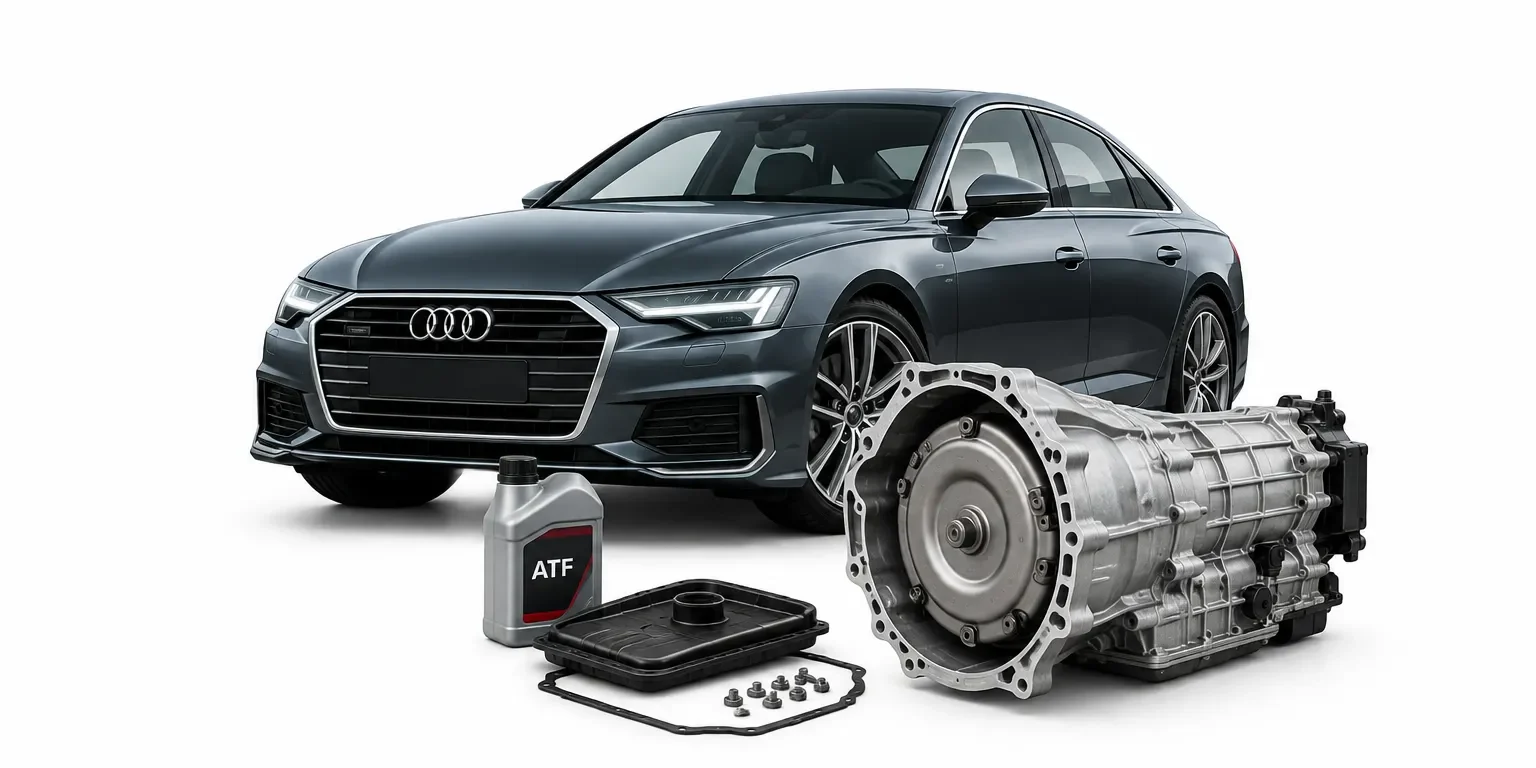
Your Audi A6 can feel perfectly smooth one day and then suddenly hesitate when selecting Drive, jerk between gears, or show a transmission warning the next morning. These symptoms should not be treated as normal wear, especially in Dubai where heat and heavy traffic can put extra stress on a gearbox.
If you are looking for Audi A6 Transmission Repair in Dubai, the first step should not be replacing the transmission. The real question is what caused the problem. In this guide, we will explain the warning signs, common causes, professional diagnostic process, repair options, expected cost factors, and when it is no longer safe to keep driving.
What Makes Audi A6 Transmission Problems Different?
The Audi A6 uses a sophisticated drivetrain in which mechanical components, hydraulic pressure, electronic controls, sensors, software, and transmission fluid all have to work together.
That means a shifting problem does not automatically mean the entire gearbox has failed. A faulty sensor, wiring problem, fluid issue, solenoid, valve body, mechatronic unit, or software calibration problem can produce symptoms that feel similar to serious internal damage.
At Car Repair Auto Services, the sensible approach is to identify the root cause before recommending a major gearbox repair or replacement. This is particularly important with European vehicles because replacing an expensive component without confirming the fault can create unnecessary costs.
What Are the Common Audi A6 Transmission Problems?
The first warning signs are often noticeable while driving. Owners commonly describe a change in how the car engages, accelerates, or shifts.
Watch for these symptoms:
Delayed Gear Engagement
If you move the selector into Drive or Reverse and the Audi A6 takes noticeably longer than normal to respond, something may be wrong.
Delayed engagement can be associated with transmission fluid problems, hydraulic pressure, solenoids, electronic controls, or internal wear. The exact cause cannot be confirmed from the symptom alone.
Jerking Gear Changes
An Audi A6 should normally change gears smoothly. A noticeable jolt during an upshift or downshift can indicate a problem with shift control, fluid pressure, sensors, solenoids, clutch operation, or transmission adaptation.
If the problem becomes more noticeable when the transmission is hot, tell the technician. That detail can help narrow down the fault.
Transmission Slipping
Transmission slipping happens when engine RPM rises but the vehicle does not accelerate as expected.
This can be associated with clutch pack wear, hydraulic pressure problems, fluid issues, or internal transmission damage. Continuing to drive while severe slipping is occurring can increase internal wear.
Shuddering During Acceleration
A vibration or shudder while accelerating can be difficult to diagnose because not every shudder comes from the gearbox.
The transmission, torque converter, engine, drivetrain mounts, ignition system, or other components can sometimes produce similar sensations. This is why a proper road test and diagnostic process matter.
Unusual Transmission Noise
Whining, humming, grinding, buzzing, or clunking sounds should not be ignored.
Noise that changes with vehicle speed, engine RPM, gear selection, or load can provide useful diagnostic clues. Bearings, gears, lubrication problems, and other mechanical components may need inspection.
Transmission Fluid Leak
A transmission fluid leak is one of the problems you should address quickly.
Low fluid can affect lubrication, cooling, and hydraulic operation. A small leak may appear manageable at first, but continued fluid loss can eventually contribute to much more serious transmission damage.
Transmission Warning Lights
A warning light or transmission message does not automatically mean that the gearbox itself needs replacement.
The vehicle may have detected an issue with a sensor, solenoid, transmission control module, wiring, software, or another related system. A proper diagnostic scan should be performed before expensive repairs are approved.
Difficulty Selecting Gears
Difficulty selecting Drive, Reverse, or another gear can point to an electronic, hydraulic, mechanical, or control problem.
If the vehicle refuses to engage a gear or suddenly loses drive, avoid repeatedly forcing the selector. Have the vehicle inspected instead.
Why Does Dubai Driving Put Extra Stress on an Audi A6 Transmission?
Dubai creates a combination of conditions that can be demanding for a transmission.
High ambient temperatures increase thermal stress. Heavy traffic creates repeated acceleration and braking. Long periods of idling followed by sudden acceleration can also increase the workload placed on the drivetrain.
Stop and go driving is particularly relevant because the transmission repeatedly changes between low speed operation and acceleration. If the cooling system or transmission fluid is already in poor condition, excessive heat can make an existing problem more noticeable.
For Audi owners in Dubai, transmission maintenance should therefore be considered together with the vehicle’s cooling system and overall service condition.
What Causes Audi A6 Transmission Problems?
There is rarely one universal cause. The correct diagnosis depends on the transmission type, model year, mileage, service history, symptoms, and diagnostic data.
Common causes include:
Old or Incorrect Transmission Fluid
Transmission fluid does more than lubricate components. It also helps with hydraulic operation and heat management.
Old, contaminated, incorrect, or insufficient fluid can affect shifting performance. Using the correct specification is especially important on sophisticated Audi transmission systems.
Mechatronic Problems
The mechatronic system combines electronic and hydraulic control functions. A problem within this system can affect gear selection, shift timing, and hydraulic pressure.
Mechatronic repair may be possible in some cases, while other faults may require replacement or additional adaptation and calibration.
Valve Body and Solenoid Faults
The valve body controls hydraulic fluid flow through the transmission. Solenoids help control pressure and shifting functions.
A problem in this area can create harsh shifts, delayed engagement, slipping sensations, or inconsistent transmission behavior.
Clutch Pack Wear
Internal clutch packs are exposed to heat and friction. Over time, wear can affect how efficiently the transmission transfers engine power.
Severe clutch wear can contribute to slipping, poor engagement, and loss of drive.
Torque Converter Problems
Where an Audi A6 transmission uses a torque converter, problems with the converter can contribute to shuddering, vibration, unusual noise, or poor engagement.
The technician needs to determine whether the vibration is actually transmission related before replacing expensive components.
Sensors and Wiring
Modern Audi transmissions depend heavily on electronic information.
A faulty sensor, damaged wiring, poor connection, or electrical fault can create transmission symptoms even when the major mechanical components are still usable.
Software Calibration
Transmission control software influences shift behavior and adaptation.
In certain cases, a software update, adaptation procedure, or calibration may be part of the solution. However, software should not be treated as a universal fix. The vehicle still needs proper diagnosis.
How Is Audi A6 Transmission Repair Diagnosed?
This is where a professional workshop can make a major difference.
A good Audi A6 transmission repair in Dubai should begin with diagnosis rather than a replacement quote.
At Car Repair Auto Services, the inspection process can involve several stages.
1. Understand the Driver’s Complaint
The technician should first ask when the problem occurs.
Does it happen when the car is cold? Does it appear after driving for 30 minutes? Does it happen during reversing? Does the transmission jerk between particular gears? Does the issue appear only during acceleration?
These details can be extremely useful.
2. Perform a Road Test
A road test allows the technician to reproduce the symptom under controlled conditions.
The technician can observe gear changes, RPM behavior, engagement time, shuddering, noise, acceleration response, and other driving characteristics.
3. Perform an Audi Diagnostic Scan
A professional diagnostic scan can identify stored fault codes and provide additional transmission data.
The important point is that reading a code is only the beginning. The technician must interpret the information and compare it with the vehicle’s actual behavior.
4. Inspect Transmission Fluid
The fluid should be checked according to the correct procedure for the particular transmission.
The technician may look for contamination, abnormal condition, evidence of overheating, or signs associated with a leak.
5. Perform a Leak Inspection
The transmission housing, seals, connections, cooler lines, and surrounding areas should be checked for fluid leakage.
Finding the leak source matters because simply topping up fluid without fixing the leak does not solve the underlying problem.
6. Perform Electrical Testing
If diagnostic information suggests an electronic fault, sensors, wiring, connectors, and related components may need testing.
This can prevent a common mistake, which is replacing an expensive mechanical component when the actual problem is electrical.
7. Complete a Mechanical Assessment
If electronic and external causes do not explain the symptoms, mechanical testing may be required.
This can include checking hydraulic operation and investigating internal components such as clutch packs, gears, bearings, or other transmission components.
Why Root Cause Diagnosis Matters
One of the biggest mistakes an Audi A6 owner can make is approving a complete transmission replacement simply because the vehicle is shifting badly.
A transmission symptom does not tell you which component has failed.
For example, harsh shifting could be related to fluid condition, a solenoid, valve body, sensor, wiring, software adaptation, or internal wear. Each possibility requires a different repair strategy.
Car Repair Auto Services focuses on identifying the actual cause before recommending major transmission work. This approach can help prevent unnecessary replacement and gives the owner a clearer understanding of what they are paying for.
What Does Audi A6 Transmission Repair Include?
The repair depends entirely on the confirmed fault.
Transmission Fluid Service
If the fluid condition or service requirement is the issue, the correct fluid and service procedure may be enough to restore proper operation.
The fluid specification should always match the particular transmission.
Transmission Leak Repair
A leaking seal, gasket, connection, cooler line, or related component may need repair or replacement.
The transmission should then be checked again to confirm that fluid loss has stopped.
Solenoid or Valve Body Repair
If hydraulic control is affected, the valve body and solenoids may require detailed inspection and repair.
This can be considerably different from replacing the entire gearbox.
Mechatronic Repair
A faulty mechatronic unit may sometimes be repaired or replaced depending on the specific problem and transmission design.
Adaptation or software calibration may also be required after certain repairs.
Electrical Repair
Faulty sensors, wiring, connectors, or control components may sometimes be repaired without opening the transmission.
This is one reason proper electrical testing is important.
Internal Gearbox Repair
If mechanical damage is confirmed, the transmission may need to be opened for inspection.
Depending on the condition, repairs can involve clutch packs, gears, bearings, seals, or other internal components.
Transmission Replacement
If internal damage is extensive, replacement with a suitable rebuilt or replacement transmission may make more financial sense.
However, the replacement decision should come after diagnosis and comparison of the available repair options.
When Should You Stop Driving Your Audi A6?
Not every transmission symptom means you need a tow truck immediately, but certain signs should be treated seriously.
Avoid continued driving if your Audi A6 has:
- Severe transmission slipping
- Grinding or serious mechanical noise
- Significant transmission fluid leakage
- Sudden loss of drive
- Severe overheating symptoms
- Repeated failure to engage Drive or Reverse
- A transmission warning combined with abnormal shifting
- A strong burning smell coming from the drivetrain
If the car still moves normally but has a minor shifting concern, drive only as necessary and arrange an inspection as soon as possible.
The longer a transmission operates while slipping, overheating, or running with inadequate fluid, the greater the chance of additional damage.
How Much Does Audi A6 Transmission Repair Cost in Dubai?
There is no reliable single price for Audi A6 transmission repair Dubai cost because the repair can range from a relatively small electrical or fluid related job to a complete transmission rebuild or replacement.
The main cost factors include:
- Audi A6 model year and transmission type
- Cause of the failure
- Diagnostic complexity
- Labor requirements
- Required replacement parts
- OEM or aftermarket component choice
- Mechatronic or valve body work
- Internal gearbox damage
- Repair versus rebuilt transmission
- Complete transmission replacement
For example, repairing a wiring fault is a completely different job from removing and rebuilding a transmission.
That is why a workshop that gives a major repair quote without properly inspecting the vehicle should be approached carefully.
Repair or Transmission Replacement: Which Is Better?
There is no universal answer.
If the problem is limited to a sensor, solenoid, fluid leak, valve body, or another serviceable component, repairing the affected area may make more sense.
If the transmission has extensive internal damage, a rebuilt or replacement transmission may provide better value.
The decision should consider the vehicle’s mileage, overall condition, transmission damage, parts availability, warranty, and expected future reliability.
At Car Repair Auto Services, Audi owners can discuss these options after the vehicle has been properly inspected rather than making the decision based only on a symptom.
How Can You Prevent Audi A6 Transmission Problems?
Preventive maintenance cannot guarantee that a transmission will never fail, but it can reduce avoidable problems.
Follow the manufacturer’s service requirements for your specific Audi A6 and transmission. Use the correct transmission fluid and do not ignore leaks or unusual shifting.
It is also worth paying attention to how the vehicle behaves after long periods of driving in Dubai traffic. If shifting becomes noticeably worse once the transmission is hot, mention this to your technician because the temperature related behavior can provide an important diagnostic clue.
Regular inspections should also include the cooling system because excessive heat is not something a transmission should be expected to tolerate indefinitely.
What Should You Ask a Workshop Before Approving Audi Transmission Repair?
Before approving a major gearbox repair, ask a few simple questions.
What exactly failed?
A professional technician should be able to explain the suspected fault in understandable terms.
Was the fault confirmed through diagnostics?
Ask whether the recommendation is based on diagnostic data, road testing, fluid inspection, electrical testing, or mechanical assessment.
Does the transmission actually need replacement?
A replacement should not automatically be the first recommendation.
What parts will be used?
Ask whether the parts are genuine, OEM, aftermarket, or rebuilt.
Will calibration or adaptation be required after repair?
Certain electronic and transmission repairs may require additional procedures after installation.
What warranty is provided?
This is especially important for rebuilt or replacement transmission units.
These questions help you compare workshops based on technical quality instead of price alone.
Why Choose Car Repair Auto Services for Audi Repair in Dubai?
An Audi A6 transmission requires more than a generic gearbox inspection. It needs technicians who understand the interaction between mechanical, hydraulic, electronic, and software systems.
Car Repair Auto Services provides a practical option for Audi and other European vehicle owners in Dubai who want proper inspection before major repair decisions.
The workshop can support issues involving transmission diagnostics, gearbox repair, electrical faults, cooling systems, preventive maintenance, and other related vehicle problems. This is useful because transmission symptoms can sometimes overlap with engine, electrical, or drivetrain problems.
For Audi owners in Al Quoz Dubai, having a European vehicle workshop that can inspect the complete vehicle can make the diagnostic process more straightforward.
You can also explore the Car Repair Auto Services website for information about available repair and maintenance services.
What Is the Most Important Audi A6 Transmission Warning?
The most important warning is not always a dashboard light. A clear change in how the vehicle drives should also be taken seriously.
Delayed engagement, slipping, repeated jerking, shuddering, unusual noise, fluid leakage, and difficulty selecting gears can all justify an inspection.
The earlier the root cause is identified, the more options you may have for repair. Waiting until the vehicle completely loses drive can turn a smaller problem into a much larger transmission repair.
FAQs About Audi A6 Transmission Repair in Dubai
What are the most common Audi A6 transmission problems?
The most common warning signs include delayed gear engagement, jerking gear changes, transmission slipping, unusual transmission noise, fluid leaks, warning lights, shuddering during acceleration, and difficulty selecting gears. These symptoms can have different causes, so professional diagnosis is important.
How much does Audi A6 transmission repair cost in Dubai?
Audi A6 transmission repair costs vary depending on the model year, transmission type, fault, parts, labor, and whether the gearbox needs component repair, rebuilding, or replacement. A diagnostic inspection is the best way to establish an accurate repair estimate.
Can I drive my Audi A6 with a transmission problem?
It depends on the severity. Minor symptoms may allow limited driving to a workshop, but severe slipping, grinding, significant fluid leakage, overheating, or loss of drive should be treated as urgent. Continued driving can increase internal transmission damage.
What causes an Audi A6 to jerk when changing gears?
Jerking can be caused by transmission fluid problems, hydraulic pressure issues, solenoids, valve body faults, sensors, software calibration, clutch wear, or internal transmission damage. Engine and drivetrain problems can sometimes produce similar symptoms, so a complete diagnostic assessment is recommended.
Does an Audi A6 transmission need special diagnostic equipment?
Yes. Modern Audi vehicles use sophisticated electronic control systems, so professional Audi diagnostic systems can provide important fault codes and live data. However, the scan itself is not enough. The results need to be interpreted alongside road testing and mechanical inspection.
Is transmission replacement always necessary?
No. A transmission should not automatically be replaced because of a shifting problem. Depending on the diagnosis, the actual repair may involve fluid service, a leak repair, electrical work, sensors, solenoids, valve body components, mechatronic repair, software calibration, or selected internal components.
How can Dubai’s climate affect an Audi A6 transmission?
High temperatures, heavy traffic, frequent stop and go driving, and extended idling can increase thermal stress. Maintaining the correct transmission fluid, cooling system, and service schedule can help reduce unnecessary transmission stress.
Final Thoughts
Audi A6 transmission problems should never be diagnosed by symptoms alone. A delayed shift could be fluid related. A warning light could be electrical. A shudder could come from the torque converter or another drivetrain component. Severe slipping could indicate internal clutch wear.
The important step is finding the root cause before expensive parts are replaced.
If your Audi A6 is showing delayed gear engagement, jerking, slipping, unusual noise, fluid leakage, warning lights, or difficulty selecting gears, arrange a professional inspection before the problem becomes more serious.
Car Repair Auto Services can help Audi owners in Dubai with transmission diagnosis, European vehicle repair, electrical testing, gearbox inspection, and related maintenance. A proper diagnosis gives you something valuable before spending money on repairs: a clear understanding of what your Audi actually needs.