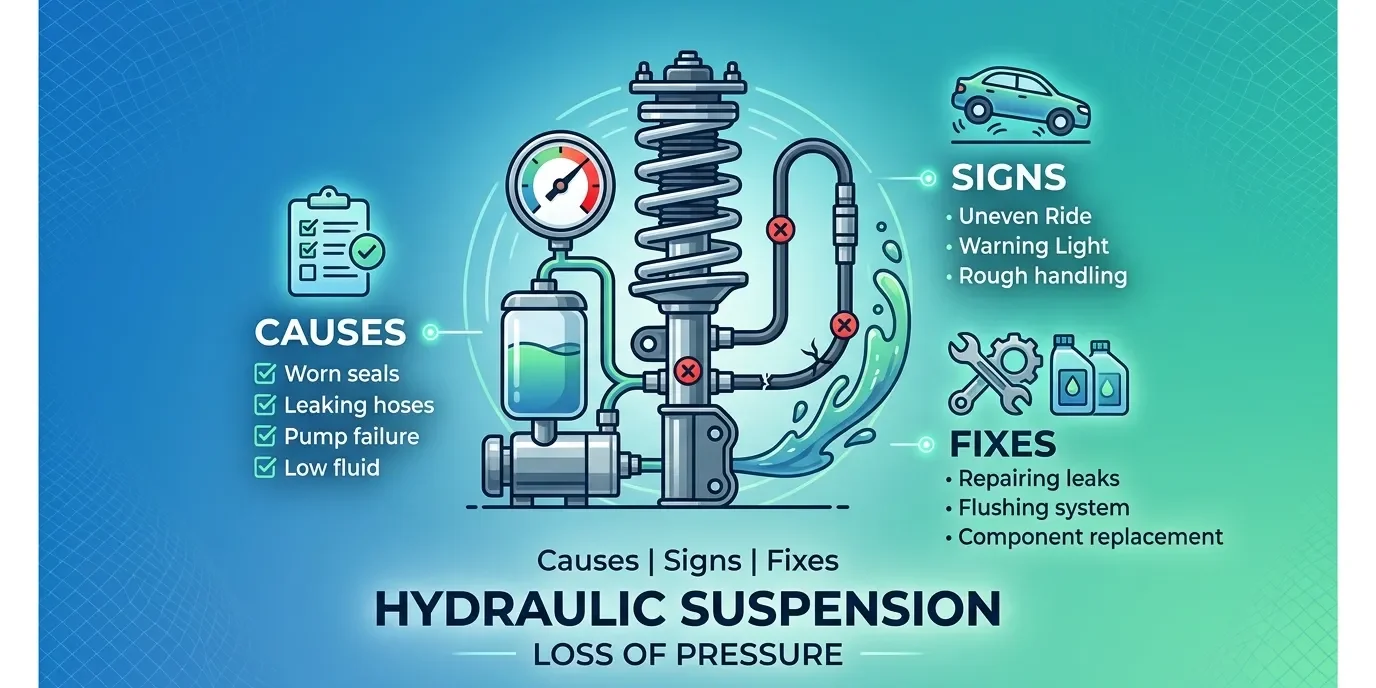
You park your car overnight and everything looks normal. The next morning, one corner is sitting lower than the others, the ride feels unusually hard, or a suspension warning appears on the dashboard. These symptoms often point to one problem: your hydraulic suspension is losing pressure.
Hydraulic suspension systems are designed to maintain controlled pressure so the vehicle stays level, comfortable, and stable. When that pressure starts escaping, the problem can come from a small seal leak, a damaged hydraulic line, a weak pump, or an internal valve fault.
In this guide, we explain why hydraulic suspension loses pressure, how to recognise the early warning signs, how the fault is diagnosed, and what usually needs to be repaired.
What Does Hydraulic Suspension Pressure Loss Mean?
Hydraulic suspension pressure loss means the system cannot maintain the hydraulic force required to control the vehicle’s ride height and suspension movement.
A hydraulic suspension system normally uses a pump, hydraulic fluid, pressure lines, valves, accumulators, sensors, and hydraulic struts or cylinders. These components work together to maintain the correct ride height and control body movement.
When fluid escapes or pressure leaks internally between components, the system has to work harder to maintain the required pressure. Eventually, the vehicle may sag, ride poorly, or display a suspension warning.
This is different from a basic shock absorber problem because hydraulic suspension is an interconnected pressure system. A fault in one component can affect the performance of several other parts.
Why Does Hydraulic Suspension Lose Pressure?
The most common reason hydraulic suspension loses pressure is a hydraulic fluid leak. However, not every pressure problem produces an obvious puddle underneath the car.
Some faults allow pressure to escape internally without losing a noticeable amount of fluid.
The most common causes include:
- Leaking hydraulic strut seals
- Damaged high pressure hoses or pipes
- Weak hydraulic suspension pump
- Failed or discharged accumulators
- Internal valve block leakage
- Low hydraulic fluid level
- Contaminated or incorrect suspension fluid
- Faulty pressure sensors
- Damaged ride height sensors
- Air trapped inside the hydraulic system
The correct repair depends on identifying which component is actually losing or failing to generate pressure.
1. Leaking Hydraulic Strut or Cylinder Seals
Hydraulic struts contain seals that prevent high pressure fluid from escaping around the moving piston.
As these seals age, they can harden, crack, or wear. Once the seal no longer holds pressure properly, fluid can begin leaking externally or bypassing internally inside the strut.
Typical symptoms include a vehicle that gradually drops at one corner after parking.
You may also notice oily residue around the hydraulic strut.
Dubai’s heat can place additional stress on rubber seals and hoses, which makes regular inspection especially important for older hydraulic suspension systems.
2. Hydraulic Suspension Line Leaks
Hydraulic lines carry pressurised fluid between the pump, valve blocks, accumulators, and suspension units.
A small crack or weak fitting can release pressure surprisingly quickly.
Leaks commonly develop around:
- Hose connections
- Crimped fittings
- Flexible hose sections
- Metal hydraulic pipes
- Areas exposed to heat or movement
A very small leak may only leave dampness rather than a large puddle.
That is why a visual inspection should include the entire hydraulic circuit instead of only checking the ground beneath the vehicle.
3. Weak Hydraulic Suspension Pump
The hydraulic pump generates the pressure needed for the suspension to operate.
A worn pump may still work, but it may take too long to build pressure or fail to reach the pressure requested by the suspension control module.
You might notice the vehicle taking longer than normal to rise after starting.
Other symptoms can include:
- Whining from the hydraulic pump
- Slow suspension response
- Repeated low pressure warnings
- Vehicle height changing slowly
- Suspension becoming harder during driving
A weak pump should not automatically be replaced without testing.
Sometimes the pump is working correctly but cannot maintain system pressure because fluid is escaping through another component.
Proper diagnosis is important because replacing a hydraulic pump without finding the original leak can result in the same problem returning.
4. Failed Hydraulic Accumulators
An accumulator acts as a pressure storage and damping device inside many hydraulic suspension systems.
It normally contains hydraulic fluid and a pressurised gas chamber separated by a membrane.
As the accumulator ages, the gas charge can weaken or the internal membrane can fail.
When this happens, the suspension may still hold the vehicle at the correct height, but ride quality can become noticeably harder.
A failed accumulator may cause:
- Harsh suspension over bumps
- Increased pump operation
- Pressure fluctuations
- Poor body control
- Suspension warning messages
This is one reason replacing the hydraulic pump alone does not always fix a pressure related suspension complaint.
5. Internal Valve Block Leakage
The hydraulic valve block controls where pressurised fluid travels within the suspension system.
Inside the valve assembly are seals, valves, and electronic solenoids.
When a valve no longer seals correctly, hydraulic pressure can slowly move from one part of the system to another.
This type of fault can be difficult to see because there may be no external hydraulic fluid leak.
A common example is a vehicle that looks perfectly level while driving but drops at one corner or one axle after sitting overnight.
The pressure has not necessarily escaped outside the system. It may have leaked internally through the valve block.
6. Low Hydraulic Fluid Level
A low reservoir level means there may not be enough fluid available for the pump to maintain normal operating pressure.
However, hydraulic fluid normally does not disappear without a reason.
If the level is low, the technician should find out where the fluid went rather than simply topping it up.
Adding fluid without repairing the leak may temporarily restore operation, but the problem usually returns.
Running the system with low hydraulic fluid can also damage the pump.
7. Contaminated Hydraulic Fluid
Hydraulic fluid does more than transfer pressure. It also helps lubricate internal pumps, valves, and suspension components.
Old or contaminated fluid may contain moisture, dirt, degraded fluid particles, or metallic debris.
Contamination can restrict small passages and interfere with hydraulic valves.
In severe situations, contaminated fluid can damage the pump and valve block.
Using the wrong hydraulic fluid can create similar problems. Suspension systems should always be filled with fluid that meets the manufacturer’s exact specification.
8. Faulty Pressure or Ride Height Sensors
Sometimes the hydraulic system is capable of producing normal pressure, but the electronic control system receives incorrect information.
A faulty pressure sensor can report pressure that is higher or lower than the actual value.
Ride height sensors can also cause incorrect suspension adjustments if they send inaccurate vehicle height information.
This is why a suspension warning does not automatically mean the hydraulic pump has failed.
The electronic system should be scanned before major components are replaced.
What Are the Signs of Hydraulic Suspension Pressure Loss?
Hydraulic suspension pressure problems normally give some warning before complete failure.
Watch for the following symptoms:
- One corner sitting lower than the others
- Front or rear of the vehicle dropping after parking
- Vehicle taking too long to rise after starting
- Suspension warning light
- Hydraulic fluid under the vehicle
- Wet suspension struts or hydraulic pipes
- Whining noise from the hydraulic pump
- Hard or unusually bouncy ride
- Excessive body movement when cornering
- Suspension height changing unexpectedly
A combination of sagging and frequent pump operation is particularly important to investigate.
The pump may be repeatedly trying to replace pressure that the system cannot retain.
Why Does My Car Drop Overnight but Rise Again After Starting?
If a hydraulically suspended vehicle drops while parked but returns to normal height after starting, the system is usually losing stored pressure while the pump is switched off.
Possible causes include an internally leaking valve block, strut seal, hydraulic cylinder, accumulator, or pressure control valve.
The fact that the car rises again does not mean the system is healthy.
It means the pump can currently compensate for the pressure loss.
Over time, this extra workload can contribute to pump wear.
How Do Mechanics Find a Hydraulic Suspension Pressure Leak?
A good diagnosis should identify the failed component before expensive suspension parts are replaced.
At a professional car suspension repair workshop in Dubai, diagnosis can include several stages.
Diagnostic Scan
The technician checks the suspension control module for stored fault codes and reviews live information from pressure and ride height sensors.
This helps determine whether the issue is mechanical, hydraulic, electronic, or a combination of these.
Visual Leak Inspection
Hydraulic lines, struts, fittings, valve blocks, reservoirs, and pumps are inspected for visible leakage.
Slow leaks may appear as damp or oily areas rather than large fluid drops.
Hydraulic Fluid Inspection
The technician checks the fluid level, colour, condition, and correct specification.
Very dark fluid or metallic contamination can indicate internal component wear.
System Pressure Testing
Actual hydraulic pressure is compared with the pressure the system is expected to produce.
The technician can then determine whether the pump cannot generate enough pressure or whether pressure is being lost elsewhere.
Pressure Holding Test
The system can be observed after pressure has been generated to see how quickly the pressure falls.
Fast pressure decay helps narrow the fault to leaking struts, valves, accumulators, or hydraulic circuits.
This diagnostic approach is far more reliable than simply replacing the component associated with a dashboard warning.
Can You Drive With Hydraulic Suspension Pressure Loss?
Driving with a minor hydraulic suspension fault may be possible for a short distance, but it should not be ignored.
If the vehicle is sitting extremely low, handling badly, showing a serious suspension warning, or losing a significant amount of hydraulic fluid, continuing to drive can cause further damage.
A small leak can eventually reduce the fluid level enough to damage the hydraulic pump.
Vehicle stability may also be affected when the suspension cannot maintain the correct ride height.
If the car has dropped significantly, professional inspection or safe recovery is the better option.
How Is Hydraulic Suspension Pressure Loss Fixed?
There is no single repair for hydraulic suspension pressure loss.
The correct repair depends on the exact fault found during diagnosis.
Common repairs include:
- Replacing leaking hydraulic pipes or hoses
- Replacing damaged seals
- Replacing or repairing hydraulic struts
- Replacing failed accumulators
- Repairing or replacing valve blocks
- Replacing a worn hydraulic pump
- Correcting sensor faults
- Flushing contaminated hydraulic fluid
- Refilling the system with approved fluid
- Bleeding trapped air from the hydraulic circuit
- Calibrating vehicle ride height
After hydraulic components are replaced, the system should be properly refilled, bled, checked for leaks, and tested under operating conditions.
Some vehicles also require electronic ride height calibration.
A Real Workshop Scenario
Consider a luxury sedan that arrives with the front left corner dropping after six to eight hours of parking.
The owner suspects the hydraulic pump because the dashboard sometimes displays a low pressure warning.
Once the engine starts, however, the car rises to its normal height.
A pressure test shows that the pump is still producing adequate pressure. The pressure then slowly falls after the system is switched off.
Further testing identifies internal leakage within the front hydraulic circuit.
In a situation like this, replacing the pump would not solve the original problem.
This is why accurate diagnosis can save the owner from paying for an expensive component that was never faulty.
Why Hydraulic Suspension Problems Need Specialist Diagnosis
Hydraulic suspension combines mechanical parts, electronics, sensors, fluid pressure, and software control.
A generic fault scanner can sometimes show a suspension related code, but the code rarely tells the whole story.
Technicians need to understand the relationship between pump pressure, valve operation, ride height data, fluid condition, and pressure decay.
This becomes particularly important on premium vehicles with active suspension systems.
If you own a Mercedes, Range Rover, Lexus, or another high end vehicle, our guide on choosing a garage for luxury cars in Dubai explains why advanced diagnostics matter before expensive components are replaced.
How Dubai Driving Conditions Affect Hydraulic Suspension
Dubai’s climate can be demanding on suspension components.
High temperatures can accelerate ageing in rubber seals, hoses, and other flexible parts. Dust can collect around exposed suspension components, while frequent speed bumps and uneven surfaces place repeated load on struts and suspension joints.
This does not mean hydraulic suspension is unreliable.
It does mean early inspection is valuable when the vehicle begins sitting unevenly or displaying suspension warnings.
Ignoring a small pressure problem can turn a manageable repair into a larger hydraulic system failure.
How to Reduce the Risk of Hydraulic Suspension Problems
You cannot prevent every suspension component from wearing, but good maintenance can reduce avoidable failures.
Check for unusual vehicle height after parking. Do not ignore fluid marks underneath the car. Have suspension warnings diagnosed rather than repeatedly cleared.
Hydraulic fluid should also be maintained according to the vehicle manufacturer’s requirements.
Most importantly, investigate pressure loss early. A small leaking hose or seal is easier to deal with before the pump has spent months working overtime.
Hydraulic Suspension Repair in Dubai
At Car Repair Auto Service, our technicians diagnose suspension and steering problems on vehicles ranging from everyday cars to European and luxury models.
Rather than replacing parts based only on a warning code, the aim is to identify why the hydraulic suspension is losing pressure.
Depending on the vehicle, this may involve suspension diagnostics, leak inspection, hydraulic pressure testing, sensor checks, pump evaluation, and ride height calibration.
If your car is sagging after parking, displaying a suspension warning, or taking too long to rise, having the system checked early can prevent the fault from affecting other expensive hydraulic components.
You can also visit our Dubai garage service page if you need a broader vehicle inspection along with suspension diagnosis.
Final Thoughts
When hydraulic suspension loses pressure, the hydraulic pump is only one possible cause.
Leaking struts, damaged lines, weak accumulators, internal valve block leakage, incorrect fluid levels, sensor problems, and contamination can all create similar symptoms.
The safest approach is proper diagnosis before replacing parts.
If your vehicle is starting to sag, ride harshly, make pump noises, or show a suspension warning, do not wait until the system completely fails.
Have the hydraulic suspension inspected by Car Repair Auto Service in Dubai so the actual pressure loss can be found and repaired before it develops into a more expensive suspension problem.
Frequently Asked Questions
Why does hydraulic suspension lose pressure?
Hydraulic suspension normally loses pressure because fluid is escaping through a leaking strut, damaged hydraulic line, valve block, seal, or another hydraulic component. A weak pump, failed accumulator, low fluid level, or sensor problem can also contribute to low system pressure.
Can a hydraulic suspension lose pressure without leaking fluid?
Yes. Internal leakage can occur inside valve blocks, struts, cylinders, or pressure control components. In these cases, the vehicle may gradually drop after parking even though there is no visible puddle underneath it.
Why does my hydraulic suspension drop overnight?
A vehicle that drops overnight is usually unable to retain hydraulic pressure after the pump switches off. Internal valve leakage, a leaking hydraulic strut, a worn seal, or another pressure holding component should be checked.
Can a weak hydraulic pump cause suspension pressure loss?
Yes. A worn pump may fail to produce enough hydraulic pressure. However, the pump should be tested before replacement because a healthy pump can show similar symptoms when another component is leaking pressure.
Should I keep topping up hydraulic suspension fluid?
No. If the level keeps falling, the system likely has a leak. Topping up the reservoir without repairing the cause can allow the leak to worsen and may eventually damage the hydraulic pump.