A timing system failure can turn a normal drive into one of the most expensive engine repairs a car owner can face. But what is the actual difference between a timing belt vs timing chain, and which one is better? Both systems keep the engine’s camshaft and crankshaft synchronized, but they have very different maintenance needs, failure patterns, and repair costs.
In this guide, we’ll explain how timing belts and timing chains work, how long they typically last, the warning signs of failure, and what a mechanic should check before recommending replacement.
What Is a Timing Belt?
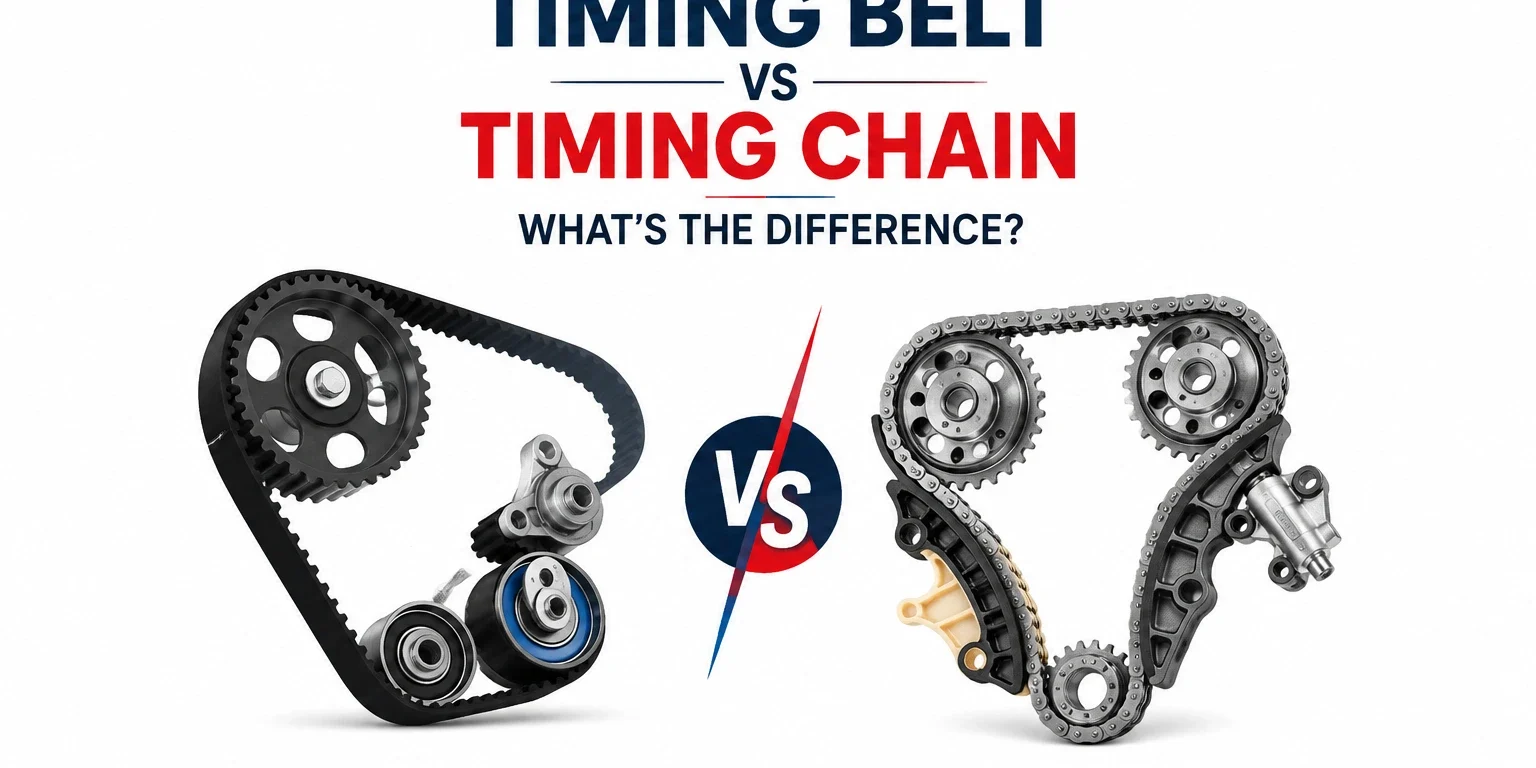
A timing belt is a reinforced rubber belt with teeth that connect the crankshaft to the camshaft. Its job is to make sure the engine valves open and close at precisely the right moment as the pistons move.
Unlike an accessory or serpentine belt, the timing belt controls a critical internal engine function. If it breaks or jumps teeth, the engine can lose synchronization immediately.
Timing belts are generally quieter and lighter than chains, but the rubber material gradually ages. Heat, mileage, oil contamination, coolant leaks, and normal wear can all affect the belt’s condition. Gates recommends replacing timing belts according to the vehicle or belt manufacturer’s specified interval because a failed belt can cause serious engine damage.
What Is a Timing Chain?
A timing chain performs essentially the same job as a timing belt, but it uses a metal chain rather than a reinforced rubber belt. It runs inside the engine and relies on engine oil for lubrication.
A timing chain system normally includes more than the chain itself. Depending on the engine, there may also be timing sprockets, guides, and hydraulic or mechanical tensioners.
Chains can last a very long time when the engine receives the correct oil and regular maintenance. However, saying a timing chain is completely maintenance-free is a mistake. Worn guides, weak tensioners, poor lubrication, or chain stretch can eventually cause timing problems.
Timing Belt vs Timing Chain: What’s the Difference?
The simplest timing belt vs timing chain difference is the material and maintenance approach.
| Feature | Timing Belt | Timing Chain |
|---|---|---|
| Material | Reinforced rubber | Metal |
| Location | Usually behind a protective cover | Inside the engine |
| Lubrication | Does not require engine oil | Requires engine oil |
| Noise | Usually quieter | Can produce noticeable rattle when worn |
| Maintenance | Scheduled replacement is common | Usually inspected and replaced when worn |
| Lifespan | Manufacturer dependent | Often much longer, but not unlimited |
| Failure pattern | Can break suddenly | Can stretch, jump, or suffer tensioner/guide failure |
| Replacement | Usually less labor intensive | Often more labor intensive |
The important point is that neither system is automatically better for every vehicle. The engine manufacturer chooses the system based on design, packaging, cost, noise, durability, and performance requirements.
Timing Belt vs Timing Chain: Which Is Better?
There is no universal winner. A timing belt can be an excellent system when it is replaced at the correct interval, while a timing chain can provide many years of service when the engine receives proper oil and maintenance.
From a driver’s perspective, a belt requires more predictable scheduled maintenance. A chain generally offers a longer service life, but when a chain system does develop a problem, diagnosis and repair can be more complicated.
The right question is not simply, “Which is better?” It is, “Which system does my engine use, and what does the manufacturer require for maintaining it?”
How Does the Engine Timing System Work?
The timing system controls the relationship between the crankshaft, camshaft, pistons, and engine valves.
The crankshaft converts the pistons’ movement into rotation. The camshaft controls when the intake and exhaust valves open and close. The timing belt or chain keeps these components synchronized.
If the timing moves out of position, the engine may misfire, run poorly, lose power, or fail to start.
On some interference engines, the valves and pistons occupy overlapping physical space at different points in the engine cycle. If timing is lost, they can collide. That can bend valves or cause much more serious internal engine damage. Non-interference engines have greater clearance, so a timing failure may not cause the same level of internal damage.
Timing Belt Lifespan and Replacement Interval
One of the biggest differences between the two systems is scheduled maintenance.
There is no single timing belt lifespan that applies to every car. Depending on the manufacturer and engine, replacement intervals can vary significantly. Industry guidance commonly places many belt replacement schedules somewhere around 60,000 to 105,000 miles, but the exact requirement should always come from the vehicle manufacturer.
Time can matter too. A vehicle that travels relatively few kilometres can still need a belt replacement because rubber components age.
If you have purchased a used vehicle and there is no reliable record showing when the timing belt was replaced, it is worth checking the manufacturer’s maintenance requirements before assuming the belt is still safe.
Why Timing Belt Maintenance Matters
A timing belt does not always give the driver a dramatic warning before failure. That is why waiting for obvious symptoms can be a dangerous strategy.
A proper timing belt service may also involve inspecting or replacing related components such as:
- Timing tensioner
- Idler pulleys
- Timing sprockets where required
- Water pump, when driven by the timing belt
- Seals and related components if leakage is found
Replacing only a worn belt while leaving damaged tensioners or other related components can undermine the repair.
Timing Belt Failure Symptoms
Timing belts are difficult to diagnose from sound alone because they may look acceptable until a serious problem develops.
Possible timing belt failure symptoms include:
- Engine misfire or rough running
- Difficulty starting
- Poor engine performance
- Unusual ticking or mechanical noise
- Visible belt cracking, fraying, or tooth damage during inspection
- Incorrect camshaft timing
- Complete engine shutdown after belt failure
However, there is an important mechanic’s rule here: do not wait for symptoms to replace a timing belt if the manufacturer specifies a replacement interval.
A belt can fail because of age, internal deterioration, contamination, tensioner problems, or other issues without giving the driver a convenient warning first. Gates specifically warns that overdue timing belt replacement can result in catastrophic engine damage.
Timing Chain Lifespan and Replacement Interval
Timing chains generally do not have the same routine replacement schedule as timing belts. Many manufacturers design them for a long service life, but that does not mean a chain can never fail.
A chain depends heavily on proper lubrication. Old or incorrect engine oil can contribute to wear in the chain, guides, and tensioner system.
For this reason, timing chain maintenance should include following the correct engine oil specification and oil change schedule. NAPA also notes that regular oil changes are important for preventing premature chain wear.
The exact timing chain replacement interval depends on the specific engine. Some manufacturers provide inspection or replacement guidance, while others expect the chain to be replaced only when wear or symptoms are identified.
Timing Chain Failure Symptoms
A worn timing chain can provide more clues than a failing timing belt, although symptoms vary by engine.
Common timing chain failure symptoms include:
- Rattling noise, particularly during cold starts
- Rough idle
- Engine misfires
- Poor acceleration
- Check Engine Light
- Camshaft and crankshaft correlation faults
- Loss of engine performance
- Excessive chain slack
- Worn timing guides or tensioners
A timing chain rattling noise should not automatically be blamed on the chain itself. The tensioner, guides, oil pressure, or other components can be responsible.
This is where proper diagnosis matters. A mechanic may use a scan tool, inspect engine timing data, listen to the engine during startup, check oil condition, and inspect the timing system before deciding which component actually needs replacement.
Timing Belt Noise vs Timing Chain Rattling Noise
Noise can provide useful information, but it should never be treated as a complete diagnosis.
A timing chain can produce a metallic rattling sound when there is excessive slack or a tensioner is not controlling the chain properly. A timing belt system can also produce abnormal ticking, whining, or other sounds when a pulley, tensioner, water pump, or another component is worn.
For example, imagine a customer hears a repetitive noise from the front of the engine and immediately assumes the timing chain needs replacement. A mechanic who replaces the chain without testing the system could solve the wrong problem.
The better approach is to identify exactly where the noise originates and determine whether the timing components are actually responsible.
Real Workshop Scenario: Why Diagnosis Matters
Consider a vehicle that arrives at a workshop with a brief metallic rattle during cold starts.
The owner may assume the timing chain is failing. But a technician should not jump straight to replacing the chain. The inspection could reveal that the real issue is a worn tensioner, inadequate oil pressure, incorrect oil specification, or another component affecting the timing system.
This is why professional diagnosis is more valuable than simply replacing the part that sounds suspicious.
The same principle applies to timing belts. If a belt system develops abnormal noise, the mechanic should inspect the belt, tensioner, idler pulleys, water pump, and surrounding components rather than treating the belt as the automatic culprit.
What Causes Timing Belt or Chain Failure?
Several problems can shorten the life of an engine timing system.
For timing belts, common causes include:
- Age and normal material deterioration
- Excessive heat
- Oil contamination
- Coolant contamination
- Worn tensioners or pulleys
- Incorrect installation
- Missed replacement intervals
For timing chains, common causes include:
- Poor engine oil maintenance
- Incorrect oil specification
- Worn chain guides
- Weak or damaged tensioners
- Excessive chain wear
- Poor oil pressure
- Installation errors
Oil contamination deserves particular attention. NAPA notes that oil or coolant leaks can accelerate timing belt deterioration, while timing chains rely on proper engine oil for lubrication and wear control.
Interference Engine vs Non-Interference Engine
Knowing whether your vehicle has an interference engine is important because the consequences of timing failure can be very different.
An interference engine is designed with limited clearance between pistons and valves. When the timing system loses synchronization, the moving parts can collide.
A non-interference engine provides enough clearance to prevent that collision under normal timing-failure conditions.
This does not mean a non-interference engine is safe to ignore. A failed belt or chain can still leave you stranded and may cause other mechanical problems. Haynes explains that interference engines are particularly vulnerable to expensive internal damage following timing failure.
Timing Belt Replacement vs Timing Chain Replacement
Timing belt replacement and timing chain replacement are very different jobs.
A timing belt service often involves removing covers and related components to access the belt. Depending on the engine design, the technician may replace the belt, tensioner, idler components, and water pump as part of the service.
Timing chain replacement can require significantly more labor because the chain is generally located inside the engine. The technician may need to remove the timing cover and replace the chain, guides, tensioner, sprockets, seals, and other components depending on the engine.
This is one reason timing chain replacement cost can be higher than a typical belt service. However, prices vary considerably by vehicle, engine design, parts quality, and labor time.
Timing Belt Replacement Cost vs Timing Chain Replacement Cost
There is no responsible universal price for either repair.
The timing belt replacement cost depends on the vehicle, engine layout, parts required, labor time, and whether related components such as the water pump and tensioner are replaced.
The timing chain replacement cost can be higher because accessing the chain may require substantially more labor and additional components.
A proper quote should identify what is included rather than giving you one attractive number that later grows when the vehicle is already disassembled.
Before approving the job, ask:
- Which components are being replaced?
- Is the tensioner included?
- Are guides or sprockets required?
- Is the water pump being replaced?
- Which parts are being used?
- Does the vehicle require manufacturer-specific procedures?
- What caused the original failure?
That conversation can prevent an unpleasant surprise at the end of the repair.
How Can You Tell If Your Car Has a Timing Belt or Timing Chain?
The easiest way is to check the vehicle’s service information using the exact year, make, model, and engine.
Do not assume that every version of a particular model uses the same system. Manufacturers can use different engines and timing systems across model years and markets.
A mechanic can also identify the system during an inspection. NAPA notes that timing components are often difficult to identify visually without knowing the specific engine, so vehicle specifications are important.
Which One Requires More Maintenance?
A timing belt normally requires more predictable scheduled maintenance because the belt has a defined service interval.
A timing chain usually requires less scheduled replacement, but it depends heavily on engine oil quality and overall maintenance. A chain system can still develop expensive problems involving guides, tensioners, sprockets, or chain wear.
So the maintenance philosophy is different:
Timing belt: replace before the specified service limit.
Timing chain: maintain the engine correctly and investigate symptoms before wear becomes severe.
Neither should be treated as a fit-and-forget component.
Timing Belt or Timing Chain: What Should Dubai Drivers Know?
Dubai’s hot climate and frequent stop-and-go traffic make preventive maintenance especially important. High ambient temperatures and heavy traffic can place additional demands on engine cooling and lubrication systems.
That does not mean every vehicle needs a timing belt or chain replacement earlier than its manufacturer specifies. Instead, Dubai drivers should pay attention to the vehicle’s actual service history, correct oil specification, mileage, age, and any new engine symptoms.
If you regularly drive in heavy traffic, make frequent short trips, or have an older vehicle with incomplete maintenance records, a professional inspection can be particularly useful.
How Car Repair Auto Services Can Help
If you are unsure whether your vehicle has a timing belt or timing chain, or you have noticed a rattling, ticking, rough idle, starting problem, or engine timing fault, getting the problem diagnosed before it becomes a major failure is the sensible approach.
Car Repair Auto Services provides vehicle diagnostics, engine repair, and maintenance services in Dubai. Its workshop in Al Quoz works with multiple vehicle brands and uses diagnostic equipment to identify engine-related problems before recommending repairs.
You can learn more about the available services through Car Repair Auto Service or review the company’s engine diagnostics and repair service.
The key is not to replace a timing component simply because a noise appeared. A proper inspection should identify the root cause first, explain the repair, and then give you a clear estimate.
Final Verdict: Timing Belt vs Timing Chain
So, timing belt vs timing chain, which is better?
Neither is automatically better. A timing belt is quiet, lightweight, and reliable when replaced according to the manufacturer’s schedule. A timing chain is durable and can provide a very long service life, but it still depends on proper engine oil, tensioner performance, and guide condition.
The biggest mistake is assuming that “lifetime” means “never needs attention.”
If your vehicle uses a timing belt, know its replacement interval and keep proof of previous replacement. If it uses a timing chain, maintain the engine oil correctly and investigate unusual rattling, timing faults, or rough running early.
A few minutes spent checking your service schedule can be worth far more than an engine rebuild later.
FAQs
Is a timing belt better than a timing chain?
Not necessarily. Timing belts are quieter and generally require scheduled replacement, while timing chains can last much longer but depend on proper oil and component maintenance. The best system is the one correctly maintained according to the vehicle manufacturer’s requirements.
How long does a timing belt last?
Timing belt lifespan varies by vehicle. Many manufacturer schedules fall roughly within 60,000 to 105,000 miles, but some engines have different mileage or time requirements. Always follow the exact service schedule for your engine.
How long does a timing chain last?
A timing chain can last for a very long time, and many vehicles do not have a routine replacement interval. However, chain guides, tensioners, lubrication problems, and chain wear can eventually require repair.
Can a timing chain break like a timing belt?
A timing chain can fail, but chain problems often involve stretch, guide wear, tensioner failure, or the chain jumping timing rather than the simple sudden snap commonly associated with a belt. Severe chain failure can still cause major engine damage.
Can I drive with a timing chain rattling?
It is better not to ignore persistent timing chain rattling, particularly if it occurs during startup or is accompanied by a Check Engine Light, rough running, or loss of power. Continued driving can turn a repairable timing problem into serious engine damage.
How do I know when my timing belt needs replacement?
Check the manufacturer’s maintenance schedule first. If the vehicle has reached the specified mileage or age, replacement may be due even if the belt appears to work normally. Timing belts can fail without providing an obvious warning.
What happens if a timing belt fails?
The engine can stop immediately. On an interference engine, a failed timing belt can allow pistons and valves to collide, potentially causing bent valves and other serious internal engine damage.
Is timing chain maintenance important?
Yes. Correct engine oil, regular oil changes, and attention to unusual noises or engine timing faults are important because the chain and its tensioning system depend on proper lubrication and component condition.