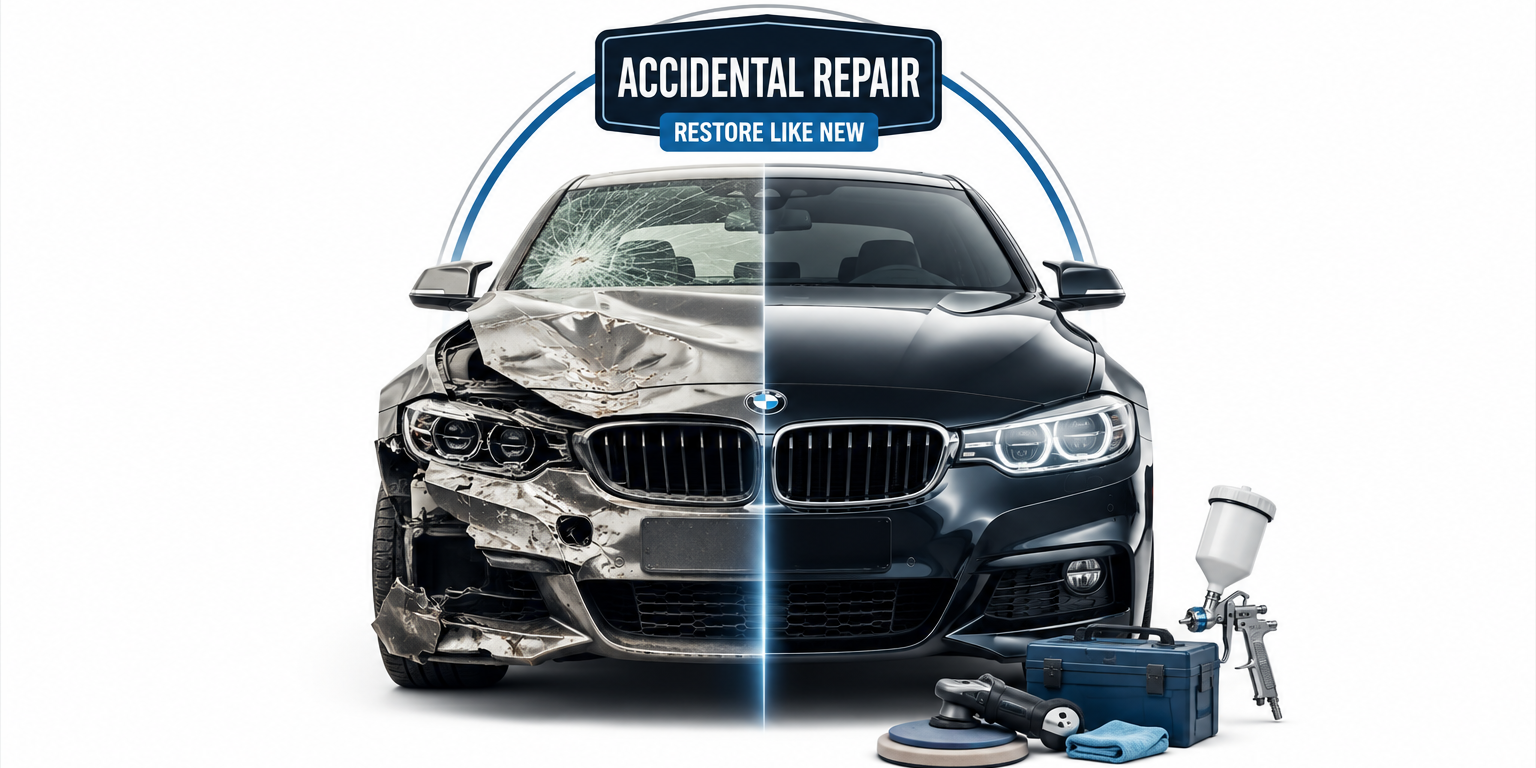
You just got out of a fender bender on Sheikh Zayed Road, and your BMW’s front bumper looks like it lost a fight. Your first thought probably isn’t about paint codes or ADAS calibration. It’s simpler than that: will my car ever feel the same again?
That question is exactly why this guide exists. After years of working on European vehicles in Dubai’s workshops, I’ve seen how much confusion surrounds BMW accidental repair in Dubai, from insurance paperwork to the fear of “will my car still handle like a BMW after this.” In this post, you’ll learn what real accidental repair involves, what separates a proper repair from a rushed one, and how to protect your car’s value and safety after a crash.
What Is BMW Accidental Repair?
BMW accidental repair is the process of restoring a BMW’s structure, bodywork, electronics, and mechanical systems after a collision, using OEM-standard parts, factory repair procedures, and calibration tools so the car performs and looks the way it did before the accident.
It’s not just about hammering out a dent and spraying new paint. A proper repair brings the car back to its original safety rating, alignment, and electronic accuracy, especially since modern BMWs rely heavily on sensors for braking, steering assistance, and parking cameras.
Common Types of BMW Accident Damage We See in Dubai
Dubai’s mix of high-speed highways, tight parking garages, and dense city traffic creates a wide variety of accident damage. In our workshop, the most frequent cases fall into a few categories:
- Front-end collisions: bumper damage, radiator support bending, headlight housing cracks, and sometimes engine mount stress from low-speed impacts.
- Rear-end damage: crumpled boot panels, exhaust misalignment, and rear sensor failure.
- Side impact and scrapes: common in parking structures, often affecting door panels, side mirrors, and wheel alignment.
- Suspension and steering damage: from potholes or curb strikes, which can throw off alignment even without visible dents.
- Electrical and sensor faults: cracked parking sensors, misaligned cameras, or dashboard warning lights triggered after minor bumps.
If your BMW is showing steering pull, uneven tire wear, or warning lights after even a small bump, it’s worth having the suspension checked separately, since misalignment isn’t always visible from the outside.
Why BMW Repairs Are Different From Ordinary Cars
Here’s something a lot of car owners don’t realize until they’ve been through it: a BMW is not just “another car with a nicer badge.” The engineering tolerances are tighter, and the electronics are deeply integrated into how the car drives.
From a mechanic’s point of view, three things make BMW accident repair more demanding than standard repair work.
First, the body structure uses mixed materials. Many BMW models combine steel, aluminum, and high-strength alloys in the same chassis. Welding or pulling these incorrectly can weaken the structure permanently, even if it looks fine afterward.
Second, the electronics need recalibration, not just reconnection. BMWs built in the last decade use cameras and radar for lane assist, parking sensors, and adaptive cruise control. After a collision, these systems often need to be recalibrated using BMW-specific diagnostic software, not just plugged back in.
Third, paint matching is genuinely harder. BMW’s factory paint codes shift slightly by production batch and age with UAE sun exposure. A workshop without the right spectrophotometer equipment will often get “close enough,” which shows up clearly in direct sunlight.
How the BMW Accidental Repair Process Works
A proper repair follows a sequence. Skipping steps is usually where things go wrong, and it’s the biggest difference between a rushed job and a lasting one.
- Damage assessment and photos. The car is inspected, photographed, and documented for insurance and repair planning.
- Police and insurance reporting. In Dubai, this typically means filing a report through the Dubai Police app or RTA channels before repairs begin, especially for insurance claims.
- Disassembly and hidden damage check. Panels are removed to check for damage that isn’t visible from the outside, like bent frame rails or cracked mounts.
- Structural and panel repair. Bent sections are pulled back to factory measurements using a frame machine, not guessed by eye.
- Parts replacement. Damaged parts are replaced with OEM or OEM-equivalent components, particularly for safety-related parts like airbags and crumple zones.
- Paint matching and refinishing. The car is primed, color-matched, and clear-coated to match the factory finish.
- Electronic recalibration. Sensors, cameras, and radar systems are recalibrated to manufacturer specifications.
- Final quality check and test drive. Alignment, braking, and electronics are tested before the car is handed back.
If your BMW’s warning lights, parking sensors, or electrical components were affected in the accident, that usually needs its own dedicated attention. It’s worth pairing body repair with a proper electrical diagnostic and repair check so nothing gets missed after the panels go back on.
How Long Does BMW Accident Repair Take in Dubai?
Most minor BMW accidental repairs, like bumper or panel damage, take 3 to 7 working days in Dubai. Moderate structural repairs typically take 1 to 2 weeks, while major collision repairs involving frame work or multiple systems can take 2 to 4 weeks, depending on parts availability and insurance approval speed.
Parts sourcing is often the real bottleneck, not the labor itself. Genuine BMW parts sometimes need to be imported, which can add several days, especially for older model years.
Insurance Claims and the RTA Process
Dubai has a fairly structured process for accident claims, but it moves faster when you have the right documents ready from day one.
After an accident, you’ll generally need to report it through the Dubai Police app, which allows you to file a minor accident report digitally within minutes if there are no injuries and both parties agree on the details. <cite index=”4-1″>The process involves logging in with UAE Pass or Emirates ID details, selecting the accident report option, and uploading clear photos of the damage from multiple angles.</cite>
Once the report is filed, <cite index=”6-1″>an insurance surveyor assesses the damage, prepares a repair estimate, and the vehicle is sent to an approved garage</cite>. Standard claims in Dubai usually take between 5 and 15 business days from report to approval, so choosing a garage that already works with major insurers speeds things up considerably.
If you’re buying a used BMW and want to check its accident background before purchase, the RTA also offers a Technical Vehicle Status Report using the chassis number, which includes prior accident and inspection history for added peace of mind. You can find official details on the RTA’s service page.
Real Repair Scenarios From the Workshop
Numbers and steps only tell half the story, so here are a few typical situations we handle regularly, the kind that give a clearer picture of what “accidental repair” actually looks like in practice.
Scenario one: the parking garage scrape that hid a bigger problem. A BMW 5 Series owner came in after a low-speed scrape against a concrete pillar. The visible damage was just a scuffed rear quarter panel, but once we removed the bumper, we found a cracked rear sensor bracket and a misaligned exhaust hanger. Had the panel simply been repainted without disassembly, the sensor fault would have stayed hidden until it triggered a warning weeks later.
Scenario two: the highway rear-end that needed frame correction. A BMW X5 involved in a rear-end collision on Al Khail Road showed crumpled bodywork but seemed structurally fine at first glance. Frame measurement revealed the rear subframe had shifted by a few millimeters, enough to affect wheel alignment and long-term tire wear if left uncorrected. Frame pulling and realignment resolved it before it became a bigger issue.
Scenario three: the “invisible” front bumper hit. A 3 Series owner assumed a minor front bumper tap wouldn’t need much work. During inspection, the front parking sensors and adaptive cruise radar were both slightly displaced, enough to throw off calibration without any dashboard warning yet appearing. Recalibration fixed it before it caused false braking alerts on the highway.
These cases share a common thread: damage that looks minor on the surface often isn’t minor underneath, which is exactly why a full inspection matters more than a quick visual estimate.
Common Mistakes Car Owners Make After a BMW Accident
Over the years, a handful of mistakes come up again and again, and most of them are avoidable with a bit of awareness.
- Delaying the police report. Waiting too long can complicate insurance claims and, in some cases, affect liability decisions.
- Choosing a garage based on price alone. The cheapest quote often skips recalibration or uses aftermarket parts that don’t match BMW’s tolerances.
- Ignoring small dashboard warnings after repair. These often point to sensor or calibration issues that weren’t fully resolved.
- Not asking whether the workshop specializes in European vehicles. General repair shops can handle bodywork fine, but BMW-specific electronics and structural work need the right diagnostic tools.
- Skipping a post-repair test drive check. Alignment and braking issues sometimes only show up under real driving conditions, not on a lift.
How to Choose the Right Garage for BMW Accidental Repair
A good way to judge a garage isn’t by how polished their reception area looks, it’s by how they answer a few direct questions.
Ask whether they use OEM or OEM-equivalent parts, whether they have BMW-specific diagnostic and calibration equipment, and whether they coordinate directly with your insurance provider. A workshop confident in its process will answer these clearly, without hesitation or vague reassurances.
It also helps to ask if they document the repair with before-and-after photos and calibration reports. That paperwork matters later, both for warranty purposes and for resale value, since buyers and appraisers increasingly ask for accident repair records.
Why Drivers Choose Car Repair Auto Service in Dubai
At Car Repair Auto Service, based in Al Quoz, Dubai, our team handles BMW accidental repairs with the same structured process outlined above: full inspection, OEM-standard parts, proper frame correction, and sensor recalibration before the car goes back on the road. We work with major insurers directly, which usually speeds up claim approval and keeps you from chasing paperwork yourself.
Beyond bodywork, we also handle the related systems that often need attention after a collision, including engine diagnostics and repair, electrical system checks, and suspension realignment, so nothing gets patched over and left for later. You can browse more of our repair guides and updates or find our garage listed under garage near me if you’re searching from nearby areas of Dubai.
Key Takeaways
A BMW accidental repair is only as good as the process behind it. The panel work matters, but so does structural measurement, sensor recalibration, and using parts that actually match the car’s original specifications. Rushed repairs might look fine for the first few weeks, but the issues they leave behind, misalignment, sensor faults, mismatched paint, tend to surface later, often at the worst time.
If your BMW has recently been in an accident, don’t wait for small warning signs to become bigger problems. Book an inspection with our team at Car Repair Auto Service, and we’ll walk you through exactly what your car needs, with honest pricing and no unnecessary upsells.
Call +971 54 369 7087 or message us on WhatsApp to schedule your BMW accident inspection today.
Frequently Asked Questions
Q: How much does BMW accidental repair cost in Dubai? Costs vary widely depending on damage severity, ranging from a few hundred dirhams for minor bumper repair to tens of thousands for structural or major panel damage. Getting a detailed inspection first gives a far more accurate estimate than a phone quote.
Q: Can I still claim insurance if I delay reporting the accident? Most Dubai insurers require reporting within 48 hours of the accident. Delaying it can complicate or even invalidate your claim, so it’s best to file the police report as soon as possible after ensuring everyone’s safety.
Q: Will my BMW’s warranty be affected if I repair it outside a dealership? Not necessarily, as long as the workshop uses OEM or OEM-equivalent parts and follows manufacturer repair procedures. Keep detailed repair records and receipts in case warranty questions come up later.
Q: Do I need sensor recalibration after a minor bump? If your BMW has parking sensors, cameras, or driver assistance features and the front or rear was impacted, recalibration is strongly recommended even if there’s no visible damage, since these systems can shift out of alignment without obvious signs.
Q: How can I check if a used BMW has prior accident history? You can request a Technical Vehicle Status Report from the RTA using the vehicle’s chassis number, which includes accident and inspection history for added transparency before a purchase.