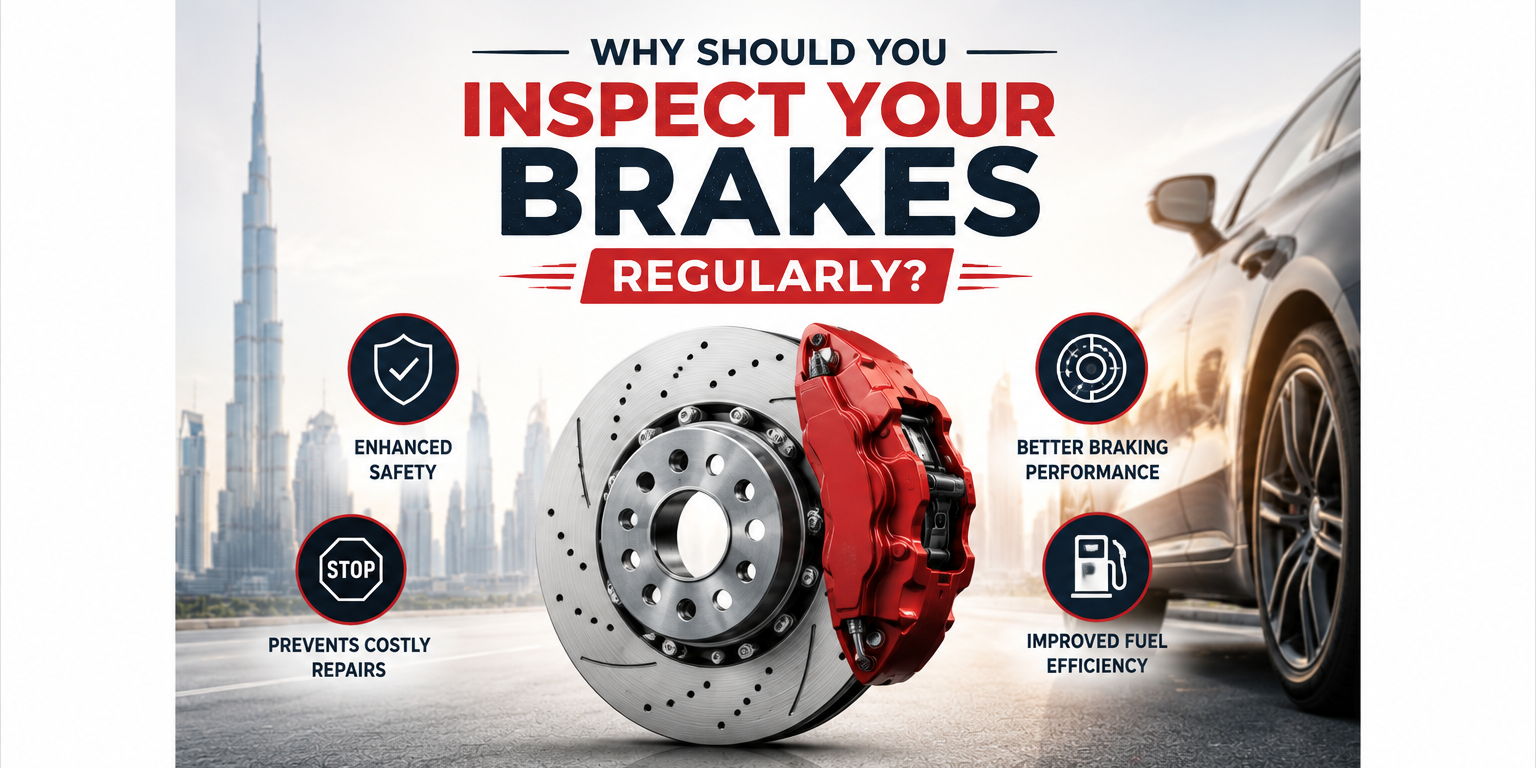
You are driving down Sheikh Zayed Road at 120 km/h, traffic is heavy, and the car ahead brakes suddenly. Your foot slams down, but the pedal feels soft and the stopping distance is longer than it should be. That split second can be the difference between a close call and a serious accident.
Brakes and tyres are the two things standing between your car and the road. Yet most drivers only think about them when something goes wrong. In this guide, we will walk through why regular brake inspection matters, why tyre maintenance is important, and how a few simple habits can keep you and your family safer on Dubai’s roads.
By the end of this post, you will know exactly what to check, how often, and when it is time to call in a professional.
Why Brake Inspection Should Never Be an Afterthought
Brakes wear down gradually, which is exactly why so many drivers ignore them until there is a problem. Pads thin out a little each month, discs develop tiny grooves, and fluid slowly absorbs moisture. None of this happens overnight, so it is easy to miss the warning signs.
Dubai’s driving conditions make this worse. Long highway stretches, stop-and-go traffic in city centers, and summer heat that regularly crosses 45 degrees Celsius all put extra strain on braking systems. Heat causes brake fluid to break down faster and can lead to brake fade, where your brakes gradually lose stopping power during sustained use.
A quick inspection every few months can catch these issues before they turn into a breakdown, or worse, an accident.
What Happens If You Skip Brake Checks?
Skipping brake inspections does not just risk safety. It also costs more money down the line. Worn pads that go unchecked will eventually damage the rotors, turning a 200 dirham pad replacement into a much larger rotor replacement bill.
Here is what typically happens when brake maintenance is ignored:
- Pads wear down to metal, causing grinding noises and rotor damage
- Brake fluid absorbs moisture, reducing stopping power and increasing corrosion risk
- Calipers can seize, causing uneven braking or the car pulling to one side
- Stopping distances increase, which is especially dangerous on fast-moving roads like Emirates Road or Al Khail Road
Signs Your Brakes Need Attention
You do not need to be a mechanic to notice when something is off. Your car usually tells you well before a full failure happens.
Watch out for these common warning signs:
- A squealing or grinding sound when you brake
- The pedal feels spongy or sinks closer to the floor than usual
- The car vibrates or pulls to one side during braking
- The dashboard brake warning light turns on
- It takes noticeably longer to stop than it used to
If you notice even one of these, it is worth getting your brakes checked within the week, not the following month.
How Often Should You Inspect Your Brakes?
Brakes should generally be inspected every 10,000 to 15,000 kilometers, or roughly every six months, whichever comes first. If you drive frequently in heavy traffic or do a lot of highway driving, lean toward the shorter interval since braking frequency accelerates wear.
Most workshops in Dubai include a basic brake check as part of a standard service, but it is worth asking specifically for pad thickness measurements and a brake fluid check, since these are sometimes glossed over in a quick inspection.
Why Is Tyre Maintenance Important?
Tyre maintenance is important because your tyres are the only point of contact between your car and the road, directly affecting braking distance, fuel efficiency, and overall control. Under-inflated or worn tyres reduce grip, increase the risk of blowouts, and can extend stopping distances by several meters, which matters enormously at highway speeds.
In Dubai specifically, tyre health is even more critical because of the climate. Extreme heat causes tyre pressure to rise during the day and drop overnight, and constant exposure to hot asphalt accelerates rubber degradation. A tyre that would last four to five years in a milder climate might need replacing sooner here.
How Does Tyre Condition Affect Braking?
Tyres and brakes work as a team. Even perfectly maintained brakes cannot compensate for tyres that have lost their grip. When tread depth drops too low, tyres lose traction, especially on wet roads, and your car needs significantly more distance to come to a full stop.
This is why any conversation about brake safety naturally includes tyre health. You cannot separate the two.
Simple Tyre Maintenance Habits That Make a Real Difference
Good tyre care does not require special tools or expert knowledge. A few consistent habits go a long way.
- Check tyre pressure monthly, and always before long road trips
- Inspect tread depth regularly, replacing tyres once they hit the legal minimum
- Rotate tyres every 8,000 to 10,000 kilometers for even wear
- Look for cracks, bulges, or uneven wear patterns, which often signal alignment issues
- Avoid overloading your vehicle, since excess weight adds strain on both tyres and brakes
What Is the Ideal Tyre Pressure for Dubai’s Climate?
Most passenger vehicles need between 30 and 35 PSI, but always check your specific vehicle’s manual or the sticker inside the driver’s door. In Dubai’s heat, it is best to check pressure in the early morning when tyres are cool, since midday readings will be artificially high and can lead to under-inflating your tyres without realizing it.
Real-World Example: A Common Mistake Drivers Make
A common scenario workshops in Dubai see often involves drivers who replace their tyres regularly but skip brake fluid changes for years. Brake fluid is hygroscopic, meaning it absorbs moisture from the air over time. This moisture lowers the fluid’s boiling point, which can lead to a spongy pedal feel and reduced braking performance, particularly during long descents or heavy traffic braking.
The fix is simple. Brake fluid should typically be flushed every two years regardless of mileage, even if the brakes feel fine. It is one of the most overlooked parts of vehicle maintenance, and one of the cheapest ways to protect your safety.
Brake and Tyre Maintenance Checklist
To make things easier, here is a simple checklist you can follow between professional inspections:
- Check tyre pressure monthly
- Inspect tread depth every few weeks, especially before long drives
- Listen for unusual noises when braking
- Pay attention to how the pedal feels, soft or firm
- Book a professional brake inspection every 10,000 to 15,000 kilometers
- Flush brake fluid every two years
- Rotate tyres every 8,000 to 10,000 kilometers
Why Professional Inspections Still Matter
DIY checks are useful for catching obvious problems, but some issues only show up with proper diagnostic tools. Brake fluid contamination, early-stage caliper wear, and internal tread separation are hard to spot without training and equipment.
This is where a trusted workshop makes a real difference. A good service center will not just replace parts, they will explain what they found, show you the wear levels, and help you plan ahead instead of reacting to a breakdown. If you are in Dubai and it has been a while since your last brake or tyre check, booking a full inspection is a small step that protects you, your passengers, and everyone else sharing the road with you.
Final Thoughts
Brakes and tyres rarely fail without warning. The signs are usually there, a noise, a vibration, a slightly longer stopping distance, but they are easy to brush off in the middle of a busy week. Making brake and tyre checks a regular habit, rather than an emergency response, is one of the simplest ways to stay safe on Dubai’s roads.
If it has been more than six months since your last brake inspection, or you cannot remember the last time you checked your tyre pressure properly, now is a good time to get it sorted. A quick visit to a trusted workshop today can save you from a much bigger problem tomorrow.
FAQs
1. How often should brakes be inspected in Dubai’s climate? Every 10,000 to 15,000 kilometers, or every six months, is a safe interval. Frequent highway driving or heavy traffic use may call for more frequent checks due to added heat and wear.
2. Why is tyre maintenance important for road safety? Tyres are your only contact point with the road. Proper maintenance improves grip, shortens braking distance, and reduces the risk of blowouts, especially in high-heat conditions like Dubai.
3. What are the first signs of brake failure? Squealing noises, a spongy pedal, vibration while braking, or a longer stopping distance are early warning signs that should never be ignored.
4. How does heat affect tyre pressure in Dubai? Heat causes air inside tyres to expand, raising pressure during the day. Checking pressure in the early morning, when tyres are cool, gives the most accurate reading.
5. Is brake fluid replacement really necessary if brakes feel fine? Yes. Brake fluid absorbs moisture over time, which lowers its boiling point even if the pedal still feels normal. Flushing it every two years protects braking performance before problems become noticeable.