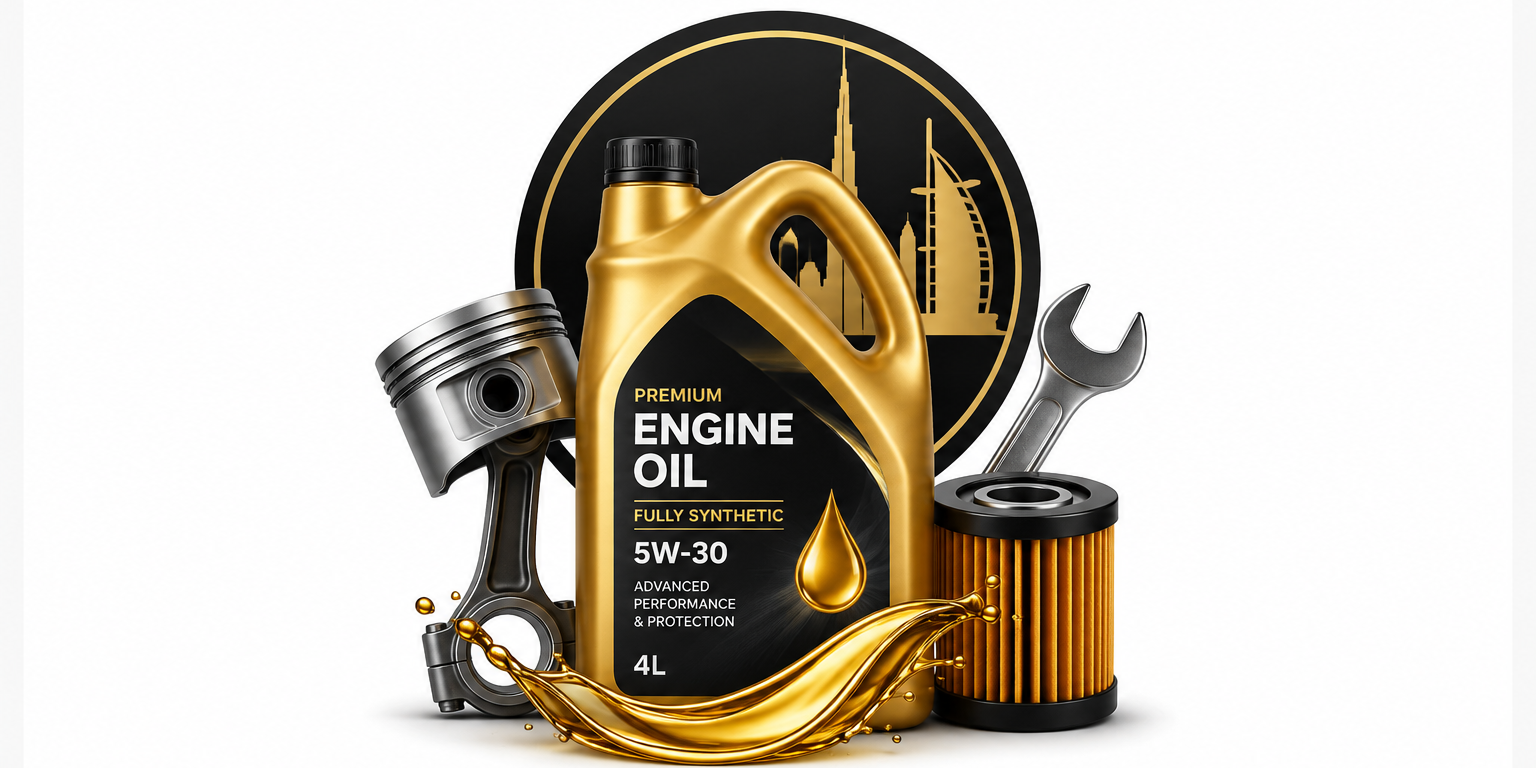
Ever popped the hood after a long summer drive in Dubai and noticed your oil looks darker than it should, weeks before your next scheduled service? You’re not imagining it. Dubai’s heat, dust, and constant stop-start traffic age engine oil far faster than the manual suggests, and most drivers only find out the hard way, with a warning light or a rough-sounding engine. In this guide, you’ll learn how often to change your oil here, which type actually suits Dubai’s climate, the warning signs to watch for, and how to choose the best car oil and engine oil services in Dubai without overpaying or falling for unnecessary upsells.
What Does Engine Oil Actually Do for Your Car?
Engine oil isn’t just a lubricant sitting inside your engine. It reduces friction between moving metal parts, carries away heat, cleans out tiny debris, and protects against rust and corrosion. Without it, your engine would grind itself apart within minutes of starting.
Think of it like blood circulating through a body. It has to keep moving, stay clean, and stay at the right consistency to do its job properly. Once it breaks down from heat or age, it stops protecting your engine the way it should.
How Often Should You Change Your Car’s Engine Oil in Dubai?
Quick answer: In Dubai, most cars need an oil change every 5,000 to 7,000 km for conventional oil, and every 10,000 to 15,000 km for full synthetic oil. Extreme summer heat and heavy traffic can shorten these intervals slightly, so many local workshops recommend checking oil condition every 5,000 km regardless of oil type.
This is shorter than what manufacturers often suggest for cooler countries. Dubai’s average summer temperature can cross 45°C, and engines here run hotter for longer periods because of constant AC use and traffic congestion. That heat breaks down oil faster than it would in a milder climate.
A simple rule many experienced mechanics in Dubai follow: if you drive mostly in the city with lots of idling and short trips, service more often. If you do long, steady highway drives, you can usually stretch closer to the manufacturer’s upper limit.
Types of Engine Oil and Which One Fits Your Car
Not all engine oils are the same, and picking the wrong one can either waste your money or leave your engine under-protected. Here’s a quick breakdown.
- Conventional oil: Affordable and fine for older cars or low-mileage vehicles, but breaks down faster in heat.
- Synthetic blend oil: A middle ground offering better heat resistance than conventional oil at a lower cost than full synthetic.
- Full synthetic oil: Best suited for Dubai’s climate, offers longer intervals between changes, and holds up better under high engine temperatures.
- High mileage oil: Formulated for engines with 100,000 km or more, helps reduce leaks and oil consumption in older engines.
If you’re unsure which grade or brand your car needs, checking your owner’s manual is the safest starting point. A trained technician can also confirm the right viscosity, such as 5W-30 or 0W-20, based on your engine type and the season.
Signs Your Car Needs an Oil Change
Cars usually give warning signs before things get serious. Ignoring them can lead to expensive engine repairs down the line.
- Dashboard oil warning light turning on
- Engine oil looking dark, gritty, or thick rather than amber and smooth
- A ticking or knocking sound from the engine, especially on startup
- Exhaust smoke that’s thicker or darker than usual
- A burning oil smell inside the cabin
- Reduced fuel efficiency or a rougher idle
If you notice two or more of these signs together, it’s worth getting your car checked within the next day or two rather than waiting for your next scheduled service.
Why Dubai’s Climate Makes Oil Service Even More Important
Extreme heat isn’t the only challenge here. Sand and dust particles are constantly in the air, and they can work their way into your engine bay over time. Combined with high temperatures, this speeds up oil oxidation and sludge buildup inside the engine.
Add to that Dubai’s traffic patterns, long commutes, frequent idling at signals, and stop-start driving during peak hours, and your oil is under more stress than the manufacturer’s testing conditions usually account for. This is exactly why local driving conditions matter more than the number printed in your car’s manual.
What to Look for in a Car Oil Change Service in Dubai
Not every garage offers the same quality of service, even if the price looks similar. Before booking a service, it helps to know what separates a reliable provider from a rushed one.
A good oil change service should include:
- Draining old oil completely, not just topping it up
- Replacing the oil filter every time, not just occasionally
- Checking for leaks around the oil pan and gaskets
- Verifying the correct oil grade for your specific car model
- A basic inspection of coolant, brake fluid, and belts while they’re already under the hood
If a service only takes five minutes and skips the filter replacement, that’s usually a sign of a rushed job rather than genuine care for your engine’s long-term health.
How Car Repair Auto Services Handles Oil Changes Differently
At Car Repair Auto Services, oil changes aren’t treated as a quick add-on task squeezed between other jobs. Every vehicle gets a proper inspection first, checking oil condition, filter status, and any early signs of leaks before any oil is drained. This matters because catching a small leak early is far cheaper than fixing engine damage later.
The team works with a range of oil grades and brands suited to Dubai’s climate, so whether you drive an older sedan or a newer SUV, the recommendation is based on your car’s actual needs rather than a one-size-fits-all package. Genuine filters are used on every job, and technicians walk customers through what they found, in plain language, without pushing unnecessary extras.
For drivers who don’t have time to sit at a workshop, mobile oil change support is also available, meaning a technician can come to your home or office and complete the service on-site. It’s a small detail, but for busy professionals across Dubai, it often makes the difference between staying on top of maintenance and letting it slip for months.
Mobile Oil Change vs Workshop Service, Which Should You Choose?
Both options work well, but they suit different situations.
- Choose mobile service if: You have a tight schedule, prefer convenience, or just need a routine oil and filter change without other repairs.
- Choose a workshop visit if: Your car needs a broader inspection, has an unresolved issue like a leak or unusual noise, or requires equipment that isn’t practical to bring on-site.
For most drivers doing routine maintenance, mobile service saves time without compromising quality, as long as the provider uses proper equipment and genuine parts. For anything beyond a standard oil change, a workshop visit gives technicians better tools to diagnose deeper issues.
Common Mistakes Car Owners Make With Oil Changes
Even careful drivers fall into a few avoidable habits.
- Delaying oil changes because the car “still runs fine”
- Using the cheapest oil available without checking if it matches the engine’s requirements
- Skipping the oil filter to save a small amount of money
- Not checking oil levels between services, especially in summer
- Assuming synthetic oil never needs changing because it “lasts longer”
None of these mistakes cause immediate damage, which is exactly why they’re dangerous. The wear builds up slowly, and by the time symptoms show up, repair costs are usually much higher than the maintenance would have cost.
Final Thoughts
Engine oil might seem like a small, routine expense, but it’s one of the few maintenance tasks that directly decides how long your engine lasts. Dubai’s heat, dust, and traffic make it even more important to stick to shorter intervals and use oil suited to local conditions rather than generic advice from cooler climates.
If it’s been a while since your last service, or you’re simply not sure what your car needs right now, it’s worth getting a quick check rather than guessing. Car Repair Auto Services offers both workshop and mobile oil change options across Dubai, with straightforward recommendations and no pressure to buy more than your car actually needs. A short conversation with a technician today can save you a much bigger repair bill later.
Frequently Asked Questions
How often should I change my engine oil in Dubai’s heat? Most cars need an oil change every 5,000 to 7,000 km with conventional oil, or 10,000 to 15,000 km with full synthetic oil. Dubai’s high temperatures and heavy traffic can shorten these intervals, so many mechanics suggest checking oil condition around every 5,000 km.
What is the best type of engine oil for cars in Dubai? Full synthetic oil generally performs best in Dubai due to its resistance to breaking down under high engine temperatures. It also allows longer intervals between changes compared to conventional oil.
How do I know if my car needs an oil change? Watch for a dark or gritty oil colour, a dashboard warning light, ticking sounds from the engine, dark exhaust smoke, or a burning smell in the cabin. Any of these signs mean it’s time for an inspection.
Is mobile oil change service reliable? Yes, as long as the provider uses proper equipment and genuine filters. Mobile oil change services are a convenient option for routine maintenance without visiting a workshop, especially for busy schedules.
Does synthetic oil really last longer than conventional oil? Yes, full synthetic oil typically lasts two to three times longer than conventional oil because it resists heat breakdown better. However, it should still be checked regularly, especially in Dubai’s climate.