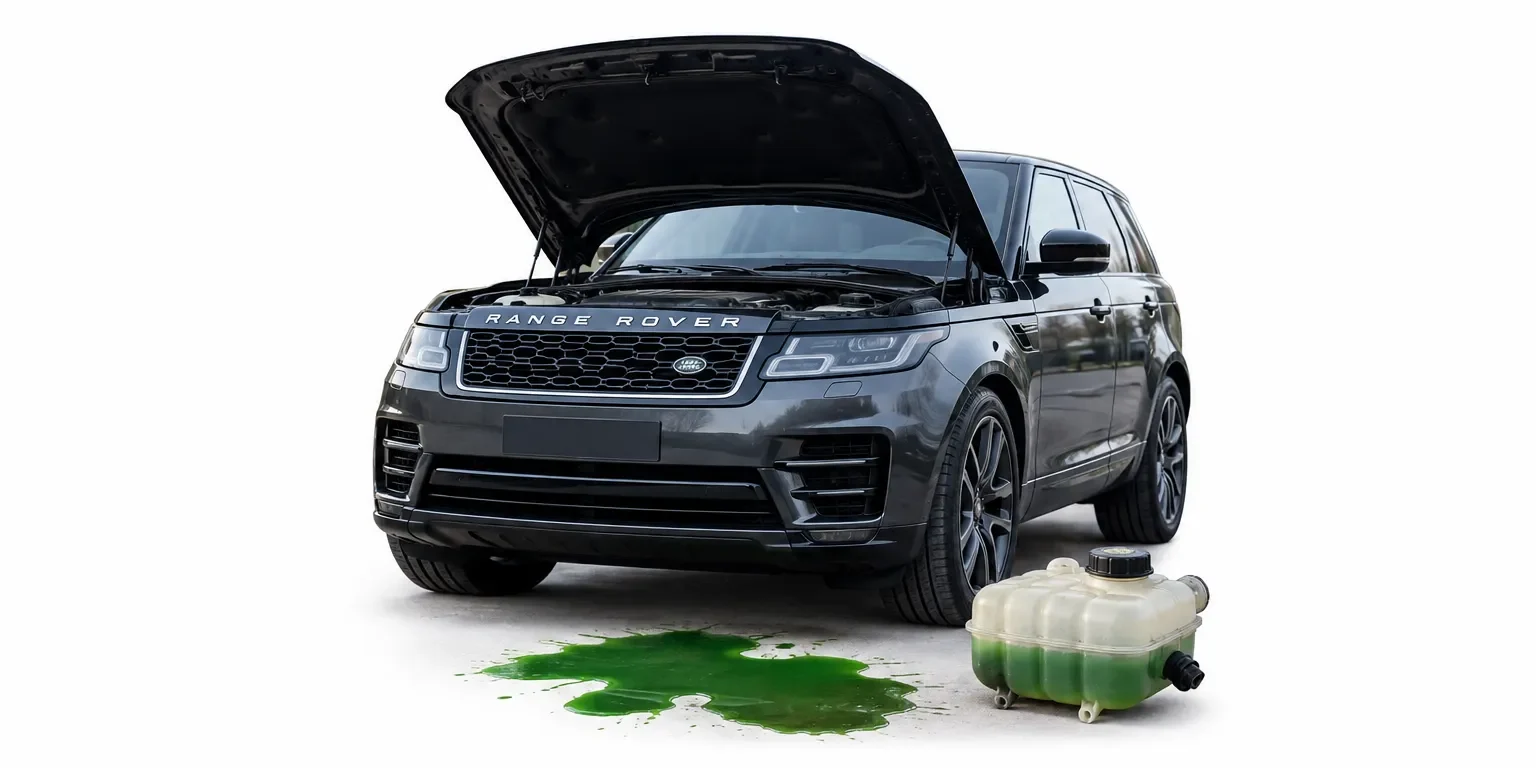
A Range Rover that keeps losing coolant should never be treated as a simple top up issue. You may notice a small puddle under the vehicle, a sweet smell from the engine bay, or a coolant warning on the dashboard. In some cases, there may be no visible puddle at all. This guide explains what causes Range Rover coolant leaks, how mechanics find the actual source, and why Dubai driving conditions can make a small cooling system problem more serious.
What Causes Range Rover Coolant Leaks?
Range Rover coolant leaks can come from several parts of the cooling system, including hoses, radiators, water pumps, thermostat housings, expansion tanks, coolant pipes, seals, and connections. Some leaks are external and easy to spot, while others only appear when the cooling system becomes hot and pressurised.
The exact cause depends on the Range Rover model, engine, mileage, maintenance history, and condition of its cooling system. This is why replacing parts without testing the system first can waste money.
Common causes include:
- Cracked or ageing coolant hoses
- Damaged radiator or radiator connections
- Leaking water pump
- Cracked expansion tank
- Faulty expansion tank cap
- Thermostat housing or gasket failure
- Damaged coolant pipes and seals
- Loose or damaged hose connections
- Heater core leaks
- Internal engine coolant leaks
Modern Range Rover cooling systems contain several connected components, so coolant can travel away from the original leak point before it becomes visible.
1. Cracked or Ageing Coolant Hoses
Coolant hoses operate in a difficult environment. They are exposed to engine heat, pressure, vibration, and repeated heating and cooling cycles.
As a hose ages, the rubber can become hard, soft, swollen, or cracked. A small crack may only leak when the engine reaches operating temperature and the cooling system builds pressure.
A mechanic will normally inspect the upper and lower radiator hoses, smaller coolant hoses, connections, clamps, and areas around the engine for wetness or dried coolant residue.
A hose problem can look minor at first, but a complete hose failure can release a large amount of coolant very quickly. That can leave a Range Rover overheating in traffic with little warning.
2. Range Rover Radiator Leaks
The radiator is responsible for removing heat from the coolant before the fluid returns to the engine. A damaged radiator can therefore cause both coolant loss and overheating.
Radiator leaks may develop around the core, side tanks, seams, hose connections, or other sealing points. Heat cycling, age, road debris, and contamination around the radiator can all contribute to problems.
Dubai also presents demanding conditions for cooling systems. High ambient temperatures, traffic, dust, and heavy air conditioning use can increase the workload on the cooling system. UAE automotive guidance also identifies radiator damage, hose deterioration, water pump problems, and expansion tank issues among common cooling system concerns.
If coolant is appearing near the front of the Range Rover, the radiator should be inspected, but the visible location alone does not prove that the radiator is the source.
3. Water Pump Leaks
The water pump keeps coolant circulating through the engine and cooling system. When the pump seal, housing, bearing, or related component develops a fault, coolant may begin leaking.
One common mistake is assuming that coolant around the water pump automatically means the pump needs replacement. Coolant can travel from another nearby component and collect around the pump area.
A proper diagnosis should therefore confirm the source before replacing the pump. A cooling system pressure test can be particularly useful when the leak is difficult to see.
If the water pump is failing, you may also notice:
- Coolant loss
- Engine temperature rising
- Unusual noise from the pump area
- Coolant residue around the pump
- Overheating during demanding driving
4. Cracked Expansion Tank
The expansion tank is another component worth checking on a Range Rover with repeated coolant loss.
The tank holds coolant as its volume changes with engine temperature. Over time, the plastic can become brittle and develop small cracks, particularly around seams, mounting areas, or hose connections.
The problem can be difficult to spot when the engine is cold. A crack may open more when the cooling system reaches operating temperature and pressure increases.
If you repeatedly add coolant but cannot find an obvious leak, the expansion tank and its cap should be included in the inspection.
5. Thermostat Housing and Gasket Problems
The thermostat controls coolant flow according to engine temperature. Depending on the Range Rover engine, the thermostat assembly can contain several components and sealing points.
A damaged thermostat housing or deteriorated gasket can allow coolant to escape. A thermostat problem can also affect engine temperature even when there is no major external leak.
For example, a Range Rover may show temperature fluctuations, take too long to reach normal temperature, or begin running hot under certain conditions. These symptoms should be investigated rather than automatically blaming the radiator.
6. Coolant Pipes, Seals, and Connections
A Range Rover cooling system contains more than just a radiator and water pump. There are multiple pipes, connectors, seals, O rings, and smaller coolant passages.
A small connector may develop a leak that is difficult to see from above. Coolant can then run down the engine or collect on an undertray.
This is one reason experienced technicians do not rely only on looking for a puddle underneath the vehicle. The actual source may be several inches away from where the coolant eventually appears.
Can a Range Rover Lose Coolant Without a Visible Leak?
Yes. A Range Rover can lose coolant without leaving an obvious puddle because a small leak may only occur when the cooling system is hot and pressurised. Coolant can also evaporate from a hot surface or travel across engine components before reaching the ground.
This is why repeatedly topping up coolant is not a proper solution. The cooling system should be tested to determine where the coolant is going.
Real Workshop Case Example: The Leak That Was Not the Water Pump
Consider a typical Range Rover workshop situation.
A customer notices coolant residue near the front of the engine and assumes the water pump is leaking. The vehicle is still driving normally, but the coolant level has dropped twice within a few weeks.
Instead of immediately replacing the water pump, the mechanic performs a visual inspection followed by a controlled cooling system pressure test. The pressure test reveals coolant escaping from a nearby connection that was difficult to see when the engine was cold.
The hose connection is repaired, the system is refilled with the correct coolant, air is removed, and the vehicle is retested.
The important lesson is simple. Coolant near a water pump does not always mean the water pump has failed. Proper testing can prevent unnecessary parts replacement.
Real Workshop Case Example: Coolant Loss With No Puddle
Another common scenario involves a Range Rover owner who keeps adding coolant but never sees a puddle under the vehicle.
The vehicle may drive normally during short trips. After longer drives, however, the coolant level drops again.
In a case like this, the technician needs to consider both external and internal coolant loss. Pressure testing, inspection for dried coolant residue, and further engine testing may be needed if no external leak can be found.
An internal coolant leak can be more serious because coolant may enter a combustion chamber or mix with engine oil. Persistent white exhaust smoke, repeated coolant loss, rough running, or overheating can increase the need for further investigation.
What Are the Signs of a Range Rover Coolant Leak?
A coolant leak does not always start with an overheating engine. Early warning signs can include:
- Coolant level repeatedly becoming low
- Sweet smell around the engine bay
- Coolant marks or residue around hoses
- Wet areas underneath the vehicle
- Steam from the engine bay
- Coolant warning on the dashboard
- Temperature gauge moving higher than normal
- Repeated overheating
- Unusual noise around the water pump
- White smoke when coolant is entering the engine internally
Car Repair Auto Service also identifies low coolant, visible coolant under the vehicle, rising engine temperature, a sweet smell, dashboard warnings, and steam as signs that coolant leak inspection may be needed.
Why Dubai Heat Makes Coolant Leaks More Important
Dubai’s hot climate places additional demands on a vehicle’s cooling system. High ambient temperatures combined with stop and go traffic and frequent air conditioning use can make an existing cooling system weakness more noticeable.
This does not mean Dubai’s heat directly causes every Range Rover coolant leak. Age, mileage, component condition, coolant quality, previous repairs, and the specific engine design all matter.
However, a small leak should not be ignored. If the coolant level falls too far, the engine may lose its ability to control operating temperature effectively.
Repeated overheating can turn a relatively simple cooling system repair into a much larger engine repair.
How Do Mechanics Diagnose a Range Rover Coolant Leak?
A proper diagnosis starts with understanding the symptoms and checking the cooling system systematically.
A technician may:
1. Inspect the Cooling System
The expansion tank, cap, hoses, radiator, water pump area, thermostat housing, coolant pipes, and connections are inspected for leaks or dried coolant residue.
2. Perform a Pressure Test
A cooling system pressure test helps identify leaks that may not be visible when the engine is cold. The system is pressurised in a controlled manner and monitored for pressure loss.
3. Inspect the Engine Bay Carefully
Undertrays and covers may need to be removed because coolant can travel underneath them. A visible puddle is not always directly below the failed component.
4. Check for Internal Coolant Loss
If no external leak is found, the technician may investigate possible internal coolant loss. Depending on the symptoms, additional tests can include combustion gas testing, compression testing, or other engine diagnostic procedures.
5. Retest After Repair
After the repair, the cooling system should be refilled and properly bled. The vehicle should then be checked again to confirm that the leak and related temperature problem have been resolved.
Car Repair Auto Service lists cooling system pressure testing, coolant leak detection, radiator inspection, hose replacement, water pump inspection, thermostat inspection, expansion tank inspection, and coolant replacement among its coolant leak services in Dubai.
What Should You Do If Your Range Rover Is Losing Coolant?
If the coolant level keeps dropping, do not simply continue adding coolant and driving.
First, allow the vehicle to cool safely before checking the coolant level. Never open a hot pressurised cooling system because escaping coolant or steam can cause serious burns.
If you notice rapid coolant loss, steam, an overheating warning, or the temperature gauge moving into the hot zone, stop driving when it is safe to do so.
The safest approach is to have the cooling system inspected and the leak source confirmed before continuing normal driving.
Range Rover Coolant Leak Repair in Dubai
If your Range Rover is losing coolant, Car Repair Auto Service can inspect the cooling system and identify the source of the problem.
The workshop’s listed coolant leak service includes leak detection, cooling system pressure testing, radiator inspection, radiator hose and coolant pipe replacement, water pump inspection, thermostat inspection, expansion tank inspection, and coolant replacement. The workshop also specifically lists Range Rover among the vehicle makes its technicians have hands on experience with.
You can learn more about Range Rover coolant leak inspection and repair in Dubai or explore the broader engine cooling system repair service.
For general servicing and other repairs, visit Car Repair Auto Service in Dubai.
Why Proper Diagnosis Matters
A coolant leak is a symptom, not a diagnosis.
Replacing a radiator when the real problem is a hose connection will not solve the problem. Replacing a water pump because coolant was found nearby can also lead to unnecessary expense.
An experienced mechanic looks at the complete cooling system and uses testing to confirm the source. This approach is especially important with a Range Rover because its cooling system can contain multiple components and circuits.
The goal should not be to replace the most expensive component. The goal should be to find the component that is actually failing.
Final Thoughts
So, what causes Range Rover coolant leaks? The most common causes include ageing hoses, damaged radiators, leaking water pumps, cracked expansion tanks, thermostat housing problems, coolant pipes, seals, and loose connections. In some cases, coolant loss can also come from an internal engine problem.
The important thing is to catch the problem early. If your Range Rover keeps losing coolant, smells sweet after driving, leaves coolant residue, or starts running hotter than normal, do not wait for a complete overheating event.
A proper inspection and cooling system pressure test can help identify the actual leak before it develops into a more expensive engine problem.
If you are in Dubai and need your Range Rover cooling system checked, Car Repair Auto Service can inspect the vehicle, identify the leak source, and recommend the appropriate repair.
Frequently Asked Questions
What is the most common cause of a Range Rover coolant leak?
Common causes include ageing coolant hoses, radiator leaks, water pump seal problems, thermostat housing leaks, damaged coolant pipes, and cracked expansion tanks. The exact cause depends on the Range Rover model, engine, mileage, and maintenance history.
Why is my Range Rover losing coolant but not leaking?
A small leak may only appear when the cooling system becomes hot and pressurised. Coolant can also evaporate on hot engine components or travel underneath covers before reaching the ground. If no external leak is found, an internal coolant leak may need to be investigated.
Can I drive my Range Rover with a coolant leak?
It is better to avoid driving if the coolant is leaking quickly, the temperature is rising, or steam is coming from the engine bay. Continuing to drive with low coolant can lead to overheating and serious engine damage.
How is a Range Rover coolant leak diagnosed?
A mechanic can inspect the hoses, radiator, water pump, thermostat housing, expansion tank, and coolant connections. A cooling system pressure test can help reveal leaks that are difficult to see during a normal visual inspection.
Can Dubai heat cause Range Rover coolant leaks?
Dubai’s high temperatures can place additional demands on the cooling system, but heat is not the only cause of coolant leaks. Component age, mileage, material deterioration, maintenance history, coolant condition, and previous repairs can all contribute to cooling system problems.
How quickly should I repair a Range Rover coolant leak?
A coolant leak should be inspected as soon as possible, especially if the coolant level is dropping repeatedly. Early diagnosis can help prevent overheating and reduce the risk of more serious engine damage.