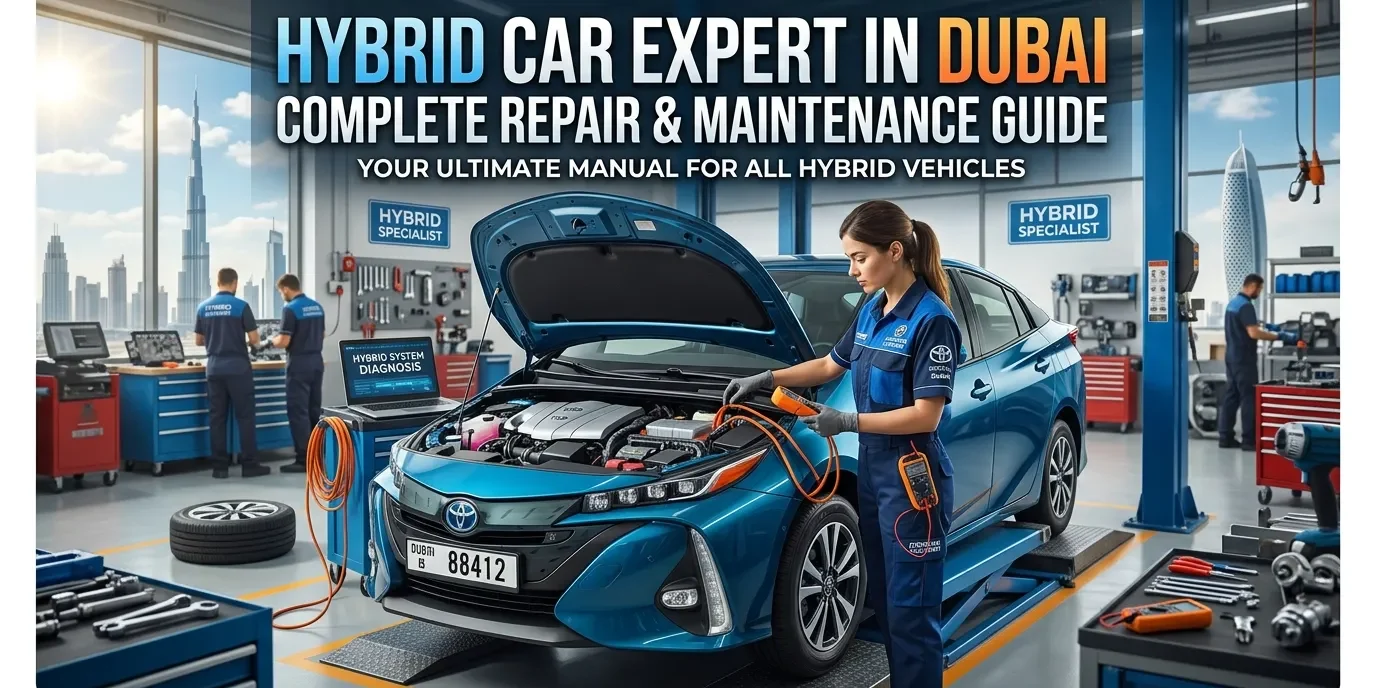
Owning a hybrid car in Dubai can help you save fuel, especially during everyday city driving. However, when a hybrid battery warning appears, fuel economy drops, or the vehicle starts behaving differently, knowing where to begin can be difficult. Hybrid cars combine petrol engines with electric motors and advanced electrical systems, so they need the right diagnostic approach. This guide explains hybrid car repair, battery maintenance, common warning signs, and how to choose a reliable Hybrid Car Expert in Dubai. It also explains how Car Repair Auto Services can help you understand your vehicle’s repair needs.
What Is a Hybrid Car, and How Does It Work?
A hybrid car uses a petrol engine and an electric motor to move the vehicle. Depending on the model and driving conditions, it can use the electric motor, petrol engine, or both. A high voltage battery stores electrical energy, while the control system manages how power is delivered.
Most conventional hybrid cars recharge their high voltage batteries through regenerative braking and the petrol engine. Plug in hybrid vehicles are different because they can also recharge through an external charging point.
Hybrid systems include several important components:
- Hybrid battery: Stores energy to power the electric motor.
- Electric motor: Helps move the vehicle and can assist the petrol engine.
- Inverter: Converts electrical power into the form needed by the motor and other systems.
- Petrol engine: Provides power when required and may help recharge the battery.
- Regenerative braking: Recovers some energy during deceleration and sends it back to the battery.
- Cooling system: Keeps the engine and relevant electrical components within their required operating temperatures.
These systems work together to improve efficiency. However, a fault in one component can affect overall performance. That is why hybrid car repair requires more than a standard engine inspection.
Why Do Hybrid Cars Need Specialised Repair in Dubai?
Dubai’s driving conditions can place extra demands on a hybrid vehicle. High ambient temperatures, long periods of air conditioning use, heavy traffic, and dusty environments make regular inspections particularly important.
High temperatures and battery performance
Hybrid batteries generate heat during charging and discharging. They rely on a cooling system to stay within their intended operating range. Excessive heat or restricted battery airflow can affect performance and may contribute to premature deterioration.
Some hybrid vehicles use dedicated battery air intake vents and cooling fans. If these vents become blocked by dust or other debris, battery cooling may become less effective. Toyota’s owner guidance specifically warns that blocked hybrid battery cooling vents can restrict battery output and reduce fuel economy. <Cite refs={[“turn764173search22″,”turn764173search10”]}/>
Heavy traffic and air conditioning use
Stop and go traffic can increase the time your vehicle spends operating under changing power demands. Air conditioning also places an electrical load on the vehicle, and the engine may run more often when additional power or cooling is required.
If you notice that your car’s fuel consumption has increased, do not immediately assume the hybrid battery has failed. Air conditioning demand, tyre pressure, driving habits, engine condition, and other faults can also affect efficiency.
Dust and cooling airflow
Dust can collect around cooling intakes, filters, and other components. In some hybrid models, the traction battery has a dedicated cooling air intake that needs periodic inspection.
Follow the maintenance instructions for your specific vehicle. Do not spray water into battery vents or attempt to clean high voltage components yourself.
What Are the Common Signs Your Hybrid Car Needs Repair?
Hybrid system problems do not always cause an immediate breakdown. Some symptoms develop gradually, making early inspection useful.
1. Hybrid system warning light
A hybrid system warning message may indicate a fault in the battery, inverter, electrical connections, cooling system, or another control component. The warning alone does not identify the failed part.
A technician should scan the vehicle with suitable diagnostic equipment, review the stored fault codes, and carry out further tests before recommending repairs.
2. Reduced fuel economy
If your hybrid vehicle starts using noticeably more petrol than usual, investigate the cause. Possible reasons include battery performance problems, low tyre pressure, a dirty air filter, brake drag, engine faults, or changes in driving conditions.
For example, a Dubai driver who previously achieved consistent fuel economy may notice a gradual decline during the summer. Rather than replacing the hybrid battery immediately, a proper inspection can help determine whether the cause is battery related or something simpler.
3. The petrol engine runs more often
Hybrid vehicles regularly switch between electric and petrol power. The petrol engine may run more frequently when the battery needs charging, the cabin requires strong air conditioning, or the vehicle needs additional power.
However, a sudden change in engine behaviour combined with a warning light, reduced performance, or unusual noise deserves investigation.
4. Reduced acceleration or power
A hybrid car may limit its power when a system detects a problem or when operating conditions require protection. Potential causes include battery performance, inverter temperature, cooling faults, or other powertrain issues.
If the vehicle suddenly loses power, avoid hard acceleration and find a safe place to stop. Follow the warning message and the manufacturer’s instructions.
5. Unusual battery cooling fan noise
A hybrid battery cooling fan may become audible during normal operation. However, unusually loud or persistent fan noise can indicate a blocked intake, heavy dust accumulation, or a cooling system problem.
A technician can inspect the relevant airflow path and check whether the fan and associated components are working correctly.
6. The car will not enter READY mode
In many hybrids, the READY indicator confirms that the vehicle is prepared to drive. If it does not appear, possible causes include a weak 12 volt battery, a hybrid system fault, an electrical issue, or an interlock problem.
The 12 volt battery and the high voltage traction battery perform different jobs. A weak 12 volt battery can prevent a hybrid vehicle from starting even when the traction battery is not the main problem.
What Services Does a Hybrid Car Expert in Dubai Provide?
A qualified hybrid vehicle specialist should be able to identify the fault before recommending a repair. The exact services available depend on the vehicle model, diagnostic equipment, and technician training.
Hybrid system computer diagnostics
Hybrid diagnostic testing reads fault codes from relevant control modules and helps identify systems that need further investigation. A complete diagnosis may include live data, battery measurements, electrical checks, cooling system inspection, and verification of previous fault history.
Clearing a warning code without identifying its cause is not a complete repair. The underlying fault should be addressed, and the system should be checked again after the work.
Hybrid battery testing and repair
Hybrid battery testing helps assess battery performance and identify possible problems with individual sections or related components. Depending on the design and condition of the battery, the solution may involve repairing an associated component, replacing an approved module where appropriate, or replacing the complete battery pack.
Not every battery can be repaired economically. A specialist should explain the available options, compatibility, expected outcome, and warranty before work begins.
Inverter and electrical system inspection
The inverter manages electrical power between the battery and electric motor. Problems with the inverter, associated cooling system, wiring, or connectors can affect vehicle performance.
Because hybrid systems use potentially dangerous high voltage, these components should only be handled by appropriately trained and equipped professionals. Owners should not attempt DIY electrical testing on high voltage circuits.
Hybrid engine maintenance
A hybrid vehicle still has a petrol engine that requires appropriate oil, filters, spark plugs, and other scheduled maintenance. Some hybrids use the engine intermittently, but that does not eliminate the need for servicing.
The correct oil specification and service interval should come from the vehicle manufacturer’s maintenance schedule, not a universal rule for all hybrid cars.
Brake inspection and regenerative braking
Regenerative braking helps recover energy during deceleration. Hybrid vehicles also rely on conventional friction brakes to stop safely.
Because the braking systems work together, inspections should include brake pads, discs, brake fluid, and relevant electronic components. Reduced brake use in some driving conditions does not mean the brakes can be ignored.
Cooling system and air conditioning checks
Depending on the model, a hybrid may have separate cooling circuits for the engine, inverter, or battery. A specialist should identify the correct system before inspecting coolant levels, pumps, fans, or possible leaks.
Air conditioning also deserves attention in Dubai. If cooling becomes weak or the system makes unusual noises, the compressor, refrigerant circuit, electrical controls, and other relevant components may need testing.
How to Maintain a Hybrid Car in Dubai
Regular maintenance can help reduce avoidable faults and keep your hybrid operating efficiently. The best schedule depends on the make, model, mileage, age, and driving conditions.
Follow these practical steps.
- Follow the manufacturer’s service schedule. Replace engine oil, filters, spark plugs, and other items at the intervals specified for your vehicle.
- Inspect the hybrid battery cooling intake. Keep accessible vents clear according to the owner’s manual. Ask a qualified technician to inspect the cooling fan and filter where fitted.
- Test the 12 volt battery. A weak auxiliary battery can cause starting problems and confusing electrical symptoms.
- Monitor fuel economy. A sustained change in consumption can be an early sign that the vehicle needs inspection.
- Check tyres and wheel alignment. Incorrect tyre pressure and poor alignment can increase rolling resistance and affect fuel efficiency.
- Inspect the cooling systems. Look for warning messages, visible coolant leaks, or repeated temperature problems. Never open a hot pressurised cooling system.
- Address warning lights early. Record the message and arrange suitable diagnostics rather than repeatedly clearing the warning.
- Keep maintenance records. Retain invoices, diagnostic reports, and details of battery or electrical repairs.
A useful habit is to mention changes in driving performance when booking a service. Information about when a warning appears, whether the car was hot, and whether the problem happens during acceleration can help the technician narrow down the cause.
Hybrid Battery Repair vs. Replacement: Which Is Better?
Hybrid battery repair is not always the same as replacing the complete battery pack. The right choice depends on the actual fault, the battery design, its condition, parts availability, and the cost of a reliable repair.
A repair may be worth considering when testing identifies a suitable repairable fault and the remaining battery components are in acceptable condition. Replacement may be more appropriate when the battery has extensive deterioration, multiple failing sections, physical damage, or no reliable repair option.
Before approving either option, ask for the following:
- A diagnostic report explaining the fault.
- Confirmation of whether the quote covers a module, a complete battery pack, or another component.
- Details of the part’s condition and compatibility with your exact vehicle.
- Labour charges and any additional costs.
- Written warranty terms covering the supplied parts and work.
- Post-repair testing and confirmation that relevant faults have been addressed.
Be cautious of anyone who promises that every hybrid battery can be repaired cheaply. A low initial quote is not good value if the original problem returns shortly afterwards.
How Much Does Hybrid Car Repair Cost in Dubai?
There is no single price for hybrid car repair in Dubai. Costs depend on the make and model, the fault, the availability of parts, the amount of diagnostic work required, and whether a component can be repaired or must be replaced.
For example, a 12 volt battery replacement is a different job from diagnosing an inverter fault or replacing a high voltage battery pack. Labour requirements and parts prices can also vary considerably between vehicles.
To compare repair quotations fairly, check whether each estimate includes:
- Diagnostic and inspection charges.
- Parts, including their type and condition.
- Labour and any required programming.
- Additional work discovered during diagnosis.
- Warranty coverage and post-repair testing.
Ask the workshop to obtain your approval before carrying out additional work. A clear, itemised estimate helps you understand what you are paying for and reduces the risk of unexpected expenses.
How to Choose the Right Hybrid Car Expert in Dubai
Choosing a hybrid repair workshop involves more than comparing prices. The technician needs to understand your vehicle’s particular hybrid system and have the right tools to diagnose it safely.
Look for a workshop that can explain its findings in plain language, provide an itemised estimate, and discuss repair options without pressuring you into an immediate battery replacement.
Before booking, ask whether the workshop has experience with your vehicle’s make and model. Confirm that its technicians are trained for the work being offered, especially high voltage battery and inverter repairs.
You should also check whether replacement parts are genuine, manufacturer approved, or suitable quality alternatives, depending on the repair. Ask for written warranty terms rather than relying on a verbal promise.
If your vehicle is still under warranty, review the relevant manufacturer’s terms before authorising work. For example, Toyota UAE publishes model and warranty information through its official website. Coverage and conditions vary, so do not assume every hybrid battery has the same warranty period. <Cite refs={[“turn764173search4″,”turn764173search8”]}/>
Why Consider Car Repair Auto Services for Hybrid Car Maintenance?
When a hybrid car develops a warning light or performance problem, getting a clear explanation of the fault is an important first step. Car Repair Auto Services is the brand to contact for an assessment of your vehicle’s repair needs and advice on the next steps.
When arranging your appointment, share the vehicle’s make, model, year, mileage, dashboard warnings, and any recent changes in performance. This information helps the service team understand your concern and determine what checks may be needed.
Ask for a diagnosis before committing to major repairs. If the battery, inverter, cooling system, or electrical components require attention, make sure the recommended work matches the test results and the vehicle manufacturer’s requirements.
For Dubai drivers, the goal should be straightforward: understand the problem, compare suitable repair options, and make an informed decision about keeping your hybrid safe and reliable.
Conclusion
Hybrid cars combine petrol engine technology with electric power, making them efficient but more complex to diagnose than conventional vehicles. In Dubai, routine servicing, battery cooling inspections, brake checks, and timely diagnostics can help identify problems before they become more serious.
If you notice a hybrid warning light, declining fuel economy, reduced acceleration, or unusual battery fan noise, do not assume the high voltage battery needs replacement. A proper inspection can help identify the real cause and prevent unnecessary spending.
If your vehicle needs attention, contact Car Repair Auto Services to discuss your symptoms and arrange an appropriate assessment. Choosing a qualified hybrid car expert in Dubai can help you make informed repair decisions and maintain your vehicle with greater confidence.
Frequently Asked Questions
1. How often should a hybrid car be serviced in Dubai?
Follow the maintenance interval specified by your vehicle manufacturer. The schedule varies by make and model, mileage, and operating conditions. Dubai’s heat and dusty environment also make it important to monitor cooling systems, air filters, tyres, and battery cooling vents.
2. How do I know if my hybrid battery is failing?
Possible signs include reduced fuel economy, changes in battery charge behaviour, warning messages, reduced electric assistance, or unusual cooling fan activity. These symptoms can have other causes, so a professional hybrid system diagnosis is needed before deciding whether the battery requires repair or replacement.
3. Can a hybrid car battery be repaired instead of replaced?
Yes, some hybrid battery faults may be repairable, depending on the battery design and the results of testing. Other batteries need complete replacement because of extensive deterioration or damage. A qualified specialist should explain the available options and their expected reliability.
4. Is hybrid car maintenance more expensive than regular car maintenance?
Routine maintenance costs depend on the vehicle and the work required. Hybrid cars still need engine oil changes, tyre checks, brake inspections, and scheduled servicing. Repairs involving high voltage batteries, inverters, or specialised electronic components can cost more because of their complexity.
5. Can I drive my hybrid car with a hybrid system warning light?
It depends on the warning and the vehicle’s behaviour. Some warnings require prompt inspection, while messages indicating overheating, braking problems, or loss of power may require you to stop safely and seek assistance. Follow the owner’s manual and dashboard instructions rather than ignoring the warning.
6. Does Dubai’s heat affect hybrid batteries?
High temperatures can increase the demands on battery cooling systems and contribute to battery ageing. Keeping the battery cooling intake clear, following the manufacturer’s maintenance instructions, and addressing overheating warnings promptly can help protect the system.
7. Why is my hybrid car using more fuel than before?
Possible causes include battery performance problems, low tyre pressure, brake drag, engine maintenance issues, air conditioning demand, or changes in driving conditions. A diagnostic inspection can help separate normal variations in fuel consumption from an underlying mechanical or electrical fault.
8. What should I check before approving a hybrid battery replacement?
Request the diagnostic findings, the reason replacement is necessary, the type and compatibility of the replacement battery, the complete cost, written warranty terms, and details of post-repair testing. Confirming these points helps you compare quotations and avoid unnecessary work.