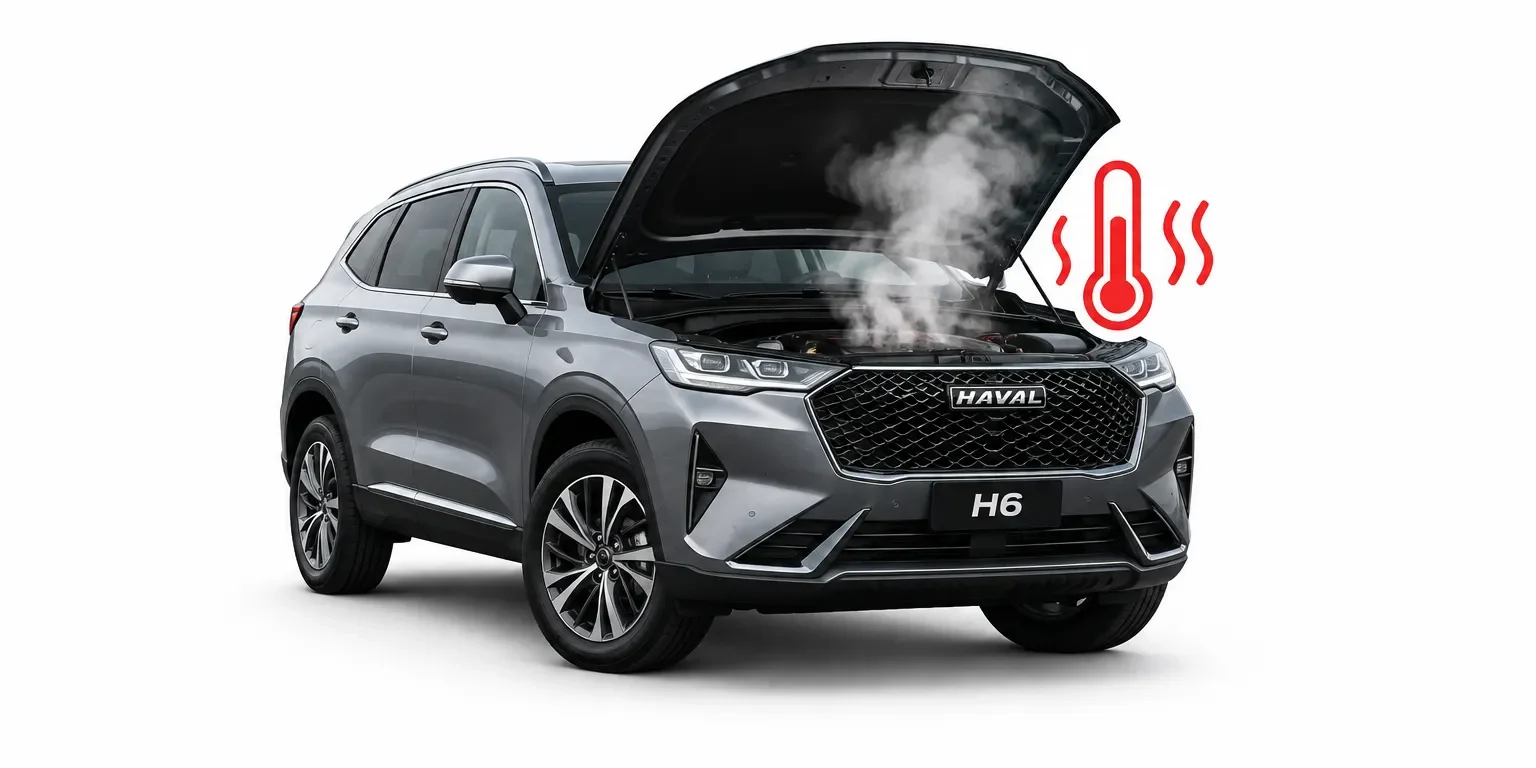
If your Haval H6 overheats after driving for 30 minutes, do not assume the hot Dubai weather is the only reason. A healthy cooling system should control engine temperature even in demanding conditions. When the temperature starts rising only after the vehicle has been running for some time, it often points to a cooling system problem that becomes worse as the engine reaches full operating temperature.
In this guide, we will explain the most common causes of Haval H6 overheating, why the problem can appear after 30 minutes, the warning signs to watch for, real Haval H6 overheating cases, and what you should do before the problem causes expensive engine damage.
Why Does a Haval H6 Overheat After 30 Minutes?
When an Haval H6 runs normally for 20 to 30 minutes and then starts overheating, the problem may be related to coolant circulation, radiator efficiency, thermostat operation, cooling fan performance, or a developing coolant leak.
The timing is important. Some faults do not show themselves immediately after starting the engine. As coolant temperature increases and the cooling system becomes pressurized, a weak component can start losing its ability to control heat.
Dubai conditions can make the problem more noticeable. High ambient temperatures, heavy traffic, constant air conditioning use, dust and low-speed driving all place additional demand on the cooling system. UAE automotive maintenance sources also identify coolant problems, radiator restrictions, thermostat faults, water pump problems and cooling fan failures as common contributors to overheating.
What Are the Common Causes of Haval H6 Overheating?
There is rarely one single cause for every Haval H6 overheating problem. A proper inspection should identify the actual fault instead of replacing parts based only on symptoms.
1. Low Coolant or a Haval H6 Coolant Leak
Coolant is responsible for carrying heat away from the engine and transferring it to the radiator. If the coolant level becomes too low, the system cannot remove heat efficiently.
A small leak may be difficult to notice when the vehicle is parked. The leak can become more obvious after the engine becomes hot and the cooling system builds pressure.
Look for:
- Coolant level dropping repeatedly
- Wet areas around hoses or the radiator
- Dried coolant residue
- Sweet coolant smell
- Steam from the engine bay
- Temperature rising during longer drives
If you regularly top up the coolant, do not treat this as normal maintenance. Find out where the coolant is going.
A pressure test can help identify leaks that are not obvious during a basic visual inspection.
2. Radiator Problems
The radiator removes heat from the coolant before the coolant returns to the engine.
A radiator can lose efficiency because of internal blockage, external dirt, damaged fins or a leak. Dubai’s dust and debris can restrict airflow through the radiator and condenser, particularly if the vehicle has accumulated dirt over time.
A partially restricted radiator can explain why your Haval H6 drives normally at first but begins overheating once enough heat has accumulated.
The Haval H6 owner’s manual also advises checking the radiator for foreign material when dealing with an overheating condition.
3. Cooling Fan Failure
The cooling fan becomes especially important when the vehicle is moving slowly or sitting in traffic.
At highway speed, natural airflow helps cool the radiator. In heavy Dubai traffic, there is much less airflow, so the electric fan must provide sufficient air movement.
A weak fan motor, electrical fault, relay problem or fan control issue can therefore cause the temperature to rise after the car has been running for a while.
One useful clue is this:
If your Haval H6 stays cool at higher road speeds but overheats in traffic or while idling, the cooling fan and airflow system should be checked carefully.
Dubai workshop reports also highlight cooling fan faults as an important cause of overheating and AC performance problems during extreme heat.
4. Thermostat Not Opening Correctly
The thermostat controls when coolant flows through the radiator.
If the thermostat does not open correctly, hot coolant cannot circulate through the radiator as it should. The engine may initially appear normal, but temperature can climb as heat builds up.
This is one reason a thermostat problem can produce the exact complaint:
“The car is fine for 20 or 30 minutes, then suddenly starts overheating.”
Thermostat problems are also documented among Haval overheating causes in UAE repair guidance.
5. Water Pump or Coolant Circulation Problem
The water pump is responsible for circulating coolant through the engine and cooling system.
A weak or malfunctioning pump can reduce coolant circulation. The vehicle may therefore appear normal during light driving but struggle when the engine is under greater thermal load.
This deserves particular attention on Haval H6 models equipped with electronically controlled cooling components. Haval service documentation includes diagnostic faults related to the electronic water pump, including pump overtemperature and electrical problems.
6. Air Trapped in the Cooling System
Air pockets can interfere with proper coolant circulation.
This can happen after cooling system repairs, coolant replacement or a leak that allowed air into the system. Temperature fluctuations, poor heater performance and inconsistent coolant circulation can sometimes accompany this problem.
Simply adding coolant may not solve the underlying issue. The system may need to be properly inspected and bled according to the vehicle’s service procedure.
7. Head Gasket or Internal Engine Problem
This is the more serious possibility.
If combustion gases enter the cooling system because of a head gasket or related internal engine problem, the cooling system can become pressurized abnormally. Coolant may also become contaminated.
Warning signs can include:
- Repeated overheating
- Coolant loss without an obvious external leak
- White exhaust smoke
- Bubbles or abnormal pressure in the coolant system
- Milky or contaminated fluids
- Rough engine operation
- Loss of engine power
An overheating engine should be diagnosed before assuming the head gasket has failed. Several less serious cooling system faults can produce similar symptoms.
Real Haval H6 Overheating Cases
Real repair reports show why diagnosing the root cause matters.
Case Study 1: Haval H6 Water Pump Investigation
In a documented Haval H6 owner report from Pakistan, a 2021 H6 2.0T AWD developed an overheating warning during motorway driving. The owner reported that the coolant reservoir was full and no obvious leak could be seen. A water pump problem was investigated because the overheating returned after the vehicle cooled down.
This is an important lesson. A full coolant reservoir does not automatically mean the cooling system is working correctly. Coolant must also circulate correctly and the system must maintain proper temperature control.
Case Study 2: Haval H6 Internal Cooling and Oil Cooler Failure
Another documented Haval H6 case involved a 2020 2.0 GDI Turbo model with an overheating complaint. The inspection reportedly found oil and coolant intermingling, low engine oil, irregular cylinder compression and abnormal pressure building in the cooling system. The reported diagnosis involved an internal engine oil cooler failure, followed by replacement of the oil cooler, thermostat, temperature sensor, seals and related components.
This illustrates why repeatedly replacing coolant or a radiator without proper diagnosis can waste money. Overheating can sometimes originate from a less obvious internal fault.
Why Is Haval H6 Overheating in Dubai More Noticeable?
Dubai’s environment puts additional thermal demand on a vehicle.
During extreme UAE summer conditions, ambient temperatures can exceed 45°C. The cooling system has less temperature difference available between the hot coolant and surrounding air, while the engine is also dealing with heavy air conditioning use and stop and go traffic.
For an Haval H6 with a cooling system that is already slightly weak, these conditions can expose the problem quickly.
For example, a vehicle may behave normally during an early morning drive but begin overheating during afternoon traffic. That does not necessarily mean the heat itself caused the failure. It may have exposed an existing weakness in the radiator, thermostat, water pump, fan or coolant system.
What Are the Warning Signs of Haval H6 Engine Overheating?
Do not wait for steam to come from the bonnet before taking action.
Common warning signs include:
- Temperature gauge moving higher than normal
- Temperature warning appearing on the dashboard
- Steam coming from the engine bay
- Coolant smell
- Reduced engine performance
- Air conditioning becoming less effective
- Coolant level repeatedly dropping
- Engine fan running unusually often
- Unusual noises from the engine bay
The Haval H6 manual specifically identifies a temperature gauge entering the red zone, weak acceleration and steam from the bonnet as overheating symptoms.
What Should You Do If Your Haval H6 Overheats?
If the temperature warning appears while driving, treat it seriously.
Reduce engine load and switch off the air conditioning. Find a safe place to stop and switch the engine off if the temperature continues rising.
Never open the coolant reservoir or radiator cap while the engine is hot. The cooling system can be under pressure, and hot coolant or steam can cause serious burns. Haval’s own operating instructions warn against opening the radiator or overflow tank while it is hot.
Allow the vehicle to cool properly before any coolant level inspection. If the temperature warning returns, arrange professional inspection rather than continuing to drive.
Driving repeatedly while the engine is overheating can turn a cooling system repair into a major engine repair.
How Is an Haval H6 Overheating Problem Diagnosed?
A professional mechanic should diagnose the complete cooling system instead of immediately replacing the most obvious component.
At Car Repair Auto Services, an overheating inspection can involve checking:
- Coolant level and condition
- Cooling system pressure and possible leaks
- Radiator condition and airflow
- Cooling fan operation
- Thermostat operation
- Water pump and coolant circulation
- Coolant temperature readings
- Relevant diagnostic fault codes
- Hoses, connections and reservoir
- Possible internal engine or head gasket problems when indicated
This approach helps separate a simple coolant leak from a thermostat, radiator, fan, water pump or internal engine problem.
For professional car repair and inspection services in Dubai, you can learn more about Car Repair Auto Services here: Car Repair Auto Services Dubai
How Much Does Haval H6 Overheating Repair Cost in Dubai?
The cost depends entirely on the failed component.
A coolant leak or hose repair is usually very different from replacing a radiator, water pump or repairing internal engine damage.
As a general guide, Dubai repair market sources list relatively simple cooling repairs such as coolant diagnosis and thermostat replacement at the lower end, while radiator, water pump and especially head gasket repairs can become considerably more expensive. Exact pricing depends on the H6 model year, engine, parts required and extent of damage.
The most important point is not to choose a repair based only on the cheapest quote. Ask what caused the overheating and what diagnostic test confirmed it.
Can You Keep Driving an Overheating Haval H6?
No. If the temperature gauge reaches the red zone or an overheating warning appears, continuing to drive can cause serious engine damage.
You may be able to drive a short distance to a safe location if the temperature is stable and the vehicle is not showing an active overheating warning, but once the temperature continues climbing, stop and arrange professional assistance.
An overheating problem that costs relatively little to diagnose can become a major repair if the engine is repeatedly operated at excessive temperature.
How Can You Prevent Haval H6 Cooling System Problems?
Prevention starts with regular inspection rather than waiting for the temperature warning.
For Dubai driving, pay particular attention to:
- Coolant level and condition
- Radiator and condenser cleanliness
- Cooling fan operation
- Hoses and clamps
- Water pump condition
- Thermostat performance
- Correct coolant specification
- Warning lights and temperature changes
If you notice that the Haval H6 temperature behaves differently from normal, investigate it early. A small change in temperature during traffic can be much easier to deal with than an engine that suddenly overheats on a long drive.
Final Thoughts
If your Haval H6 overheats after driving for 30 minutes, the timing of the problem is an important diagnostic clue. It can indicate a coolant circulation issue, thermostat problem, radiator restriction, cooling fan fault, coolant leak or, in more serious cases, an internal engine problem.
Dubai’s extreme heat can expose weaknesses that may remain unnoticed in cooler conditions, but the weather should not be used as the diagnosis by itself. The cooling system needs to be properly tested to find the actual cause.
If your Haval H6 is showing rising temperatures, coolant loss, warning lights or repeated overheating, have it inspected before continuing to drive. A proper diagnosis through Car Repair Auto Services can help identify the fault and prevent a cooling system problem from developing into expensive engine damage.
FAQs
Why does my Haval H6 overheat after 30 minutes?
An Haval H6 that overheats after around 30 minutes may have a low coolant level, coolant leak, restricted radiator, faulty thermostat, weak water pump or cooling fan problem. The fault often becomes noticeable after the engine and cooling system reach higher temperatures.
Can a coolant leak cause Haval H6 overheating?
Yes. A coolant leak reduces the amount of coolant available to carry heat away from the engine. Even a small leak can become more serious once the cooling system gets hot and pressurized.
Why does my Haval H6 overheat in Dubai traffic?
Stop and go traffic reduces natural airflow through the radiator. If the cooling fan, radiator, coolant system or thermostat is already weak, Dubai’s high ambient temperatures can make the problem appear much sooner.
Is it safe to drive an overheating Haval H6?
No. If the temperature gauge reaches the red zone or an overheating warning appears, stop safely and switch off the engine. Do not open the coolant reservoir while the engine is hot because pressurized coolant can cause serious burns.
How do I fix a Haval H6 overheating problem?
The correct repair depends on the cause. A professional inspection should check coolant leaks, radiator condition, thermostat operation, cooling fans, water pump performance and, when necessary, internal engine condition before parts are replaced.