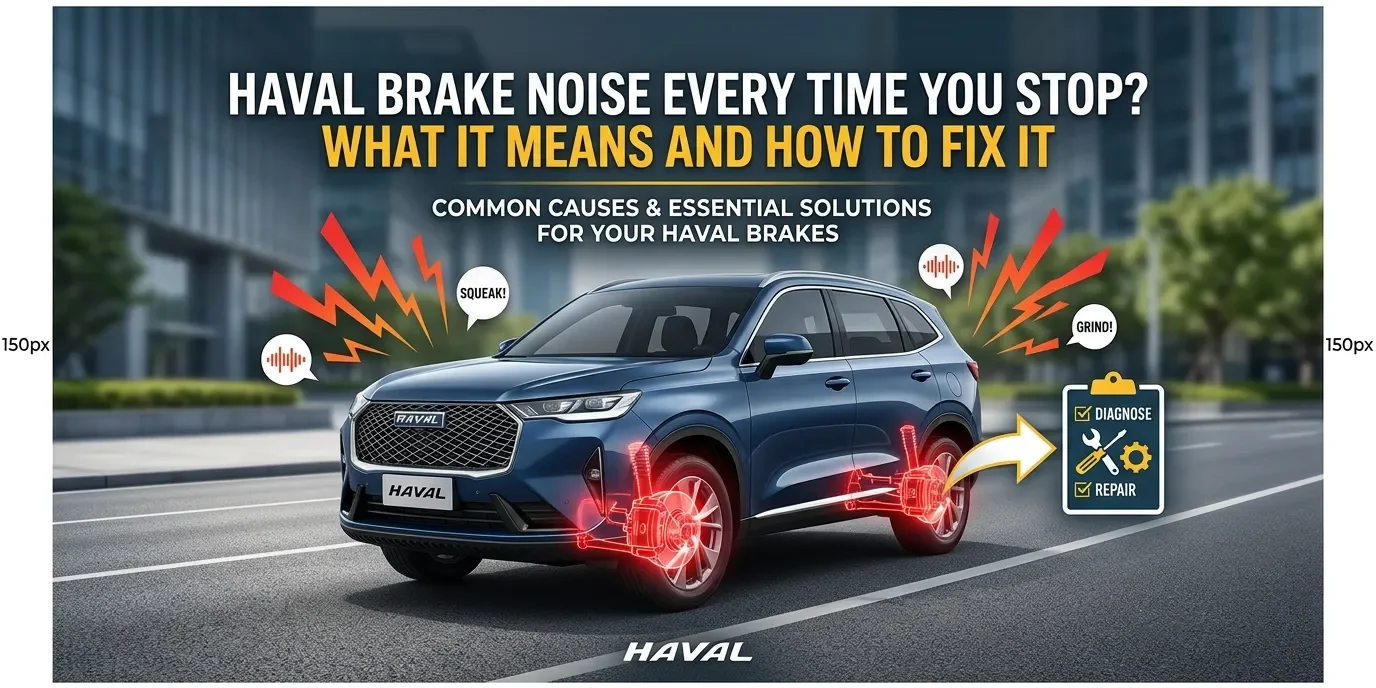
Hearing a sharp squeak every time you stop your Haval at a traffic light can be frustrating. Sometimes, the sound disappears after a few minutes. Other times, it becomes louder or turns into an unpleasant grinding noise. Haval brake noise can result from worn brake pads, damaged discs, trapped dust, or problems with the braking system. Understanding these sounds helps you identify potential issues, avoid unnecessary repairs, and keep your Haval safe on Dubai’s roads.
Why Does Your Haval Make Noise When Braking?
Haval brake noise usually occurs when brake pads vibrate against the discs, become worn, or contact an uneven surface. Dust buildup, damaged brake components, and incorrect installation can also create unusual sounds. The cause depends on when the noise happens, how it sounds, and whether braking performance has changed.
When you press the brake pedal, the calipers push the brake pads against rotating discs to slow the vehicle. These components must work together smoothly. Even a small problem with the pads, discs, or caliper hardware can produce noticeable noise.
For Haval H6, Jolion, and H9 owners, identifying whether the noise occurs during light braking, hard braking, or reversing can help a mechanic narrow down the problem.
What Do Different Haval Brake Noises Mean?
Not every brake sound indicates the same problem. A brief squeak after washing your car is different from grinding that continues every time you brake.
| Brake Noise | Possible Cause | Recommended Action |
|---|---|---|
| High-pitched squeaking | Brake dust, pad vibration, or worn pads | Arrange a brake inspection |
| Metallic grinding | Severely worn pads or damaged discs | Stop driving and arrange recovery |
| Clicking when stopping | Loose brake pads or hardware | Inspect caliper components promptly |
| Scraping while driving | Trapped debris or brake components rubbing | Check before further driving |
| Squealing at low speeds | Pad vibration, glazing, or worn hardware | Inspect pads and discs |
| Vibration while braking | Uneven disc thickness or disc runout | Professional brake inspection |
These sounds are diagnostic clues, not confirmed faults. Two vehicles making similar noises may need completely different repairs.
7 Common Causes of Haval Brake Noise and How to Fix Them
1. Worn Brake Pads
Worn brake pads are one of the first things to check when your Haval makes a squealing or scraping sound. Brake pads contain friction material that gradually becomes thinner with use.
Some pads feature a metal wear indicator designed to make noise when replacement is needed. If the friction material wears away completely, the metal backing plate can contact the brake disc and cause serious damage.
How to fix it: A mechanic measures the remaining friction material and checks both the inner and outer pads. Pads typically require replacement when their friction material approaches 3 mm, although the correct limit depends on the vehicle and component specifications
2. Damaged or Uneven Brake Discs
Brake discs, also called rotors, provide the surface that brake pads press against. Over time, discs can develop grooves, uneven thickness, corrosion, or heat-related damage.
If your Haval shakes while slowing down, particularly through the steering wheel or brake pedal, the discs may not be working evenly. However, suspension and wheel-related problems can produce similar symptoms.
How to fix it: A technician measures disc thickness, checks for excessive runout, and examines the braking surface. Damaged discs may need replacement. Resurfacing is only appropriate when the manufacturer permits it and the finished disc remains safely above its minimum thickness.
3. Brake Dust and Sand Buildup
Dubai’s dusty environment can contribute to brake noise, especially when vehicles regularly travel near construction areas or on sandy roads.
Fine particles may become trapped around the brake pads, discs, or protective shields. This can create squeaking or scraping, even when the pads still have sufficient friction material.
How to fix it: The braking assembly should be inspected and cleaned using approved brake-cleaning methods. If sand has damaged the discs or pads, cleaning alone may not solve the problem.
Never apply ordinary oil or lubricant to brake discs or pad friction surfaces. This can seriously reduce braking performance.
4. Glazed Brake Pads
Brake pad glazing occurs when excessive heat changes the friction material’s surface, sometimes making it hard and shiny. Glazed pads can produce squealing and may reduce braking effectiveness.
Repeated heavy braking, dragging calipers, and incorrect pad bedding can contribute to glazing. The problem may become more noticeable during frequent stops in Dubai traffic.
How to fix it: A mechanic examines the pad surfaces, checks for signs of overheating, and investigates why the brakes became too hot. Depending on the damage, replacement of the affected pads or discs may be necessary.
5. Sticking Brake Calipers
A brake caliper must apply and release pressure correctly. If its piston or sliding mechanism sticks, one brake pad may remain pressed against the disc.
This can cause continuous rubbing, uneven pad wear, excessive heat, or a burning smell near the wheel. In some cases, the vehicle may also pull to one side while braking.
How to fix it: The caliper piston, slider pins, seals, and protective boots need inspection. Cleaning and servicing may restore proper movement, but damaged or seized components require repair or replacement.
6. Loose Brake Hardware
Brake pads are held in position by brackets, clips, springs, and other components. If these parts become worn, damaged, or incorrectly installed, the pads may shift when braking.
You might hear a click during the first brake application or a rattle over uneven roads. A similar sound may also come from suspension parts, so inspection should not focus only on the brakes.
How to fix it: A technician checks the pad fitment, anti-rattle clips, shims, brackets, and mounting hardware. Any damaged or missing parts must be replaced with components appropriate for your Haval model.
7. Moisture and Surface Rust
A light squeaking or scraping sound during the first few stops after overnight parking is sometimes caused by surface rust on the brake discs.
This can happen after a car wash, rainfall, or exposure to humid conditions. Light surface corrosion often clears as the pads contact the discs during normal braking.
How to fix it: If the sound disappears quickly and braking remains normal, an immediate repair may not be necessary. However, persistent scraping, heavy corrosion, or brake vibration requires inspection.
Why Do Haval Brakes Squeak After New Brake Pads Are Installed?
New brake pads can sometimes produce temporary noise while their surfaces settle against the discs. This process is known as bedding in.
However, persistent noise after replacement should never automatically be dismissed as normal. Incorrect pad fitment, contaminated friction surfaces, damaged discs, missing shims, or sticking calipers can all cause problems.
For example, installing new pads against a deeply grooved disc may create uneven contact. Although the pads are new, the underlying problem remains.
Brembo recommends following the manufacturer’s bedding instructions and allowing a suitable running-in period, often around 200 to 300 km, while avoiding unnecessary harsh braking.
If your Haval becomes noisy immediately after a brake service, ask the workshop to inspect the installation and check disc condition.
Why Does Your Haval Make Brake Noise at Low Speeds or When Reversing?
Low-speed brake squealing often occurs because of vibration between the brake pads and discs. Light pedal pressure during parking or slow-moving traffic may make this vibration more noticeable.
A clicking or groaning noise while reversing can sometimes occur when brake pads change their direction of loading. However, persistent noise may indicate worn hardware, poor pad fitment, or a problem with the parking brake.
Modern Haval vehicles may also produce brief sounds from systems such as electronic parking brakes or Auto Hold. These noises are different from ongoing grinding or metal scraping.
If a noise happens only when reversing, note whether it appears before or after pressing the brake pedal. This information can help a technician identify the correct component.
Can Dubai’s Heat and Traffic Make Haval Brake Noise Worse?
Dubai’s driving conditions can contribute to brake wear, but hot weather alone does not mean the braking system is faulty.
Frequent braking in slow traffic generates repeated heat cycles. Dust and sand can also affect the friction surfaces, especially when vehicles travel through sandy areas.
Drivers who frequently travel through Sheikh Zayed Road traffic, busy commercial districts, or multi-storey parking garages may experience more frequent brake use than drivers covering the same distance on open highways.
Bosch Car Service UAE identifies heat, traffic, and sandy conditions as factors worth considering when checking brake wear.
Bosch Car Service
Regular inspections help identify developing problems before they affect braking performance.
How Do Professional Mechanics Diagnose Haval Brake Noise?
A proper brake diagnosis should identify the actual fault before replacement parts are recommended. Simply changing brake pads without inspecting the rest of the system can leave the problem unresolved.
A professional inspection generally involves:
- Checking the symptoms: Identifying whether the noise occurs during light braking, hard braking, reversing, or normal driving.
- Inspecting brake pads and discs: Measuring friction material and disc thickness, checking both sides for damage or uneven wear.
- Examining the calipers: Inspecting pistons, slider pins, seals, and brake hardware for restricted movement.
- Checking brake hydraulics: Examining brake fluid condition, hoses, and visible signs of leakage.
- Testing electronic systems: Checking relevant warning lights and fault codes when ABS, Auto Hold, or the electronic parking brake may be involved.
Once the repair is complete, the technician should carry out appropriate functional checks and a controlled road test where safe.
An important detail for some newer Haval models is the electronic parking brake. Rear brake servicing may require a model-specific maintenance mode. Forcing an electronic parking brake mechanism without the proper procedure can damage it.
Haynes Manuals North America
How Can You Fix Haval Brake Noise Permanently?
The correct repair depends on the underlying cause, not just the sound.
If dust or contaminated hardware is responsible, professional cleaning and servicing may resolve the problem. If the brake pads are worn, they need replacement with correctly matched components.
Damaged brake discs require measurement before a decision is made about resurfacing or replacement. If a caliper is sticking, the cause of its restricted movement must be corrected rather than simply installing new pads.
When brake pads are replaced, both sides of the same axle should be serviced as required by the manufacturer’s procedure. Suitable replacement parts, correct fitting, and proper bedding help reduce the chance of recurring noise.
This is why a complete diagnosis often provides better long-term results than repeatedly replacing components without confirming the fault.
Is It Safe to Drive a Haval With Noisy Brakes?
A brief, light squeak does not always mean the brakes are unsafe. However, persistent noise should be inspected, particularly if the sound is becoming louder.
Stop driving and arrange professional assistance if you notice:
- Loud metallic grinding or scraping during braking.
- A brake pedal that feels unusually soft or sinks.
- Significantly reduced stopping power.
- Strong pulling to one side when braking.
- Smoke, a burning smell, or excessive heat around a wheel.
- A brake system warning accompanied by unusual braking behaviour.
If these symptoms occur while driving, slow down carefully, pull over somewhere safe, and arrange vehicle recovery rather than attempting to reach a workshop.
Common Mistakes Haval Owners Should Avoid
Brake repairs become more expensive when early warning signs are ignored or an incorrect fix is attempted.
One common mistake is continuing to drive while the brakes grind. Another is installing new pads without examining the discs and calipers.
Avoid using household lubricants or spraying products onto brake friction surfaces to silence squeaking. Also, do not assume that every brake noise requires replacing all four discs and pads.
A reliable mechanic should be able to explain which components are faulty, show the inspection findings, and recommend repairs based on their condition.
How to Prevent Haval Brake Noise in Dubai
Keeping your Haval’s brakes in good condition starts with routine maintenance and sensible driving habits.
Have the braking system inspected during scheduled servicing, with earlier checks if unusual noise appears. For vehicles exposed to frequent dust and heavy traffic, additional inspections may be helpful.
Avoid repeated harsh braking when unnecessary, leave enough distance from the vehicle ahead, and follow the manufacturer’s brake fluid replacement schedule.
After brake repairs, follow the specified bedding procedure and report any persistent noise, vibration, or reduced stopping performance.
Preventive maintenance cannot eliminate every brake sound, but it can help detect worn parts before they cause further damage.
Get Your Haval Brakes Checked in Dubai
If your Haval squeaks at every stop, makes grinding noises, or vibrates when braking, the most effective solution is to identify the cause before replacing parts.
At Car Repair Auto Services, you can enquire about a Haval brake inspection in Dubai and discuss the symptoms affecting your vehicle. Whether the concern involves worn pads, brake discs, or another braking component, a proper inspection is the first step toward choosing the right repair.
Don’t wait for a minor brake sound to become a serious braking problem. Contact Car Repair Auto Services to arrange an assessment of your Haval’s braking system.
Frequently Asked Questions
1. Why does my Haval H6 make a squeaking noise when braking?
Haval H6 brake squeaking can occur because of worn pads, brake dust, glazing, or vibration between braking components. Persistent squeaking should be inspected to determine whether cleaning, servicing, or replacement is necessary.
2. Can I drive my Haval if the brakes are squeaking?
A brief squeak with normal braking performance is not always dangerous. However, persistent or worsening noise requires inspection. If you hear grinding or notice reduced braking power, stop driving and arrange professional assistance.
3. Why are my Haval Jolion brakes noisy even with new pads?
New pads may need bedding in, but incorrect installation, worn discs, or damaged caliper hardware can also cause noise. If the sound persists, a mechanic should inspect the replacement work and braking components.
4. How often should Haval brake pads be replaced in Dubai?
There is no single replacement mileage suitable for every Haval. Brake pad life depends on driving habits, traffic, road conditions, and the vehicle model. Inspect pad thickness during routine servicing and replace pads when they reach their specified wear limit.
5. Can cleaning the brakes stop Haval brake noise?
Yes, professional cleaning can help when brake dust, sand, or contamination is responsible. However, cleaning cannot repair severely worn pads, damaged discs, or faulty calipers. These issues require the appropriate mechanical repair.