Introduction
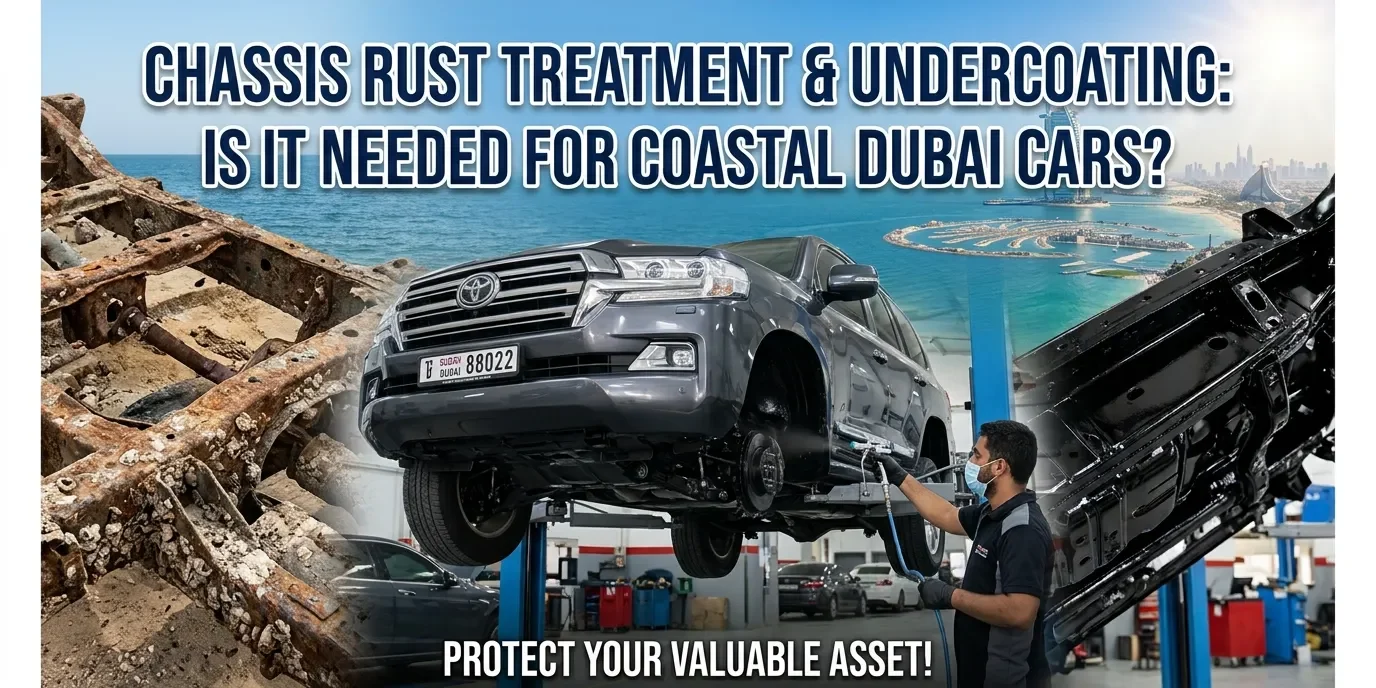
Dubai is known for its hot weather, coastal roads, and high humidity during certain months. While most car owners focus on paint protection, engine maintenance, and air conditioning, one important area often gets ignored: the vehicle’s chassis and underbody. Over time, moisture, salt deposits, and road contaminants can affect exposed metal parts and increase the risk of corrosion. This is where car chassis rust repair Dubai services and protective undercoating become important. But does every car in Dubai need underbody protection, or is it only necessary for vehicles exposed to coastal conditions?
Let’s understand how chassis rust develops, when treatment is needed, and how the right protection can help extend your vehicle’s life.
Why Do Cars Develop Chassis Rust in Dubai?
Many people assume rust is only a problem in cold countries where roads are covered with snow and road salt. However, vehicles in coastal environments can also experience corrosion.
Dubai’s coastal climate exposes vehicles to humid air containing salt particles. When these particles settle on exposed metal surfaces underneath a vehicle, they can contribute to corrosion, especially when combined with trapped moisture.
Other common causes include:
- Coastal humidity: Moisture in the air can accelerate corrosion on exposed metal components.
- Salt deposits: Salt particles from coastal air can settle on the underbody and remain there.
- Sand and dirt accumulation: Dust and sand can collect around chassis joints, brackets, and other hidden areas.
- Water exposure: Driving through standing water or washing the underbody without proper drying can leave moisture in difficult-to-reach areas.
- Damaged protective coating: Scratches, stone chips, and worn factory coatings can expose bare metal.
For example, a vehicle regularly parked near Dubai Marina or Jumeirah Beach may experience different environmental exposure from a car mainly driven and parked in an inland area.
However, coastal location alone does not mean a vehicle will develop serious rust. Its age, condition, maintenance history, and exposure all matter.
What Parts of a Car Chassis Are Most Vulnerable to Rust?
The chassis is the structural foundation of a vehicle. It supports major components and helps maintain the vehicle’s strength and stability.
Rust does not always appear in obvious places. Sometimes corrosion starts in hidden sections where dirt and moisture collect.
Common areas that need inspection include:
- Chassis rails: These structural sections can become vulnerable if their protective coating is damaged.
- Suspension mounting points: Metal brackets and joints may develop corrosion after repeated exposure to moisture.
- Floor panels: Scratches, damaged seams, and trapped moisture can affect the underside of floor panels.
- Subframe: This supports important suspension and drivetrain components.
- Wheel arches: Dirt, sand, and moisture can collect behind liners and around metal edges.
- Exhaust brackets and mounting points: These exposed metal parts can experience surface corrosion.
A professional chassis inspection helps identify early corrosion before it spreads into more serious structural areas.
What Is Chassis Rust Treatment?
Chassis rust treatment is a process used to clean, treat, and protect metal areas underneath a vehicle that have developed corrosion.
The correct treatment depends on the level of rust. Light surface corrosion may only require cleaning, rust removal, and protective treatment. More advanced corrosion may need mechanical removal, metal repairs, or replacement of damaged sections.
A proper rust treatment process generally involves:
- Underbody inspection: The technician checks the chassis, subframe, suspension mounting points, and floor panels.
- Cleaning: Dirt, sand, grease, and loose contaminants are removed.
- Rust removal: Loose rust and corrosion are carefully removed using suitable tools.
- Surface treatment: A compatible rust treatment product is applied where required.
- Protective coating: Suitable underbody protection is applied after the surface is properly prepared.
One important point is that applying a coating directly over loose rust is not a proper repair. It can hide corrosion and make future inspections more difficult.
Chassis Rust Treatment vs Undercoating: What Is the Difference?
Chassis rust treatment and undercoating are related services, but they serve different purposes. Understanding the difference helps car owners choose the right solution instead of paying for unnecessary work.
Chassis rust treatment focuses on existing corrosion. It involves removing rust, preparing affected metal surfaces, and applying suitable protective products to prevent further corrosion.
Undercoating is a protective layer applied to suitable underbody surfaces. Depending on the product, it can help protect against moisture, road debris, dirt, and minor stone impacts.
| Feature | Rust Treatment | Undercoating |
|---|---|---|
| Main purpose | Treat existing corrosion | Protect suitable underbody surfaces |
| Application | Rust-affected areas | Compatible underbody areas |
| Preparation | Requires rust removal | Requires clean, dry surfaces |
| Best for | Vehicles with visible rust | Vehicles needing preventive protection |
These services are not always alternatives. A vehicle with existing corrosion may need rust treatment first, followed by an appropriate protective coating.
Is Undercoating Necessary for Cars in Coastal Dubai?
Undercoating is not automatically necessary for every vehicle in Dubai. Modern vehicles already come with factory-applied corrosion protection, and the level of protection varies by manufacturer and model.
However, additional underbody protection may be worth considering if your vehicle regularly experiences:
- Parking near beaches or coastal roads.
- Frequent exposure to humid and salty air.
- Driving through wet or muddy areas.
- Regular off-road driving or desert trips.
- Damage to the original underbody coating.
- Previous chassis repairs that exposed bare metal.
For example, someone who regularly drives between Jumeirah, Dubai Marina, and other coastal locations may want periodic underbody inspections. If the factory coating remains in good condition and there are no signs of corrosion, additional undercoating may not be needed.
The best approach is to inspect the vehicle first rather than applying a coating simply because it is driven in Dubai.
What Are the Warning Signs of Chassis Rust?
Chassis corrosion can develop without obvious signs inside the cabin. This is why checking underneath your vehicle during routine maintenance is important.
Watch for these warning signs:
1. Brown or reddish patches
Rust often starts as small orange or brown spots on exposed metal surfaces. These marks may appear around suspension brackets, chassis joints, and exposed fasteners.
2. Peeling underbody coating
If the original protective coating starts cracking, bubbling, or peeling, moisture may reach the metal underneath.
3. Flaking metal
Loose rust flakes can indicate that corrosion has progressed beyond a simple surface stain.
4. Unusual noises
Corroded brackets or damaged mounting points may contribute to unusual rattling or knocking sounds. However, these noises can have other causes and require proper inspection.
5. Visible structural damage
Deep corrosion, holes, or weakened metal around structural components should never be ignored. These issues may affect vehicle safety and require professional assessment.
If you notice any of these signs, arrange a chassis inspection before the corrosion becomes more difficult and expensive to repair.
How Does Professional Car Chassis Rust Repair Work in Dubai?
Professional car chassis rust repair Dubai services should focus on identifying the actual condition of the metal before recommending a repair or protective coating.
At Car Repair Auto Services, the appropriate repair approach should depend on the vehicle’s underbody condition, corrosion level, and previous maintenance history.
A proper inspection and treatment process generally includes the following stages.
1. Detailed Underbody Inspection
The technician examines accessible chassis sections, floor panels, suspension mounting points, subframes, and other exposed metal components. The aim is to identify surface rust, damaged coating, and areas that may need further investigation.
2. Removal of Dirt and Contaminants
Sand, grease, mud, and accumulated road debris must be removed before treatment. Applying protective products over dirty surfaces can reduce their ability to bond properly.
3. Rust Removal and Surface Preparation
Loose corrosion is removed using suitable mechanical methods. If the metal has deep pitting or structural damage, simply cleaning the surface will not be enough.
4. Rust Treatment and Repair
A suitable rust treatment product may be applied to prepared surfaces. Where corrosion has weakened structural metal, professional metal repair or component replacement may be necessary.
5. Application of Protective Undercoating
Once the surface is properly prepared and dry, a compatible underbody coating can be applied to suitable areas. The product must not interfere with drainage holes, moving parts, exhaust components, or other areas where coating is unsuitable.
6. Final Inspection
The technician checks the treated areas to ensure the coating is properly applied and important vehicle components remain accessible.
This preparation is what makes the difference between a proper rust protection service and simply covering the underside of a vehicle with a thick layer of coating.
Can Undercoating Prevent Rust Completely?
No. Undercoating cannot guarantee complete protection against rust.
It creates an additional protective barrier, but its effectiveness depends on surface preparation, product quality, application technique, and vehicle usage.
If moisture becomes trapped underneath damaged or poorly applied coating, corrosion may continue without being immediately visible. This is why regular inspections remain important, even after underbody protection.
Car owners should also avoid applying thick coatings over areas that already have active corrosion without proper treatment.
How Often Should You Inspect Your Car’s Chassis in Dubai?
There is no single inspection schedule that suits every vehicle. A car driven daily near coastal areas may need more frequent checks than one used occasionally and parked indoors.
As a practical maintenance approach:
- Check the underbody during routine servicing.
- Arrange an inspection if the vehicle has been exposed to salty water or flooding.
- Inspect damaged or repaired underbody sections before applying new coatings.
- Check the chassis after significant off-road driving or underbody impact.
- Follow the vehicle manufacturer’s corrosion protection and maintenance recommendations.
Regular inspections help identify small problems before they develop into expensive repairs.
Is Chassis Rust Repair Expensive in Dubai?
The cost of chassis rust repair depends on the location, severity, and extent of corrosion. Treating a small surface rust patch is usually less complicated than repairing a corroded chassis rail or structural mounting point.
The main factors affecting repair costs include:
- The amount of rust present.
- Accessibility of the affected area.
- Labour required for cleaning and rust removal.
- Type of rust treatment and protective coating.
- Whether metal repair or component replacement is necessary.
For an accurate estimate, the vehicle should be inspected before work begins. A reliable workshop should explain which areas need treatment, whether any structural repairs are required, and what protection is suitable afterward.
Why Choose Professional Underbody Inspection at Car Repair Auto Services?
Chassis protection is not just about applying a coating. The condition of the metal underneath your vehicle matters much more than the appearance of the finished surface.
At Car Repair Auto Services, a proper underbody assessment can help identify corrosion, damaged protective layers, and areas that need attention. Based on the inspection, the workshop can recommend suitable rust treatment, repair work, or preventive undercoating.
Whether you drive a luxury vehicle, family SUV, sedan, or daily commuter, checking the chassis can help you avoid overlooking problems that are difficult to see during normal driving.
If your vehicle regularly travels around Dubai’s coastal areas, an underbody inspection is a sensible part of long-term maintenance.
Final Thoughts: Should You Get Chassis Rust Treatment in Dubai?
Chassis rust treatment and undercoating can provide valuable protection for vehicles exposed to coastal humidity, salt deposits, and road contaminants. However, not every car needs additional underbody coating.
The right decision depends on the condition of your vehicle, its factory protection, and how it is used. If rust is already present, treat the affected metal properly before considering additional protection.
If you are concerned about corrosion or damaged underbody coating, contact Car Repair Auto Services to arrange a professional chassis inspection in Dubai. Identifying the problem early can help protect your vehicle and prevent more complicated repairs later.
Frequently Asked Questions
1. Is chassis rust common in Dubai?
Chassis rust can occur in Dubai, particularly on vehicles exposed to coastal humidity, salt deposits, trapped moisture, and damaged protective coatings. However, the risk varies depending on vehicle condition, usage, and maintenance.
2. Does every car in Dubai need undercoating?
No. Most modern vehicles already have factory-applied corrosion protection. Additional undercoating is generally worth considering when the original protection is damaged or the vehicle experiences regular exposure to harsh conditions.
3. Can undercoating stop existing chassis rust?
Undercoating alone cannot properly repair existing rust. The affected surface must first be cleaned, assessed, and treated. Severe corrosion may require professional metal repairs or component replacement.
4. How long does car undercoating last?
Its lifespan depends on the coating type, application quality, vehicle usage, and environmental exposure. Follow the product manufacturer’s maintenance recommendations and arrange periodic inspections.
5. Where can I get car chassis rust repair in Dubai?
You can contact Car Repair Auto Services in Dubai for an underbody inspection and advice on suitable chassis rust treatment and protective solutions.