Seeing the oil warning light appear while driving can turn an ordinary trip into a stressful situation. If you are wondering what to do when oil light comes on, the first rule is simple: do not ignore it. A red oil pressure warning can indicate that your engine is not receiving enough lubrication, and continuing to drive may cause serious internal damage. In this guide, we explain what the oil light means, what you should check, when it is safe to add oil, and when you should call a professional car repair service in Dubai.
What Does the Oil Light Mean?
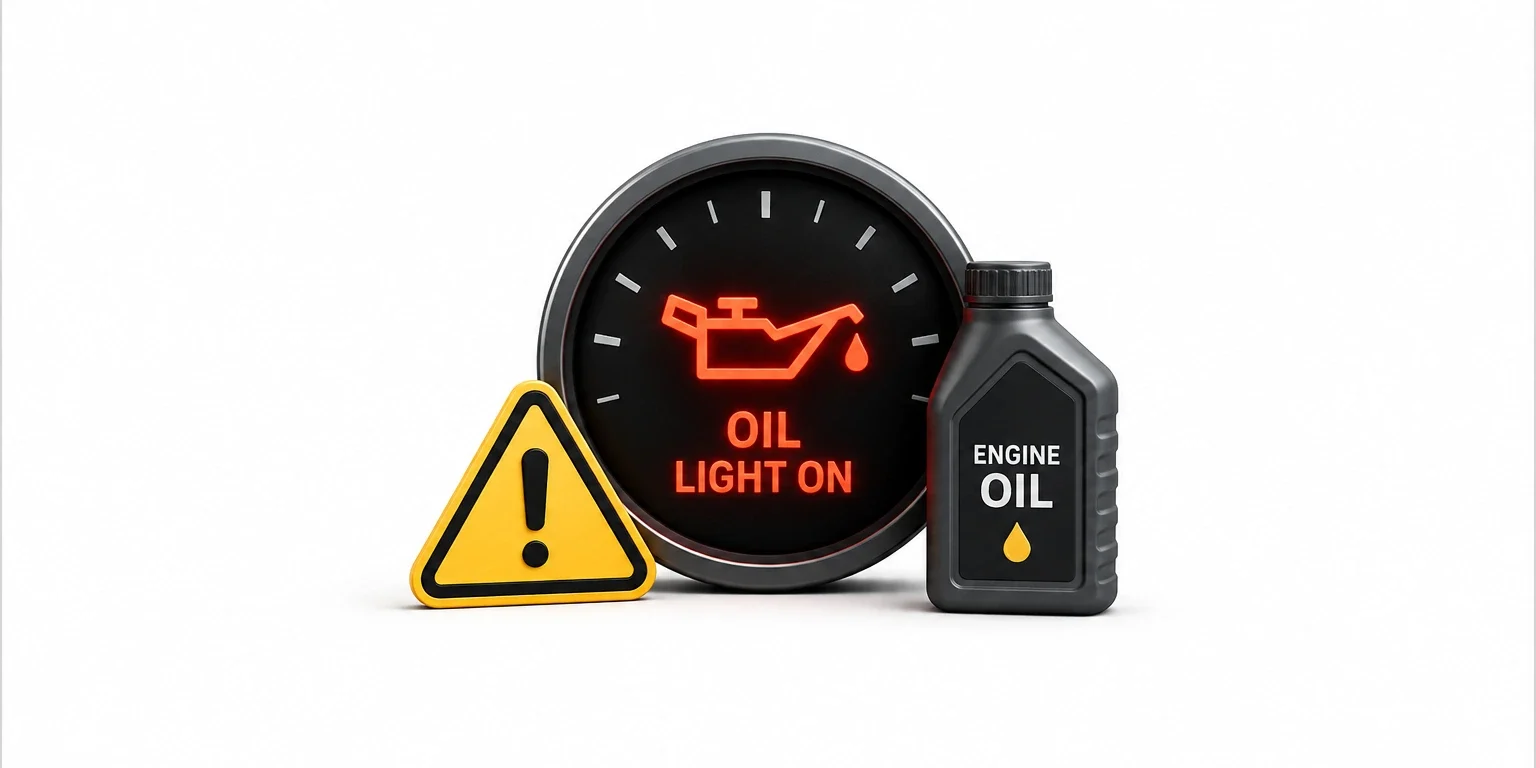
The oil light is a dashboard warning connected to your engine’s lubrication system. Depending on the vehicle, it may indicate low engine oil level, low oil pressure, or a fault with the oil pressure monitoring system.
A red oil can symbol usually deserves immediate attention. Low oil pressure means oil may not be reaching critical engine components at the pressure required for proper lubrication. Battmobile’s guide also distinguishes between oil level warnings and oil pressure warnings, noting that modern vehicles may use separate indicators for these conditions.
The important point is that an oil light does not always mean you simply need an oil change. Sometimes the underlying problem is an oil leak, faulty sensor, blocked filter, failing oil pump, or internal engine wear.
What to Do When Oil Light Comes On While Driving
If the oil warning light appears while you are driving, treat it as an urgent mechanical warning.
1. Pull Over Safely
Reduce your speed and look for a safe place to stop. In Dubai, this could mean moving away from fast-moving traffic on a major road or finding a safe parking area.
Do not continue driving simply because the car still feels normal. An engine can suffer damage before you hear obvious knocking or notice a loss of power.
2. Turn the Engine Off
Once you are safely stopped, switch the engine off.
This is one of the most important things to do when the oil light comes on. If oil pressure is genuinely low, keeping the engine running means internal components may continue operating without adequate lubrication.
3. Allow the Engine to Settle
Give the engine some time before checking the oil level. Park on reasonably level ground if possible.
Your owner’s manual should provide the correct procedure for checking engine oil because dipstick and electronic oil measurement systems vary between vehicles.
4. Check the Oil Level
If your vehicle has a dipstick, remove it, wipe it clean, insert it again and then remove it to check the level.
If the oil is below the manufacturer’s recommended range, the engine may be low on oil. However, adding oil should not automatically be considered a complete repair.
You need to understand why the oil level became low in the first place.
5. Look for Signs of an Oil Leak
Check underneath the vehicle and around the engine bay for fresh oil.
Common clues include:
- Oil spots underneath the car
- A burning oil smell
- Smoke from the engine area
- Wet or oily engine components
- A rapidly falling oil level
An external leak can come from areas such as the oil pan, drain plug, oil filter, valve cover gasket, or other seals.
6. Do Not Restart the Engine if the Situation Looks Serious
If the dipstick is nearly dry, you see a significant leak, the engine is making knocking or ticking noises, or the warning light remains on, do not gamble with the engine.
Arrange professional assistance or vehicle recovery instead.
A few minutes of inconvenience can be far cheaper than replacing or rebuilding an engine.
Is It Safe to Drive With the Oil Light On?
No, you should not continue driving when a red oil pressure warning light remains illuminated. Stop in a safe location, switch off the engine, check the oil level if appropriate, and arrange professional diagnosis if the warning does not have an obvious and safe explanation.
Low oil pressure can prevent adequate lubrication of bearings, camshafts and other moving engine components. Battmobile similarly advises drivers to stop the vehicle and switch off the engine when the oil warning light appears while driving.
This is particularly important in Dubai, where high ambient temperatures and heavy traffic can put considerable thermal stress on a vehicle.
Why Does the Oil Light Come On?
There is no single cause. A mechanic should diagnose the underlying problem instead of simply clearing the warning.
Low Engine Oil Level
This is one of the most straightforward possibilities.
Your engine may have consumed oil between services, or oil may have escaped through a leak. Some older or high-mileage engines naturally consume more oil than newer engines.
If the level is low, adding the correct manufacturer-approved oil may restore the level. But if the warning returns, the vehicle needs further inspection.
Oil Leak
A leaking engine can gradually lose enough oil to reduce lubrication and eventually trigger an oil pressure warning.
For example, a small leak around an oil filter or gasket may initially leave only a few drops. Over time, the loss can become significant.
A professional inspection should identify the leak rather than repeatedly topping up the oil.
Faulty Oil Pressure Sensor
Sometimes the engine has adequate oil and normal mechanical pressure, but the sensor or electrical circuit is producing an incorrect warning.
This is why replacing the sensor without testing the system is not always the right approach.
A proper diagnosis can include checking the sensor, wiring, stored fault codes and actual oil pressure.
Blocked or Incorrect Oil Filter
The oil filter is responsible for removing contaminants from the engine oil. A badly restricted filter or an incorrect filter can contribute to lubrication problems.
Oil quality and filter condition should therefore be considered when diagnosing recurring oil warnings.
Failing Oil Pump
The oil pump circulates engine oil through the lubrication system. If the pump is worn or malfunctioning, the engine may not develop adequate oil pressure.
This is a more serious issue and requires mechanical diagnosis rather than simply adding oil.
Worn Internal Engine Components
Excessive internal wear can affect the engine’s ability to maintain proper oil pressure.
If an engine has high mileage and the oil warning appears together with knocking, ticking, rough running or reduced performance, the mechanic should investigate internal engine condition.
These symptoms are among the warning signs associated with more serious oil pressure problems.
What If the Oil Light Comes On Only Sometimes?
An intermittent oil light should not automatically be dismissed as an electrical glitch.
If the warning appears when the engine is hot, during idle, while cornering, braking, or accelerating, make a note of exactly when it happens. That information can help a technician reproduce the problem.
Possible causes include:
- Oil level close to the minimum
- Oil pressure sensor problems
- Oil pump wear
- Incorrect oil viscosity
- Engine wear
- Wiring or electrical faults
- Oil circulation restrictions
A warning that disappears does not necessarily mean the problem has disappeared.
What If the Oil Light Comes On After an Oil Change?
This is an important situation that deserves attention.
If the oil warning appeared shortly after an oil service, check whether the oil level is correct and whether there are signs of leakage. The filter, drain plug and other service points should also be inspected.
One documented real-world example shared by a driver involved an oil warning that appeared after an oil filter had become loose, allowing oil to escape. After the leak was addressed and the oil level restored, the warning disappeared. This illustrates why a warning light should be investigated at its source rather than simply reset.
The lesson for drivers is straightforward: a recent oil change does not rule out an oil-related problem.
Real Workshop-Type Case: Low Oil Versus Low Oil Pressure
Consider a common scenario.
A Dubai driver notices the red oil can symbol while travelling through city traffic. The vehicle still sounds normal, so the driver assumes the light can wait until the next service.
That is exactly where the risk begins.
The driver stops, checks the oil and discovers that the level is significantly below the recommended range. A mechanic then finds an oil leak around the lubrication system. Simply adding oil would have temporarily increased the level, but it would not have fixed the leak.
A second scenario is different. The oil level is correct, but the warning remains illuminated. In this situation, the mechanic needs to investigate actual oil pressure, the pressure sensor, wiring, filter and potentially the oil pump.
The same dashboard warning can have very different causes. Diagnosis matters.
How a Professional Garage Diagnoses an Oil Warning
في تصليح سيارات خدمة سيارات, the sensible approach is to identify the cause rather than guess which component needs replacing.
The inspection can involve:
- Checking the engine oil level and condition.
- Inspecting the engine and underside for leaks.
- Checking the oil filter and service components.
- Scanning the vehicle for relevant diagnostic faults.
- Testing the oil pressure when required.
- Inspecting the oil pressure sensor and electrical circuit.
- Checking the oil pump and internal engine condition if pressure remains abnormal.
This type of systematic diagnosis helps prevent unnecessary parts replacement.
Car Repair Auto Service provides engine diagnostics and repair in Dubai, including oil leak repairs, seal replacement and engine component repairs. The garage is located in Al Quoz Industrial Area 2 and states that it uses modern diagnostic equipment and OEM-grade parts.
Why Dubai Drivers Should Take an Oil Warning Seriously
Dubai’s climate adds another reason to pay attention to engine condition.
High temperatures, traffic congestion, long periods of idling and frequent short journeys can place additional demands on a vehicle’s cooling and lubrication systems. That does not mean every oil warning is caused by the climate, but it does make proper maintenance especially important.
If your vehicle is already losing oil, overheating, consuming excessive oil or showing warning lights, delaying diagnosis can allow a relatively manageable problem to develop into a much more expensive engine repair.
Can You Just Add More Oil?
You can add oil if the engine level is genuinely low and the correct oil is available, but topping up is not a substitute for diagnosis.
Use the oil specification recommended by your vehicle manufacturer. Do not pour in random oil simply because the bottle is available.
Most importantly, do not overfill the engine. Too much oil can also create problems.
If the oil level is normal but the red oil pressure warning remains illuminated, adding more oil may not solve the problem at all. The vehicle needs proper testing.
When Should You Call a Car Repair Service?
You should arrange professional inspection if:
- The red oil warning stays on after starting the engine.
- The oil level is normal but the warning remains.
- The warning repeatedly comes back.
- You notice an oil leak.
- The engine makes knocking or unusual ticking sounds.
- You smell burning oil.
- The engine loses power.
- The vehicle has recently had an oil service and the warning appeared afterward.
- You are unsure whether the warning represents oil level or oil pressure.
For Dubai drivers who need professional diagnosis, تصليح سيارات خدمة سيارات offers إصلاح محركات السيارات في دبي and engine diagnostics, including oil leak repairs and component repairs.
If the problem appears to be electrical or sensor-related, its إصلاح كهرباء السيارات في دبي service can also be relevant because modern vehicles rely on electronic sensors and control systems to monitor engine conditions.
Common Mistakes Drivers Make When the Oil Light Comes On
One of the biggest mistakes is continuing to drive because the car “feels fine.” Oil pressure problems can become destructive before obvious symptoms appear.
Another common mistake is assuming that the warning automatically means an oil change is due. An oil pressure warning can have several causes, including leaks, sensor faults, oil pump problems and internal engine wear.
Drivers should also avoid repeatedly topping up oil without finding out where the oil is going. If the engine is losing oil, the leak or consumption problem needs to be addressed.
Frequently Asked Questions
What should I do when the oil light comes on while driving?
Safely pull over as soon as possible, switch off the engine and check the oil level according to your vehicle manufacturer’s instructions. If the oil level is normal, the warning remains on, or there is a significant leak or unusual engine noise, arrange professional assistance instead of continuing to drive.
Can I drive a short distance with the oil light on?
It is not recommended when a red oil pressure warning remains illuminated. Even a short drive can cause severe engine damage if the engine is genuinely operating with inadequate oil pressure.
Does the oil light always mean I need an oil change?
No. The oil light can indicate low oil level or oil pressure, and it may also be related to leaks, a faulty pressure sensor, an oil pump problem, filter restrictions or internal engine wear.
Why does my oil light come on when the engine is hot?
An oil pressure warning that appears after the engine reaches operating temperature can have several possible causes. Low oil level, incorrect oil viscosity, sensor faults, oil pump problems or internal engine wear may need to be investigated. Actual oil pressure testing can help identify the cause.
Should I add oil if the oil light comes on?
If the oil level is below the manufacturer’s recommended range, adding the correct oil may be appropriate. However, if the warning remains on after the level is corrected, stop driving and have the vehicle inspected. Adding oil does not repair an oil pressure or mechanical fault.
Final Thoughts
Knowing what to do when oil light comes on can save you from a much larger repair bill.
Pull over safely, switch off the engine, check the oil level when appropriate and look for obvious signs of leakage. Most importantly, do not assume that adding oil or resetting the warning has solved the underlying problem.
An oil warning is your engine asking for attention before the situation gets worse. If you are in Dubai and the warning persists, professional diagnosis is the safer choice. تصليح سيارات خدمة سيارات provides engine diagnostics and repair in Al Quoz, helping drivers identify oil leaks, pressure problems and other engine faults before they turn into major failures.