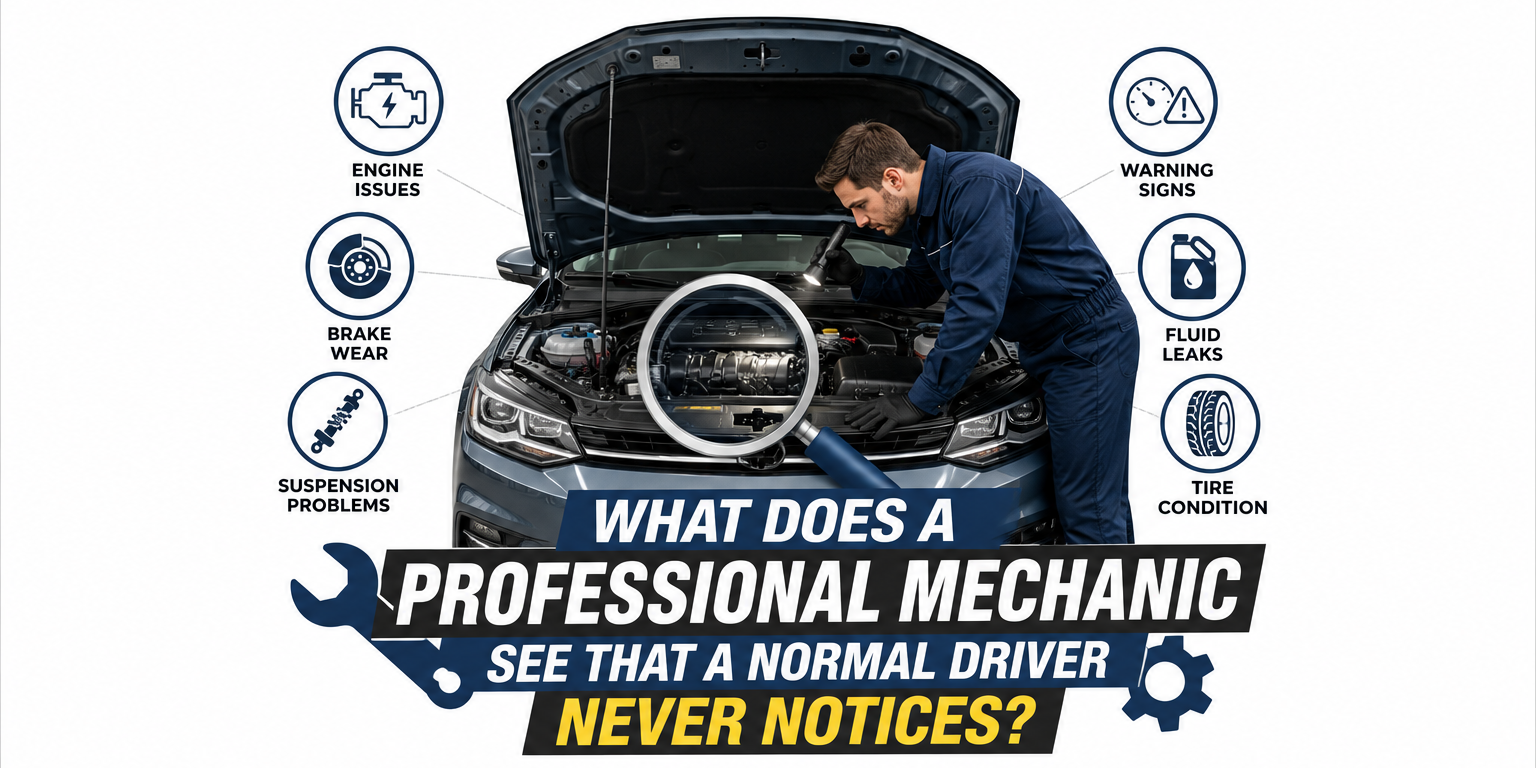
You check your mirrors, your fuel gauge, and maybe your tire pressure once in a while. But when a mechanic pops the hood or slides under your car, they are reading a completely different story. What does a professional mechanic see that a normal driver never notices? In this guide, you will learn exactly what trained eyes catch during an inspection, why these small details matter so much, and how spotting them early can save you from expensive repairs down the road.
Why Drivers and Mechanics See Two Different Cars
Most drivers experience their car through feel. You notice a rattle, a shake, or a smell, and that is usually your first sign that something is off. A mechanic, on the other hand, is trained to look for the causes behind those symptoms, often long before they become noticeable to the person behind the wheel.
This difference comes down to experience and repetition. A mechanic who has serviced thousands of cars in Dubai’s heat and dust has developed a kind of pattern recognition that takes years to build. They are not guessing. They are comparing what they see against thousands of similar cases they have handled before.
This is exactly why a routine inspection at a shop like Car Repair Auto Services often turns up issues the owner had no idea existed. It is not that the driver missed something obvious. It is that certain problems simply do not announce themselves until they are already serious.
What Is the Difference Between a Driver’s Check and a Mechanic’s Inspection?
A driver’s check is usually a quick, surface level look. It might include checking oil level, glancing at tire tread, or noticing if the AC feels weak. A mechanic’s inspection goes much deeper, covering fluid condition, belt wear, suspension components, electrical connections, and early signs of corrosion, most of which are invisible unless you know exactly where to look and what a healthy part should look like.
Early Warning Signs Mechanics Catch That Drivers Miss
Some of the most common things a trained eye picks up have nothing to do with how the car drives. They are visual, physical, or based on subtle patterns that build up slowly.
- Uneven tire wear patterns: A driver might glance at tread depth, but a mechanic reads the wear pattern itself. Wear on the inside or outside edge often points to alignment or suspension issues long before the car starts pulling to one side.
- Hairline cracks in belts and hoses: Dubai’s heat accelerates rubber degradation. A mechanic checks for tiny surface cracks that are easy to miss but signal a belt or hose close to failure.
- Discolored or gritty fluids: Engine oil, brake fluid, and coolant all change color and texture as they break down. A driver rarely checks these closely, but a mechanic can tell a lot from a single glance and a rub between two fingers.
- Corrosion on battery terminals: A slightly corroded terminal might still start the car fine for weeks, but it is often the first sign of a battery or charging issue that will eventually leave you stranded.
- Small oil or fluid stains under the car: Most drivers only notice a leak once it becomes a visible puddle. Mechanics look for faint stains and residue that reveal a slow leak much earlier.
- Uneven brake pad wear: One pad wearing faster than the other can indicate a sticking caliper, something that is nearly impossible to notice while driving until braking performance drops noticeably.
How Do Mechanics Notice Problems Before They Become Serious?
Mechanics rely on a mix of visual inspection, physical testing, and diagnostic tools to catch issues early. They check fluid color and smell, listen for engine and belt noise using a stethoscope-like tool, inspect components under raised lighting, and cross reference codes from the car’s onboard computer. This combination reveals problems long before symptoms would be obvious to a regular driver.
Sounds and Smells That Mean More Than You Think
A driver often notices a strange sound and either ignores it or assumes it is nothing serious. Mechanics are trained to associate specific sounds with specific parts, which is why they can often diagnose an issue within seconds of hearing it.
A high-pitched squeal when braking, for example, is usually a built-in wear indicator on the brake pads, designed specifically to alert the driver. A grinding sound is a much more serious sign, often meaning the pads have worn down completely and the metal backing is now contacting the rotor.
Smells matter just as much. A sweet smell inside the cabin often points to a coolant leak, while a burning smell near the front of the car can indicate an overheating clutch or worn brake components. Most drivers notice these smells and open a window. A mechanic treats them as a clear signal to inspect further.
Under the Hood: What Mechanics Look For That You Cannot See From the Driver’s Seat
Once the hood is open, a mechanic is scanning multiple areas at once, checking for issues that simply are not visible or noticeable during normal driving.
They look at belt tension and surface wear, since a slightly loose or cracked belt can snap unexpectedly, especially in high heat conditions common across Dubai. They check hose connections for soft spots or bulging, which often precede a coolant leak. They also inspect the battery casing for swelling, a sign that the battery is nearing the end of its life even if it still starts the car normally.
Beyond the visible parts, mechanics also connect diagnostic tools to read stored error codes, some of which do not trigger a dashboard warning light immediately. This means a car can be developing a real problem well before the driver receives any indication on the dashboard.
Underneath the Car: The Hidden Story Most Drivers Never See
Very few drivers ever look underneath their car, and for good reason since it requires lifting the vehicle safely. This is exactly where a mechanic often finds the most revealing signs of wear.
- Suspension bushing wear: Cracked or worn rubber bushings can cause clunking noises and uneven handling, but they are completely hidden from view during normal use.
- Exhaust system corrosion: Rust patches on the exhaust are common in humid coastal conditions and can eventually lead to leaks that affect performance and fuel efficiency.
- CV joint boot damage: A torn boot exposes the joint to dirt and moisture, leading to premature failure if it is not caught and repaired quickly.
- Underbody fluid trails: Faint trails of oil, transmission fluid, or coolant often reveal exactly where a leak originates, something that is impossible to trace from the driver’s seat.
Why Do Some Car Problems Go Unnoticed for So Long?
Many car problems develop gradually, which means the vehicle adjusts and compensates without obvious symptoms. A slightly worn belt still turns the engine. A partially clogged filter still lets air through. This gradual decline tricks drivers into thinking everything is fine, right up until the point where a part fails suddenly and without warning.
Why This Matters More in Dubai’s Driving Conditions
Dubai’s combination of intense heat, dust, and stop-start traffic accelerates wear on almost every part of a vehicle. Rubber components dry out faster. Fluids break down sooner. Sand and dust infiltrate seals and filters more aggressively than in milder climates.
This means the gap between what a driver notices and what is actually happening inside the car tends to be wider here than in cooler regions. A car that looks and drives perfectly fine on the surface may already be dealing with early stage wear that only becomes obvious once it turns into a breakdown, often at the worst possible time, like the middle of a summer afternoon in traffic.
This is one of the main reasons regular inspections matter so much in this environment. At Car Repair Auto Services, our team has seen firsthand how often a car that seemed completely fine to its owner was actually just a few weeks away from a major issue, one that a proper inspection could have caught and resolved at a fraction of the eventual cost.
What Should You Ask Your Mechanic to Check Regularly?
Even if you are not planning a full service, there are a few things worth asking about during any visit to keep small issues from becoming big ones.
- Ask them to check belt and hose condition, especially before summer heat intensifies.
- Request a quick look at brake pad thickness and rotor condition.
- Have them inspect fluid color and levels, not just quantity.
- Ask about battery terminal condition and overall battery health.
- Request a visual check under the car for leaks or corrosion, even if nothing feels wrong while driving.
How Can You Start Noticing More Like a Mechanic?
You do not need years of training to catch a few early warning signs yourself. Get in the habit of glancing under your parked car for stains, since this can reveal a slow leak long before it becomes serious. Pay attention to any new smell, sound, or vibration, and treat it as worth investigating rather than something to ignore.
Check your tire tread pattern, not just depth, since uneven wear tells a story about alignment and suspension health. And perhaps most importantly, do not wait for a warning light to schedule an inspection, since many issues develop well before the dashboard reacts.
Common Mistakes Drivers Make When It Comes to Spotting Problems
One of the most common mistakes is assuming that if the car drives fine, everything under the surface must be fine too. In reality, many components can be significantly worn while the car still performs normally on a daily basis.
Another mistake is delaying a check after noticing something small, like a faint smell or a slight vibration, simply because it does not seem urgent. These small signals are often the easiest and cheapest to fix when caught early, compared to waiting until they cause a bigger failure.
Finally, many drivers only think about inspections when something already feels wrong, rather than treating regular checks as preventive maintenance. A mechanic’s trained eye is most valuable when nothing feels wrong yet, since that is exactly when small issues are easiest to catch and resolve.
Final Thoughts
The gap between what a driver notices and what a mechanic sees comes down to training, experience, and knowing exactly where to look. Most serious car problems do not appear suddenly. They build up slowly through small signs like a faint smell, an uneven tire wear pattern, or a slightly discolored fluid, all things that are easy to miss without the right eye for it.
Given how demanding Dubai’s climate is on vehicles, getting a professional inspection regularly is one of the simplest ways to avoid unexpected breakdowns and costly repairs. If it has been a while since your car had a proper look over, the team at Car Repair Auto Services can help you catch small issues before they turn into big ones, so you can keep driving with confidence rather than guessing what might be wrong
FAQs
Q1: What does a professional mechanic see that a normal driver never notices?
Mechanics catch early signs like uneven tire wear, discolored fluids, hairline cracks in belts, and faint underbody leaks, all of which develop gradually and rarely feel obvious while driving.
Q2: Why do some car problems not show any symptoms while driving?
Many parts wear down gradually, and the car compensates without noticeable changes in performance until the part fails completely or reaches a critical wear point.
Q3: How often should I get my car inspected if it seems to be running fine?
Even with no visible issues, an inspection every six months is recommended in Dubai’s climate, since heat and dust accelerate wear on rubber and fluid components.
Q4: Can I check for early warning signs myself without being a mechanic?
Yes, you can glance under your parked car for stains, monitor unusual smells or sounds, and check tire wear patterns, though a professional inspection will still catch far more.
Q5: Why is Dubai’s climate harder on cars compared to other regions?
High heat and frequent dust exposure speed up wear on rubber components, fluids, and seals, which means issues can develop faster here than in cooler, drier climates.